By Ethan Brooks
Updated November 2026
Choosing a 48V off-grid solar system is easier when you know what to compare. A 48V battery bank is the standard voltage for most home off-grid setups because it keeps current manageable, reduces wire size and works well with split-phase inverters. This guide compares seven complete kits on the criteria that matter most for a house: inverter output and surge capacity, battery energy storage in kilowatt-hours, panel wattage and array size, the number of parts you must assemble, and how well each package matches typical daily loads.
Our top picks at a glance
- 1
 TOP CHOICEBest overallSUNGOLDPOWER 5000W 48V Off Grid System Complete Solar KitView on Amazon
- 2
 TOP CHOICEBest for whole-house backupECO-WORTHY 10KW Output Off Grid Solar System Complete KitView on Amazon
- 3
 TOP CHOICEBest for large battery storageWhole House System 10KW Split Phase Solar Inverter KitView on Amazon
- 4
 Best budget pickECO-WORTHY 9.36KWH Off Grid Solar System Complete KitView on Amazon
- 5
 Best for small kitchens and essential loadsOff Grid Solar Panle Kit with Battery & Inverter 5KWView on Amazon
- 6
 Best for plug-and-play installsECO-WORTHY 9.36KWH 2340W 48V Solar Power System KitView on Amazon
- 7
 Best for high-demand homesSUNGOLDPOWER 6500W Off Grid System Complete Solar KitView on Amazon
Our Top Picks
| Product | Best for | Key feature |
|---|---|---|
| SUNGOLDPOWER 5000W 48V Off Grid System Complete Solar Kit | Typical homes with moderate loads | 5000W 120Vac inverter with 100Ah LiFePO4 battery |
| ECO-WORTHY 10KW Output Off Grid Solar System Complete Kit | Whole-house backup | 10KW split-phase 120V/240V output with 20.48kWh storage |
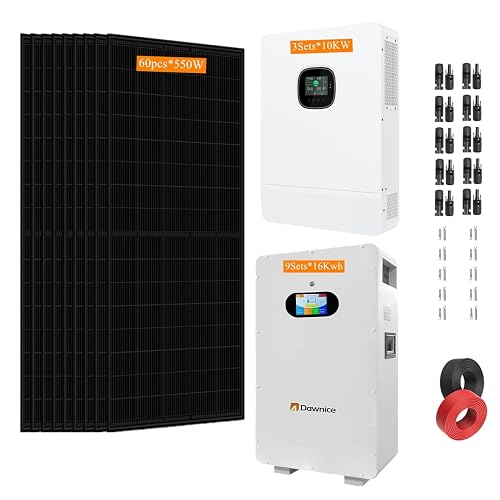
| Whole House System 10KW Split Phase Solar Inverter Kit | Large battery storage | 16kWh battery bank at 48V 314Ah |
| ECO-WORTHY 9.36KWH Off Grid Solar System Complete Kit | Budget-minded builders | 12 x 195W panels and 10.24kWh battery |
| Off Grid Solar Panle Kit with Battery & Inverter 5KW | Essential loads and small homes | 48V 5000W inverter with 2340W array |
| ECO-WORTHY 9.36KWH 2340W 48V Solar Power System Kit | Plug-and-play setup | All-in-one 5000W inverter and mounting brackets |
| SUNGOLDPOWER 6500W Off Grid System Complete Solar Kit | High-demand homes | 6500W 120/240Vac inverter with 370W panels |
SUNGOLDPOWER 5000W 48V Off Grid System Complete Solar Kit
SUNGOLDPOWER 5000W 48V Off Grid System Complete Solar Kit,1 * 5000W 120Vac Solar Inverter UL1741+6 * 200W Mono Solar Panels +1 * 100Ah 51.2V Lifepo4 Battery UL1973, for House Storage (SGM-5K5E)
Best for: Overall balance of inverter size, battery capacity and array output for a typical house.
This kit suits a homeowner who wants a complete 48V package with a 5000W inverter, six 200W panels and a 100Ah lithium battery, without assembling parts from several vendors.
Key specs For a deeper look, Diy Camping Solar Water Heater: Build a Portable Off-Grid Shower System covers this in detail.
- Inverter: 5000W, 120Vac output
- Panels: 6 x 200W monocrystalline (1200W array)
- Battery: 1 x 100Ah, 51.2V LiFePO4
- Certifications listed: UL1741 inverter, UL1973 battery
Pros
- Clear, matched component set from one listing
- LiFePO4 chemistry is well suited to daily cycling
- Inverter certification listed for grid-tie-compatible standards
Cons
- Single 100Ah battery limits overnight runtime for larger loads
- 120Vac-only output may not suit homes needing split-phase service
Bottom line: A strong first choice for a moderate-load home that wants a complete, certified kit.
ECO-WORTHY 10KW Output Off Grid Solar System Complete Kit
ECO-WORTHY 10KW Output Off Grid Solar System Complete Kit:10KW 120V/240V Output Split Phase Inverter| 4Pcs 48V 100Ah 20.48kWh High Capacity Energy Storage| 5310 Watts Solar Panel PV
Best for: Whole-house backup with split-phase service.
This kit fits a home that needs 120V/240V output for major appliances such as electric ranges, well pumps and HVAC, and wants substantial battery reserve.
Key specs
- Inverter: 10KW, 120V/240V split-phase output
- Battery: 4 x 48V 100Ah (20.48kWh total)
- Panels: about 5310W array
Pros
- Split-phase output supports larger household loads
- Large battery reserve for multi-day cloudy periods
- Array size leaves room for charging during sun hours
Cons
- Four-battery bank adds wiring and installation work
- Requires careful load calculation and a licensed electrician for service connection
Bottom line: Best for owners sizing a true whole-house system who can handle a larger install.
Whole House System 10KW Split Phase Solar Inverter Kit
Whole House System:10KW 120V/240V Split Phase Solar Inverter| 48V 314Ah 16kWh High Capacity Energy Storage| 2950W Solar Panel ECO WORTHY 10000W Output Complete Off-Grid Solar Panel Kit for Home
Best for: Maximum battery storage in a single 48V bank.
Suited to a household that prioritizes stored energy over array size, especially in areas with long winter nights or frequent overcast days.
Key specs
- Inverter: 10KW, 120V/240V split-phase
- Battery: 48V 314Ah (16kWh)
- Panels: about 2950W array
Pros
- High storage capacity in one battery bank
- Split-phase inverter output for whole-home loads
- Smaller array can be easier to mount on limited roof space
Cons
- Smaller array means slower recharge after heavy use
- Large battery bank is heavy and needs a suitable location
Bottom line: A good match for storage-focused homes where recharge time is less critical.
ECO-WORTHY 9.36KWH Off Grid Solar System Complete Kit
Solar Panel Kit:12PCS 195W Solar Panels(2340W)+2PCS 48V 100AH Cubix Lithium Battery(10.24kWh)+10KW Solar Inverter 120V/240V ECO-WORTHY 10KW Output 9.36KWH Off Grid Solar System Complete Kit for Home
Best for: Budget-conscious builders who want a full 10KW inverter and two batteries.
This kit suits a DIYer who wants a solid mid-size array and a 10.24kWh battery bank without choosing each component separately.
Key specs
- Inverter: 10KW, 120V/240V split-phase
- Battery: 2 x 48V 100Ah Cubix lithium (10.24kWh)
- Panels: 12 x 195W (2340W array)
Pros
- Good energy-to-panel balance for daily cycling
- Split-phase output in a compact package
- Two-battery bank is simpler to wire than a four-battery system
Cons
- Array is modest for heavy daily use in low-sun regions
- Owners should verify inverter surge rating against largest motor loads
Bottom line: A practical choice for a moderate home that values a straightforward build.
Off Grid Solar Panle Kit with Battery & Inverter 5KW
Off Grid Solar Panle Kit with Battery & Inverter:12x195W Panels, 48V 5000W Solar Inverter, 48V 100AH Cubix LiFePO4 Battery ECO-WORTHY 5KW Off Grid Solar System Complete Kit 2340W
Best for: Essential loads and smaller homes or cabins.
Fits a household focused on lights, refrigeration, electronics and a few medium appliances rather than full electric heating.
Key specs
- Inverter: 48V 5000W
- Battery: 48V 100Ah LiFePO4 Cubix
- Panels: 12 x 195W (2340W array)
Pros
- Right-sized inverter for essential loads
- Panel array is well matched to a single 100Ah battery
- Lower complexity than multi-battery systems
Cons
- Single battery limits runtime during long outages
- Not suited to large electric resistance heating loads
Bottom line: Ideal for a small home or cabin where loads are kept modest.
ECO-WORTHY 9.36KWH 2340W 48V Solar Power System Kit
ECO-WORTHY 9.36KWH 2340W 48V Solar Power System Kit Off Grid Solar Panel Kit with 5000W 48V All-in-One Off-Grid Charge Inverter and 12pcs 195W Mono Solar Panel and Z Mounting Brackets.Plug and Play
Best for: Owners who want an all-in-one kit with minimal assembly.
Works for a first-time builder who prefers included mounting brackets and a single integrated inverter-charger.
Key specs
- Inverter: 5000W all-in-one 48V off-grid charge inverter
- Panels: 12 x 195W mono (2340W array)
- Energy storage: about 9.36kWh total system
- Mounting: Z brackets included
Pros
- Integrated inverter and charger simplify wiring
- Mounting hardware included
- Plug-and-play layout suits first-time installs
Cons
- Fixed inverter size may limit future expansion
- Still requires proper grounding, fusing and code-compliant wiring
Bottom line: A convenient option for builders who value simplicity over custom component choice.
SUNGOLDPOWER 6500W Off Grid System Complete Solar Kit
SUNGOLDPOWER 6500W Off Grid System Complete Solar Kit, 1 * 6500W 120/240Vac Solar Inverter UL1741+6 * 370W Mono Solar Panels + 1 * 100Ah 51.2V Lifepo4 Battery UL1973, for House Storage (SGM-655M)
Best for: Higher-demand homes that need more inverter headroom and a larger array.
Suited to a household with heavier evening loads or multiple large appliances running at once.
Key specs
- Inverter: 6500W, 120/240Vac output
- Panels: 6 x 370W mono (2220W array)
- Battery: 1 x 100Ah, 51.2V LiFePO4
Pros
- Higher inverter rating for simultaneous loads
- Larger-wattage panels give more output per module
- Split-phase output option for larger homes
Cons
- Single 100Ah battery limits stored energy
- Higher inverter power draws more standby loss when unused
Bottom line: Best for owners whose peak demand is high and who can add battery capacity later.
Buying Guide
Inverter output and surge capacity
Add the wattage of every load you may run at once, then check the inverter’s continuous and surge ratings. Motors such as well pumps and compressors can draw several times their running watts at startup. Choose an inverter with at least 25 percent headroom above your calculated peak.
Good picks for this: ECO-WORTHY 10KW Output Off Grid Solar System Complete Kit, SUNGOLDPOWER 6500W Off Grid System Complete Solar Kit
Battery capacity in kilowatt-hours
Multiply your average daily kWh use by the number of autonomy days you want. A 48V bank of 100Ah stores about 5.12kWh. Keep usable depth of discharge in mind; lithium chemistry generally allows deeper cycling than lead-acid, but check manufacturer limits.
Good picks for this: Whole House System 10KW Split Phase Solar Inverter Kit, ECO-WORTHY 9.36KWH Off Grid Solar System Complete Kit
Panel array size and daily production
Estimate daily production by multiplying array watts by peak sun hours for your location and then by about 0.75 to account for system losses. A 2340W array in a region with four peak sun hours yields roughly 7000 watt-hours per day under those assumptions.
Good picks for this: Off Grid Solar Panle Kit with Battery & Inverter 5KW, ECO-WORTHY 9.36KWH 2340W 48V Solar Power System Kit
Split-phase versus 120V-only output
Many US homes use 120/240V service. If you need to run an electric range, dryer or central air, confirm the inverter provides split-phase output. A 120V-only inverter may cover lighting and electronics but not large resistance loads.
Good picks for this: Whole House System 10KW Split Phase Solar Inverter Kit, ECO-WORTHY 10KW Output Off Grid Solar System Complete Kit
Battery chemistry and durability
LiFePO4 batteries are widely used for off-grid storage because of their cycle life and stable chemistry. Look for listed certifications such as UL1973 for stationary storage batteries and verify the battery management system includes protection against overcharge, over-discharge and temperature extremes.
Good picks for this: SUNGOLDPOWER 5000W 48V Off Grid System Complete Solar Kit, SUNGOLDPOWER 6500W Off Grid System Complete Solar Kit
Installation effort and included hardware
Kits that include mounting brackets, cable and an integrated inverter-charger reduce the number of purchasing decisions, but you still need proper grounding, DC overcurrent protection and a suitable disconnect. Plan for a permitted install if you connect to a home service panel.
Good picks for this: ECO-WORTHY 9.36KWH 2340W 48V Solar Power System Kit, Off Grid Solar Panle Kit with Battery & Inverter 5KW
Future expansion
Choose a platform that can accept additional batteries or panels. Parallel-capable 48V battery banks and inverters with stackable or expandable inputs make later upgrades simpler than replacing the whole system.
Good picks for this: ECO-WORTHY 10KW Output Off Grid Solar System Complete Kit, SUNGOLDPOWER 5000W 48V Off Grid System Complete Solar Kit
FAQ
Why is 48V used for off-grid solar systems?
At 48V, a given power level draws less current than at 12V or 24V, so cable can be smaller and losses lower. It also matches the input range of most split-phase inverters used in homes.
How many batteries do I need for a home?
It depends on daily energy use and how many days of backup you want. Calculate average daily kWh, divide by usable battery depth and multiply by the number of autonomy days. Many homes end up with 10 to 20kWh of storage.
Can I add more panels later?
Often yes, provided the charge controller or inverter input can handle the added array voltage and current. Check the maximum PV input rating before adding modules.
Do I need a licensed electrician?
Connecting a system to a home electrical panel usually requires a permit and inspection in many jurisdictions. If you are unsure, consult a licensed electrician or your local building department before installation.
What does UL1741 mean for an inverter?
UL1741 is a safety standard covering inverters and other equipment for interconnection with the utility grid. Off-grid-only units may use different standards, so confirm the listing matches your use and local code.
How long do lithium batteries last in an off-grid system?
Manufacturers typically specify cycle life at a given depth of discharge and temperature. Actual lifespan depends on use patterns, temperature and maintenance, so review the warranty and rated cycles for the specific battery.
Conclusion
For most homes, a 48V off-grid solar system should be matched to the peak power your loads demand, the energy you need overnight, and the sun your location receives. The SUNGOLDPOWER 5000W kit suits moderate homes that want a complete certified package. The ECO-WORTHY 10KW kit with 20.48kWh of storage fits whole-house backup. The Whole House System with 16kWh storage suits homes that prioritize battery reserve. The 9.36kWh budget-oriented kit and the plug-and-play 2340W kit serve builders who want simpler installs, while the 6500W kit suits high-demand homes. Calculate your own loads before committing, and confirm permits and electrical code requirements with a professional.
Sources
- Guidance on sizing home energy systems and understanding solar equipment basics (energy.gov)
- Research on solar resource data and system performance estimation (nrel.gov)
- Safety standards and certification information for inverters and batteries (ul.com)
Related reading
- Wind Solar Hybrid Off Grid System: How to Size and Wire One
- What Is Meant by Off Grid Solar System? A Plain-English Answer
- V Guard Off Grid Solar System: Sizing, Parts and Wiring Guide (2026)
About Ethan Brooks
Ethan Brooks is part of our editorial team and reviews and edits our DIY solar power systems guides, checking product details against manufacturer specifications and owner feedback.