 By Ethan Brooks
Updated November 2026
Choosing the best solar system for off grid power comes down to matching three numbers to your daily load: how many kilowatt-hours you use each day, the peak wattage your appliances draw at once, and how many sunny hours you get. This list compares seven complete kits from ECO-WORTHY and similar off-grid bundles, using the criteria that matter most in practice: inverter output and voltage, battery capacity and chemistry, total panel wattage, whether the kit is built for a whole house, a cabin or a vehicle, and how much system-level detail the listing actually states. Read the specs against your own load before you buy.
Our top picks at a glance
- 1
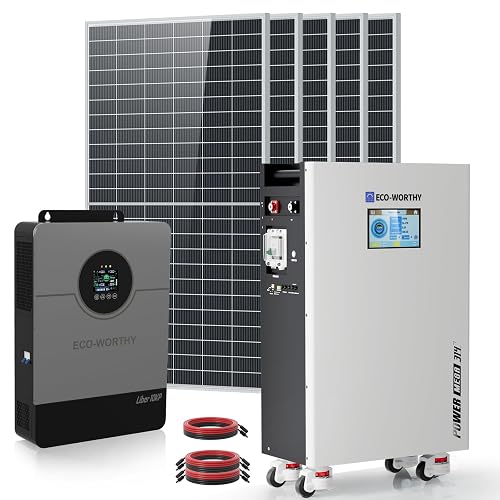 TOP CHOICEBest overallWhole House System 10KW 120V/240VView on Amazon
- 2
 TOP CHOICEBest for a full split-phase homeSolar Panel Kit 12PCS 195W with 10KW InverterView on Amazon
- 3
 TOP CHOICEBest for small cabins3000W 24V Solar Power System Complete KitView on Amazon
- 4
 Best for 5 kW homesOff Grid Solar Panel Kit with Battery and Inverter 5KWView on Amazon
- 5
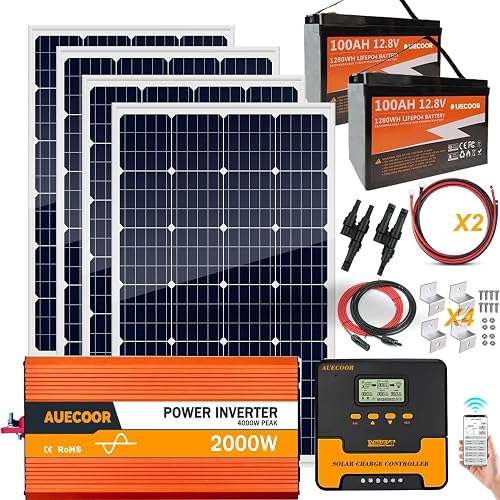 Best for RVs and campers92KWH Complete Solar Panel Kit for RVView on Amazon
- 6
 Best customizable optionECO-WORTHY 10KW Off Grid Solar System StandardView on Amazon
- 7
 Best budget pickOff Grid Solar System Complete Kit 1350W 24VView on Amazon
Our Top Picks
Quick Comparison
| Product | Best for | Key feature |
|---|---|---|
| Whole House System 10KW 120V/240V | Whole-home off-grid use | 10 kW split-phase inverter with 16 kWh battery |
| Solar Panel Kit 12PCS 195W | Full split-phase homes | 2,340 W panels with 10.24 kWh lithium battery |
| 3000W 24V Solar Power System | Small cabins and backup | 1,440 W panels with 5.12 kWh battery |
| Off Grid Solar Panel Kit with Battery and Inverter | 5 kW homes | 48V 5 kW inverter with 100 Ah LiFePO4 battery |
| 1.92KWH Complete Solar Panel Kit for RV | RVs, campers, trailers | Rigid mono panels with 2,000 W inverter |
| ECO-WORTHY 10KW Off Grid Solar System Standard | Custom-sized systems | Configurable 10 kW inverter and 314 Ah battery |
| Off Grid Solar System Complete Kit 1350W 24V | Budget-minded starter systems | 60 A MPPT controller and 5,000 W inverter |
Whole House System 10KW 120V/240V
Whole House System:10KW 120V/240V Split Phase Solar Inverter| 48V 314Ah 16kWh High Capacity Energy Storage| 2950W Solar Panel ECO WORTHY 10000W Output Complete Off-Grid Solar Panel Kit for Home
Best for: Whole-home off-grid power with large daily loads
This is the most complete option on the list for a house that needs split-phase 120V/240V power for electric range, well pump and central air. The large battery bank suits homes that want a day or two of autonomy.
Key specs
- 10 kW inverter with 120V/240V split-phase output
- 48V 314 Ah battery, about 16 kWh capacity
- 2,950 W solar array
Pros
- Covers whole-house loads including 240V appliances
- Large battery provides multi-hour buffer through cloudy spells
- Single kit simplifies sizing decisions
Cons
- Heavy battery requires a strong mounting location and careful handling
- Full installation usually needs a licensed electrician for panel integration
Bottom line: Pick this if you are powering an entire home off grid and want one kit that covers split-phase loads.
Solar Panel Kit 12PCS 195W with 10KW Inverter
Solar Panel Kit:12PCS 195W Solar Panels(2340W)+2PCS 48V 100AH Cubix Lithium Battery(10.24kWh)+10KW Solar Inverter 120V/240V ECO-WORTHY 10KW Output 9.36KWH Off Grid Solar System Complete Kit for Home
Best for: Full split-phase homes that need about 9 kWh per day
A good match for households that want a balanced package of panels, battery and split-phase inverter, with enough storage for evening loads.
Key specs
- 12 panels at 195 W each, 2,340 W total
- Two 48V 100 Ah lithium batteries, about 10.24 kWh
- 10 kW inverter, 120V/240V output
Pros
- Battery capacity fits typical daily household use
- Split-phase output covers standard US home circuits
- Panel count gives room for expansion
Cons
- Panel array is modest for a 10 kW inverter, so peak output depends on sun hours
- Wiring and grounding still require code-compliant installation
Bottom line: A strong mid-to-large home option for owners who want balanced storage and a split-phase inverter.
3000W 24V Solar Power System Complete Kit
3000W 24V Solar Power System Complete Kit with 1440W (12×120W) Solar Panel 3KW Peak 6KW Pure Sine Wave Inverter, 5.12KWH Battery,PV Combiner Box,MPPT Solar Controller,Off-Grid Home RV Backup
Best for: Small cabins and essential-load backup
Suited to a cabin or shed that runs lights, a refrigerator, a few outlets and perhaps a small pump, without the demands of a full house.
Key specs
- 12 panels at 120 W each, 1,440 W total
- 5.12 kWh battery
- 6 kW peak, 3 kW continuous pure sine wave inverter
Pros
- Pure sine wave output suits sensitive electronics
- Right-sized battery for a cabin load profile
- Includes combiner box and charge controller
Cons
- Not sized for electric heat or large motor loads
- Owners often report needing to add panels in cloudy regions
Bottom line: Ideal for a small off-grid cabin or workshop with modest, predictable loads.
Off Grid Solar Panel Kit with Battery and Inverter 5KW
Off Grid Solar Panle Kit with Battery & Inverter:12x195W Panels, 48V 5000W Solar Inverter, 48V 100AH Cubix LiFePO4 Battery ECO-WORTHY 5KW Off Grid Solar System Complete Kit 2340W
Best for: 5 kW homes and mid-size off-grid properties
A practical middle option for homes whose peak demand stays under about 5 kW and whose daily use is in the 6 to 8 kWh range.
Key specs
- 12 panels at 195 W each, 2,340 W total
- 48V 100 Ah LiFePO4 battery, about 5.12 kWh
- 48V 5 kW solar inverter
Pros
- 48V architecture is efficient for medium-size systems
- LiFePO4 chemistry offers long cycle life
- Kit format keeps component matching simple
Cons
- Single battery limits storage for multi-day autonomy
- Peak loads above 5 kW will trip the inverter
Bottom line: A sensible pick for a modest home or guest house that stays within a 5 kW load envelope.
1.92KWH Complete Solar Panel Kit for RV
1.92KWH Complete Solar Panel Kit for RV Off Grid Solar System |2x100Ah 12.8V Batteries 2560WH| 4x120W Mono Rigid Solar Panels |2000W Power Inverter|MPPT Controller|Trailer, Camper, Marine
Best for: RVs, campers, trailers and marine use
Built around 12.8V batteries and a portable-format inverter, this kit fits vehicles that need reliable 12V and modest AC power on the road.
Key specs
- Two 100 Ah 12.8V batteries, 2,560 Wh total
- Four 120 W rigid mono panels
- 2,000 W power inverter and MPPT controller
Pros
- Designed for mobile installation with compact components
- Rigid panels handle roof mounting well
- Good match for weekend trips and boondocking
Cons
- Not suitable for running large AC appliances continuously
- Roof space may limit panel count on smaller vehicles
Bottom line: The right choice for RV owners who want solar independence without a whole-house footprint.
ECO-WORTHY 10KW Off Grid Solar System Standard
Standard: 4x590W Solar Panels+48V 10kW Inverter +48V 314AH Battery+Cable. Customize the System to Fit Your Needs. ECO-WORTHY 10KW Output Off Grid Solar System Complete Kit& Custom 48V 314Ah
Best for: Buyers who want to customize battery and panel sizing
The standard configuration pairs four 590 W panels with a 10 kW inverter and a 314 Ah 48V battery, and the listing is built around the option to adjust the system to your needs.
Key specs
- Four 590 W solar panels, 2,360 W total
- 48V 314 Ah battery
- 10 kW inverter output
Pros
- Large-format panels reduce roof and wiring footprint
- Battery size can be matched to your autonomy target
- 48V system supports higher-power inverters efficiently
Cons
- Customization means more planning before purchase
- Panel count is low for a 10 kW inverter, so verify sun-hour output
Bottom line: Best for experienced DIYers who want a configurable 10 kW system and will do the sizing math.
Off Grid Solar System Complete Kit 1350W 24V
Off Grid Solar System Complete Kit 1350W 24V Solar Kit,6X 225W 12V Solar Panel,2X 100ah 12.8V Lithium Battery,60a MPPT Controller,5000W Power Inverter,6 String PV Combiner Box
Best for: Budget-minded starter systems and small loads
A straightforward entry point for someone testing off-grid power with lights, phone charging, a small fridge or a few tools.
Key specs
- Six 225 W 12V panels, 1,350 W total
- Two 100 Ah 12.8V lithium batteries
- 60 A MPPT controller and 5,000 W inverter
Pros
- MPPT controller improves harvest in varied light
- Includes PV combiner box for string wiring
- Scales down the complexity of a larger system
Cons
- Limited storage for multi-day outages
- The 5,000 W inverter rating is far above what the array can sustain
Bottom line: A good first system for a shed, workshop or weekend getaway where loads stay small.
Buying Guide
Daily Energy Use (kWh per Day)
Add the wattage of each appliance multiplied by its hours of use per day, then divide by 1,000. A refrigerator might use 1 to 2 kWh daily, and a well pump can add several more. Size battery storage for at least one day, and ideally two, of your average use.
Good picks for this: Whole House System 10KW 120V/240V, Solar Panel Kit 12PCS 195W
Inverter Output and Surge Rating
The inverter must handle your largest simultaneous load and the startup surge of motors. Check both continuous and peak ratings. Pure sine wave output is preferred for electronics and motor-driven appliances.
Good picks for this: 3000W 24V Solar Power System Complete Kit, Off Grid Solar Panel Kit with Battery and Inverter 5KW
Battery Voltage and Chemistry
Higher system voltage (24V or 48V) reduces current and wire thickness for the same power. Lithium iron phosphate (LiFePO4) batteries generally offer more usable capacity and longer cycle life than lead-acid. Confirm the battery voltage matches your inverter and charge controller.
Good picks for this: ECO-WORTHY 10KW Off Grid Solar System Standard, Off Grid Solar System Complete Kit 1350W 24V
Panel Wattage and Array Size
Estimate array size by dividing your daily kWh by your local peak sun hours, then add 20 to 30 percent for losses. The panel total in the kit should exceed this number to recharge batteries in a typical day, not just in ideal weather.
Good picks for this: Solar Panel Kit 12PCS 195W, 1.92KWH Complete Solar Panel Kit for RV
Mobility and Use Case
Fixed installations can use heavier batteries and larger panels. RV and marine installs need compact, vibration-tolerant components and rigid panels that fit the roof. Match the kit format to where it will be mounted.
Good picks for this: 1.92KWH Complete Solar Panel Kit for RV, 3000W 24V Solar Power System Complete Kit
Durability and Environmental Rating
Look for panels with tempered glass and anodized aluminum frames, and batteries with enclosures suited to your climate. Cold temperatures reduce lithium charging, so check whether the battery has low-temperature charge protection.
Good picks for this: Off Grid Solar Panel Kit with Battery and Inverter 5KW, ECO-WORTHY 10KW Off Grid Solar System Standard
Expansion and Future Needs
Choose a charge controller and inverter with headroom, and a battery bank that can be expanded in parallel. Plan wire gauges for the future array size, not just the current kit, to avoid rewiring later.
Good picks for this: Whole House System 10KW 120V/240V, Solar Panel Kit 12PCS 195W
FAQ
How do I know what size solar system I need for off grid living?
Start with your daily energy use in kilowatt-hours, then divide by your local peak sun hours to estimate panel wattage. Add battery capacity for at least one day of autonomy. A licensed electrician or a qualified installer can verify the numbers against local conditions.
Is a 24V or 48V system better for off-grid use?
Both are common. A 48V system carries the same power at lower current, which means thinner wire and lower losses. 24V systems suit smaller loads and cabins. Choose the voltage that your inverter and battery support.
Do I need lithium batteries for an off-grid system?
Lithium iron phosphate batteries are widely used because they offer higher usable capacity and longer cycle life than lead-acid. Lead-acid remains a lower-cost option for some installations, but it requires more maintenance and larger capacity for the same usable energy.
Can I run a whole house on these kits?
Only the larger kits, such as the 10 kW systems, are realistically sized for whole-house use, and even those depend on your load profile and sun exposure. Electric heat, well pumps and central air can exceed most kit capacities. Confirm your peak and daily loads before committing.
Do I need a permit or inspection for an off-grid solar system?
Many jurisdictions require permits for electrical work and interconnection, even for off-grid systems. Requirements vary by location, so check with your local building department. Electrical work should follow the National Electrical Code.
How long do off-grid solar batteries last?
Lithium iron phosphate batteries are often rated for several thousand charge cycles at a specified depth of discharge. Actual life depends on temperature, charge settings and usage patterns. Check the manufacturer’s cycle rating and warranty terms.
Conclusion
The best solar system for off grid use depends on your daily load, peak demand and space. For a whole house, the 10 kW Whole House System or the Solar Panel Kit with 10 kW inverter fit best. For a cabin, the 3000W 24V kit or the 1350W 24V budget system are sensible starting points. For an RV or camper, the 1.92 kWh RV kit is the most suitable. Confirm your numbers before buying and have a qualified professional review the wiring and interconnection.
Sources
- Guidance on home solar system design, storage and off-grid considerations (energy.gov)
- Research on solar resource data and system performance modeling (nrel.gov)
- The National Electrical Code requirements that apply to solar and battery installations (nfpa.org)
Related reading
- Top 7 Full Off-Grid Solar System Options Compared for Homes
- Top 7 DIY Off Grid Solar System Kits Compared for Homes (2026)
- Top 5 Off Grid Solar Panel Systems for Home Options Compared in 2026
About Ethan Brooks
Ethan Brooks is part of our editorial team and reviews and edits our DIY solar power systems guides, checking product details against manufacturer specifications and owner feedback.