As an Amazon Associate I earn from qualifying purchases. This page may contain affiliate links.
Choosing a lifepo4 12v 200ah battery comes down to a handful of numbers that matter more than marketing copy: usable capacity, cycle life, built-in battery management system (BMS) current limits, and how the pack behaves in cold weather. This guide covers seven 12V 200Ah LiFePO4 listings sold on Amazon US, grouped by the kind of job each one fits best. Selection was based on published specifications, brand reputation, and patterns that owners tend to describe in their feedback, such as low-temperature cutoff behavior and BMS performance under load. None of these were tested for this article, so treat the notes as a starting point and check the listing details before you buy.
Our Top Picks
Quick Comparison
| Product | Best for | Key feature |
|---|---|---|
| POERUNI 12V 200Ah LiFePO4 Trolling Motor Lithium Battery | Marine trolling motors and cold-weather use | Low-temperature protection and 200A BMS |
| 12V 200Ah LiFePO4 Battery Iron Phosphate Deep Cycle (200A BMS) | General solar storage and RV house loads | High cycle rating with 200A BMS |
| 15000 Cycles 10-Year Lifespan 12V 200Ah LiFePO4 (IP65) | Outdoor and exposed installations | IP65 rating with low-temp cutoff |
| UL1973 UN38.3 12V 200Ah LiFePO4 Lithium Battery | Buyers who want certification details | UL1973 and UN38.3 listing with 200A BMS |
| 1Pack 12V 200Ah LiFePO4 Deep Cycle Lithium Battery | Single-battery backup and off-grid cabins | Single-pack simplicity with 200A BMS |
| 12V 200Ah LiFePO4 Lithium Battery 2 Pack | Users who want two packs in parallel | Two-pack bundle with 200A BMS |
| Grade A Cells 12V 200Ah Lithium LiFePO4 Battery | Budget-minded solar and home storage | Grade A cells with 150A BMS |
POERUNI 12V 200Ah LiFePO4 Battery, 2560Wh Trolling Motor Lithium Battery

Low-temperature power failure,up to 15000 cycles,200A BMS,Suited for electric marine propulsion,ships,solar equipment,RV. POERUNI.12V 200Ah LiFePO4 Battery,2560Wh Trolling Motor Lithium Battery
This pack is aimed at boaters running electric trolling motors, but it also suits solar and RV builds where cold starts and high discharge currents are common. It is a good fit if you want the battery marketed around low-temperature power protection.
Key specs
- Nominal voltage: 12V
- Capacity: 200Ah (about 2560Wh)
- Chemistry: LiFePO4
- BMS: 200A
- Listed cycle life: up to 15,000 cycles
Pros For another angle, check out LiFePO4 vs Lithium-Ion (NMC): Which Battery Is Better in a Power Station?.
- Marketed with low-temperature power failure protection
- 200A BMS suits high-current motor loads
- Listing explicitly covers marine, solar and RV use
Cons
- Marine-focused marketing may not match a fixed solar install
- Owners should confirm the BMS current limit matches their inverter surge
12V 200Ah LifePO4 Battery – Iron Phosphate 15000+ Deep Cycle Lithium Battery

12V 200Ah LifePO4 Battery – Iron Phosphate 15000+ Deep Cycle Lithium Battery with 200A BMS, Solar Energy Storage Batteries for RV, Marine, and Off-Grid Power – Long Lasting, Rechargeable
This is a general-purpose option for solar storage, RV house banks and off-grid cabins. Its listing emphasizes deep cycling and a long rated life, which suits daily cycling rather than occasional backup.
Key specs
- Nominal voltage: 12V
- Capacity: 200Ah
- Chemistry: Iron phosphate (LiFePO4)
- BMS: 200A
- Listed cycle life: 15,000+ deep cycles
Pros
- Clear focus on deep cycle solar and RV use
- 200A BMS gives headroom for inverter loads
- Long rated cycle life for daily cycling
Cons
- Cold-weather behavior should be confirmed before winter use
- Listing wording is broad, so compare terminal type and dimensions
15000 Cycles 10-Year Lifespan Rechargeable Lithium Battery 12V 200Ah LiFePO4

15000 Cycles 10-Year Lifespan Rechargeable Lithium Battery for RV Marine Trolling Motor Solar Off-Grid and Home Energy 12V 200Ah LiFePO4 Lithium Battery 200A BMS 2560Wh IP65 Low-Temp Cutoff
This pack is a good match for outdoor or semi-exposed installations, such as a solar shed or a trailer deck, because the listing highlights an IP65 rating and low-temperature cutoff.
Key specs
- Nominal voltage: 12V
- Capacity: 200Ah (about 2560Wh)
- Chemistry: LiFePO4
- BMS: 200A with low-temp cutoff
- Listed cycle life: 15,000 cycles, 10-year lifespan
Pros
- IP65 rating suits dusty or damp locations
- Low-temperature cutoff is stated in the listing
- Long listed lifespan for seasonal solar use
Cons
- IP65 is a dust and water-jet rating, not a submersion rating
- Still requires a ventilated, temperature-managed enclosure
UL1973 UN38.3 2560Wh Low Temp Protection Rechargeable Lithium Battery 12V 200Ah
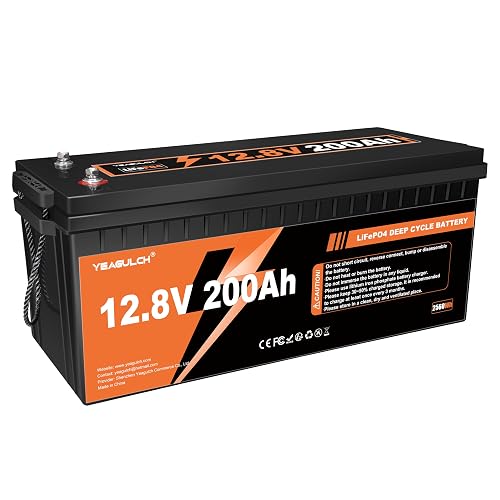
UL1973 UN38.3 2560Wh Low Temp Protection Rechargeable Lithium Batteries for RV Camping Solar Trolling Motors Off-Grid 12V 200Ah LiFePO4 Lithium Battery Built-in 200A BMS 15000+ Deep Cycle
This listing stands out for its stated certifications. UL1973 relates to stationary battery safety and UN38.3 covers transport testing, so buyers who care about documentation may find this one easier to justify.
Key specs
- Nominal voltage: 12V
- Capacity: 200Ah (about 2560Wh)
- Chemistry: LiFePO4
- BMS: 200A built-in
- Certifications listed: UL1973, UN38.3
Pros
- Lists UL1973 and UN38.3 certifications
- Built-in 200A BMS with low-temp protection
- Covers RV, marine, solar and off-grid use
Cons
- Certification claims should be verified against the manufacturer documentation
- Specifications are dense, so confirm terminal and fuse requirements
1Pack 2560Wh 200A BMS 12V 200Ah LiFePO4 Battery Deep Cycle Lithium Battery

1Pack 2560Wh 200A BMS, 15000+ Cycles,Low-Temp Cutoff Protection for RV/Marine/Solar/Off Grid/Backup Power 12V 200Ah LiFePO4 Battery Deep Cycle Lithium Battery
The single-pack listing suits a first lithium upgrade, a backup battery for a cabin, or a small off-grid load center where one 200Ah pack covers the essentials.
Key specs
- Nominal voltage: 12V
- Capacity: 200Ah (about 2560Wh)
- Chemistry: LiFePO4
- BMS: 200A
- Listed cycle life: 15,000+ cycles
Pros
- Single-pack purchase keeps the system simple
- 200A BMS and low-temp cutoff are listed
- Suits RV, solar and backup duty
Cons
- One pack limits expansion unless you buy a second unit
- Confirm the BMS current rating against your largest inverter
Lightweight 12V 200Ah LiFePO4 Lithium Battery 2 Pack W/ 200A BMS

15000+ Deep Cycles, Low-Temp Protection, Lightweight Lithium Battery for RV, Marine, Trolling Motor, Solar, Off-Grid 12V 200Ah LiFePO4 Lithium Battery 2 Pack W/ 200A BMS,2560Wh Energy
This is a two-pack bundle, which makes it a logical choice for builders who want 400Ah of 12V capacity by wiring two packs in parallel. Check the connection details carefully before wiring.
Key specs
- Nominal voltage: 12V per pack
- Capacity: 200Ah per pack (2 packs listed)
- Chemistry: LiFePO4
- BMS: 200A per pack
- Listed cycle life: 15,000+ deep cycles
Pros
- Two packs simplify doubling capacity
- Marketed as lightweight for a LiFePO4 pack of this size
- 200A BMS per pack for high-current loads
Cons
- Parallel wiring needs matched cable lengths and proper fusing
- Two packs add significant weight and footprint to plan for
Grade A Cells Deep Cycle Rechargeable Battery 12V 200Ah Lithium LiFePO4 Battery

Grade A Cells Deep Cycle Rechargeable Battery,10000+ Cycles,Perfect for RV,Home Storage,Solar Power System,Camping 12V 200Ah Lithium LiFePO4 Battery with 150A BMS
This option leans toward budget-minded solar and home storage. Its listing highlights Grade A cells and a lower BMS current rating, which suits moderate loads rather than large inverter surges.
Key specs
- Nominal voltage: 12V
- Capacity: 200Ah
- Chemistry: LiFePO4
- BMS: 150A
- Listed cycle life: 10,000+ cycles
Pros
- Grade A cells are emphasized in the listing
- Strong listed cycle count for home storage
- A practical choice for moderate solar loads
Cons
- 150A BMS limits high-current inverter use
- Lower listed cycle count than some competitors
Buying Guide
A 12V 200Ah LiFePO4 battery stores roughly 2.5 kWh of nominal energy. Because LiFePO4 is commonly discharged to about 80 to 90 percent depth of discharge, usable energy is typically around 2 kWh. Start your selection by working out your daily watt-hour load, then divide by 12V to find the amp-hours you need per day.
Selection criteria
- BMS current rating: The BMS must handle your inverter’s continuous and surge draw. A 200A BMS is common for 2000W-class inverters.
- Cycle life: Check the stated cycle count and the depth of discharge it assumes.
- Low-temperature protection: LiFePO4 should not be charged below freezing. Look for built-in low-temp cutoff.
- Terminals and fusing: Confirm terminal type (M8 bolts are common) and plan a fuse close to the battery.
- Physical fit: Measure the enclosure and ventilation space before ordering.
Important features
- Built-in BMS with overcharge, over-discharge and short-circuit protection
- Low-temperature charge cutoff
- Certifications such as UL1973 or UN38.3, where documented
- Ingress protection ratings for outdoor or damp locations
Specs to check
Verify nominal voltage, rated amp-hours, BMS continuous current, maximum charge current, operating temperature range, and warranty terms. Compare these numbers across listings rather than relying on headline cycle counts alone.
Choosing by need
- Marine and trolling motors: Look at the marine-focused POERUNI listing or the low-temp focused IP65 option.
- Solar and RV house loads: The general deep cycle pack with a 200A BMS suits most daily cycling.
- Documentation-focused buyers: The UL1973 and UN38.3 listing gives you certifications to verify.
- Expandable systems: The two-pack bundle makes parallel capacity simpler.
- Moderate budgets: The Grade A cell pack with a 150A BMS is a reasonable match for lighter loads.
Things to watch out for
- Do not charge below freezing unless the pack has low-temp charge protection.
- Parallel packs need equal cable lengths and matched state of charge.
- Size your charge controller so it does not exceed the battery’s maximum charge current.
- Read the warranty and whether it depends on installation conditions.
For broader planning, see How to Size a Solar Battery Bank: Autonomy, Depth of Discharge and Voltage and Solar Battery Safety: Charging, Temperature, Enclosures and Storage. If you are comparing chemistries, LiFePO4 vs Lead-Acid Batteries for DIY Solar covers the trade-offs. Consult a qualified electrician for any permanent home installation.
FAQ
How much usable energy does a 12V 200Ah LiFePO4 battery provide?
Nominal energy is about 2.56 kWh (12.8V nominal times 200Ah for many LiFePO4 packs). With a typical usable depth of discharge around 80 to 90 percent, expect roughly 2 kWh of usable energy. Always check the manufacturer’s stated usable capacity.
Can I charge a lifepo4 12v 200ah battery in freezing weather?
Generally no, unless the battery includes low-temperature charge protection or heating. Charging LiFePO4 below freezing can cause lithium plating and permanent damage. Discharging in cold weather is usually permitted, but capacity drops. Check the listing for its stated operating range.
What BMS size do I need for my inverter?
Divide your inverter’s continuous wattage by 12V to estimate continuous current, then add headroom for surge. A 2000W inverter draws about 167A at full load, which is why 200A BMS ratings are common. Confirm the BMS continuous rating, not just the peak rating.
Can I connect two 12V 200Ah batteries in parallel?
Yes, parallel wiring doubles capacity while keeping voltage at 12V. Use matched cable lengths, fuse each battery, and make sure both packs have similar state of charge before connecting. Mixing packs with different ages or capacities is not recommended.
Do I need a special charge controller for LiFePO4?
You need a controller or charger with a LiFePO4 charge profile, meaning a bulk and absorption voltage around 14.2 to 14.6V and a float at or near 13.5V. Lead-acid profiles can undercharge or overcharge lithium packs. Check the battery manufacturer’s recommended settings.
How long should a LiFePO4 battery last?
Listed cycle life varies by manufacturer, often from several thousand to 15,000 cycles at a stated depth of discharge. Real service life depends on temperature, depth of discharge, and charging practices. Compare cycle counts only when the test conditions are stated.
Is a LiFePO4 battery safe to install in a home?
LiFePO4 is considered one of the more stable lithium chemistries, but installation still requires proper fusing, ventilation, and a suitable enclosure. For permanent home or garage installs, consult a licensed electrician and follow local code. See Solar Battery Safety: Charging, Temperature, Enclosures and Storage for general guidance.
Conclusion
For marine and trolling motor loads, the POERUNI pack and the IP65 low-temp listing are the most relevant starting points. For general solar and RV house banks, the iron phosphate deep cycle pack with a 200A BMS covers most needs. Buyers who want stated certifications should look at the UL1973 and UN38.3 listing, while those planning expansion will find the two-pack bundle useful. If budget is the main concern and loads are moderate, the Grade A cell pack with a 150A BMS is a reasonable match. Whatever you choose, verify BMS current, cold-weather behavior, and fusing before you buy, and check the DIY Solar Sizing Calculations: Panels, Battery Banks and Inverters guide to confirm the pack fits your system.