 By Claire Whitaker
Updated November 2026
Choosing an off-grid solar system with battery backup comes down to three things: how much energy your home uses, how many hours of storage you need when the sun is down, and whether the inverter can handle your biggest loads. The picks below cover whole-house kits, mid-size home packages and smaller RV or cabin setups. Each was selected from product listings, brand reputation and common owner feedback patterns, and none were bench-tested.
Our top picks at a glance
- 1
 TOP CHOICEBest overallWhole House System:10KW 120V/240V Split Phase Solar Inverter| 48V 314AView on Amazon
- 2
 TOP CHOICEBest for a mid-size homeSolar Panel Kit:12PCS 195W Solar Panels(2340W)+2PCS 48V 100AH Cubix LiView on Amazon
- 3
 TOP CHOICEBest for small homes and backup-only use3000W 24V Solar Power System Complete Kit with 1440W (12×120W) Solar PView on Amazon
- 4
 Best for expandable storageECO-WORTHY Powermega 48V 314Ah UL1973 LiFePO4 Energy Storage System wiView on Amazon
- 5
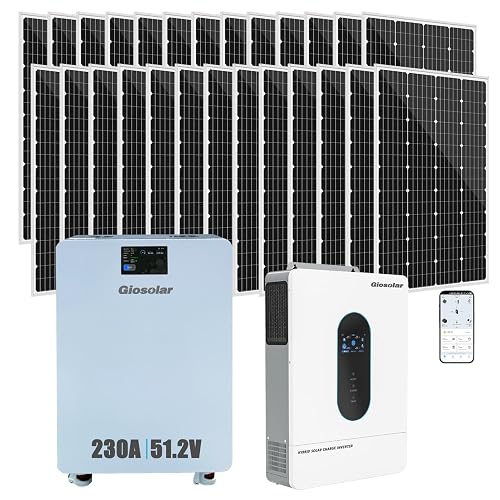 Best for high-output hybrid use12000W Solar Power System Kit: 12KW 48V Split Phase Hybrid Solar InverView on Amazon
- 6
 Best for RV and small cabins4PCS 195W Solar Panels, 3000W UPS Inverter Charger, 2PCS 12.8V 280AH LView on Amazon
- 7
 Best for a 15kWh whole-home systemExpertPower 15KWH 5400W 51.2V Solar Power System Kit | LiFePO4 51.2V 3View on Amazon
Our Top Picks
| Product | Best for | Key feature |
|---|---|---|
| ECO-WORTHY Whole House System 10KW | Whole-house backup | 10kW split-phase inverter |
| ECO-WORTHY 10KW Off Grid Kit | Mid-size homes | 9.36kWh lithium storage |
| 3000W 24V Complete Kit | Small homes, backup | 5.12kWh battery, MPPT controller |
| ECO-WORTHY Powermega 48V 314Ah | Expandable storage | Built-in Bluetooth and WiFi |
| 12000W Solar Power System Kit | High-output hybrid use | Dual 200A MPPT controllers |
| ECO-WORTHY 7.168KWH 800W Kit | RVs and small cabins | Bluetooth MPPT controller |
| ExpertPower 15KWH 5400W Kit | Whole-home off-grid | 15kWh LiFePO4 storage |
ECO-WORTHY Whole House System:10KW 120V/240V Split Phase Solar Inverter| 48V 314Ah 16kWh High Capacity Energy Storage
Whole House System:10KW 120V/240V Split Phase Solar Inverter| 48V 314Ah 16kWh High Capacity Energy Storage| 2950W Solar Panel ECO WORTHY 10000W Output Complete Off-Grid Solar Panel Kit for Home
Best for: Whole-house backup with high storage capacity.
This kit suits homeowners who want to run most household circuits, including heating and cooling loads, without grid power. It pairs a 10kW split-phase inverter with a 16kWh battery bank. We also found Types of Home Solar Systems: Grid-Tied, Hybrid, Off-Grid useful on this point.
Pros
- Split-phase 120V/240V output supports standard US household wiring.
- Large 16kWh storage covers long overnight and cloudy-day periods.
Cons
- Installation typically requires a licensed electrician for permitting.
Solar Panel Kit:12PCS 195W Solar Panels(2340W)+2PCS 48V 100AH Cubix Lithium Battery(10.24kWh)+10KW Solar Inverter 120V/240V ECO-WORTHY 10KW Output 9.36KWH Off Grid Solar System Complete Kit for Home
Solar Panel Kit:12PCS 195W Solar Panels(2340W)+2PCS 48V 100AH Cubix Lithium Battery(10.24kWh)+10KW Solar Inverter 120V/240V ECO-WORTHY 10KW Output 9.36KWH Off Grid Solar System Complete Kit for Home
Best for: A mid-size home with moderate daily use.
Owners with a home of average size who want a balanced mix of panel array and battery storage will find this kit a good fit. The 2340W array feeds 10.24kWh of lithium batteries. A related read: 6 Best Solar Panel Kit Off-Grid Systems for Homes (2026).
Pros
- Two 48V 100Ah batteries offer 10.24kWh of usable-class capacity.
- Complete kit reduces the number of parts to source separately.
Cons
- The 2340W array may fall short in consistently cloudy regions.
3000W 24V Solar Power System Complete Kit with 1440W (12×120W) Solar Panel 3KW Peak 6KW Pure Sine Wave Inverter, 5.12KWH Battery
3000W 24V Solar Power System Complete Kit with 1440W (12×120W) Solar Panel 3KW Peak 6KW Pure Sine Wave Inverter, 5.12KWH Battery,PV Combiner Box,MPPT Solar Controller,Off-Grid Home RV Backup
Best for: Small homes and backup-only use.
This 24V system fits smaller homes, backup circuits and off-grid cabins where loads are modest. The pure sine wave inverter is suited to sensitive electronics. Worth reading next: 7 Best Off Grid Solar System 5 kW Kits for Homes (2026).
Pros
- Pure sine wave output is compatible with most household electronics.
- Includes a combiner box and MPPT controller in the kit.
Cons
- The 5.12kWh battery bank limits runtime for larger loads.
ECO-WORTHY Powermega 48V 314Ah UL1973 LiFePO4 Energy Storage System with Liber 10KP 10kW Hybrid Inverter
ECO-WORTHY Powermega 48V 314Ah UL1973 LiFePO4 Energy Storage System with Liber 10KP 10kW Hybrid Inverter, Active Balancing BMS, Battery Built-in Bluetooth&WiFi, Communication for Home Backup, Off-Grid
Best for: Expandable storage and remote monitoring.
Buyers who expect to add capacity later or want to monitor battery state from a phone will find this option useful. The UL1973-listed battery is a recognized safety standard for stationary storage.
Pros
- Built-in Bluetooth and WiFi allow remote status checks.
- Active balancing BMS helps keep cells matched over time.
Cons
- Requires a separate panel array, which increases total setup cost.
Buying Guide
Daily energy use and storage capacity
Start by estimating how many kilowatt-hours your home uses in a typical day, then check how much of that your battery bank can cover overnight or during cloudy stretches. Kits with larger battery capacity, such as the 16kWh and 15kWh options, suit full-time off-grid homes, while smaller packages work better for cabins, RVs or backup use during outages.
Inverter size and surge capacity
The inverter must handle your peak load, not just your average use. Look at the continuous wattage rating and the surge rating, since well-sized inverters can run well pump, air conditioner or power tool startups without tripping. Split-phase 120V/240V inverters are the usual choice for whole-house service and large appliances.
Solar array output
Panel wattage determines how quickly the battery recharges, especially in winter or on overcast days. Compare total array wattage against your storage size, and make sure the charge controller or MPPT rating can handle the panel voltage and current the kit provides.
Battery chemistry and built-in safety features
Most current systems use lithium iron phosphate (LiFePO4) batteries, which offer long cycle life and stable chemistry. Check for a battery management system with cell balancing and protections against overcharge, overheating and short circuits, and look for listings such as UL1973 when safety certification matters to you.
Expandability and monitoring
If your energy needs may grow, choose a system that allows you to add batteries or panels later. Features like Bluetooth or WiFi monitoring make it easier to track production, state of charge and fault alerts from your phone.
FAQ
How much battery storage do I need for an off-grid home?
Storage needs depend on your daily kilowatt-hour use and how many days of backup you want during poor weather. A common approach is to multiply your average daily use by the number of backup days you want, then add some margin for battery aging and depth-of-discharge limits.
Can these kits power a whole house, including large appliances?
Whole-house kits with 10kW or larger split-phase inverters are designed to run most household circuits, but heavy loads like electric dryers, electric ranges and central air conditioning may need careful planning. Calculate your peak running load and surge requirements before buying, and consider a load management plan if you rely on high-draw appliances.
Do I need a licensed electrician to install an off-grid solar system?
Many local codes require a licensed electrician for permanent installations, especially when connecting to your home’s main electrical panel. Even if a kit is designed for DIY setup, having a professional review wiring, grounding and inverter integration can prevent costly mistakes and help with inspections.
How long do lithium batteries in these systems typically last?
LiFePO4 batteries are generally rated for thousands of charge cycles, and actual lifespan depends on temperature, depth of discharge and charging habits. Keeping the battery within the manufacturer’s recommended temperature range and avoiding frequent deep discharges will help it last longer.
Are these systems suitable for RVs and cabins as well as homes?
Yes, smaller kits in the lower-wattage range are well suited to RVs, cabins and occasional-use properties where loads are lighter. Matching the system to actual daily needs keeps costs reasonable and avoids paying for capacity you will not use.
Conclusion
If you need to power an entire home off the grid, the larger whole-house kits with high-capacity storage and split-phase inverters are the best fit. Households with moderate energy use or a desire for a simpler setup may find the mid-size packages more practical and affordable.
For cabins, RVs and light backup duty, the smaller 24V and 48V kits offer a manageable starting point that can be expanded over time. Match the system’s storage, inverter output and panel array to your real daily usage to get the best balance of performance and value.
Related reading
- Off-grid Solar System Packages with Batteries and Generator Backup: A Practical Guide (2026)
- Top 5 Off Grid Solar PV Systems with Battery Options Compared for Homes
- Top 3 Off Grid Solar System Battery Bank Options Compared for Homes
- Off-grid Solar System Packages with Batteries Australia: A Practical Guide (2026)
- Off-Grid, Backup and Hybrid Solar Systems: How They Differ
About Claire Whitaker
Claire Whitaker is part of our editorial team and reviews and edits our DIY solar power systems guides, checking product details against manufacturer specifications and owner feedback.


