 By Claire Whitaker
Updated November 2026
Choosing a 48v hybrid solar inverter comes down to matching continuous output, surge rating, MPPT charge capacity and battery chemistry to your home’s loads. The picks below were compiled from manufacturer specifications, product listings and common owner feedback, not from any hands-on testing. Each is judged on output size, built-in charge controller strength, parallel expansion and safety features.
Our top picks at a glance
- 1
 TOP CHOICEBest overall3600W Hybrid Solar Inverter 48VView on Amazon
- 2
 TOP CHOICEBest for larger homesInversor 5500W Hybrid Solar Inverter 48VView on Amazon
- 3
 TOP CHOICEBest for lithium and lead-acid flexibility5500W Hybrid Inverter 48VView on Amazon
- 4
 Best for split-phase 240V servicePOWLAND 12000W Hybrid Solar InverterView on Amazon
- 5
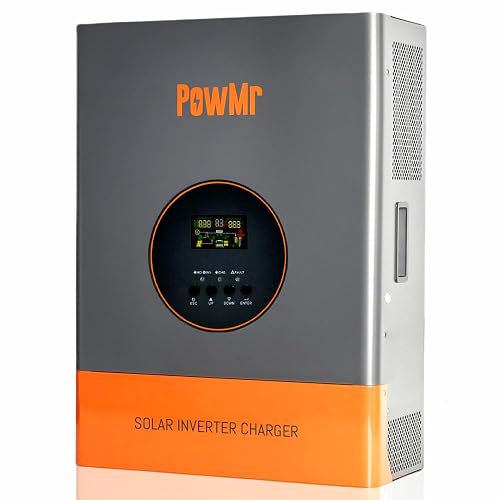 Best for mid-size off-grid cabinsPowMr 5000W Hybrid Solar Inverter 48VDCView on Amazon
- 6
 Best for high-current battery chargingSUNGOLDPOWER 10000W 48V Solar Hybrid Inverter, Built-in 2 MPPT Solar CView on Amazon
- 7
 Best for dual-MPPT arraysPure Sine Wave, Dual MPPT 6300W Hybrid Solar Inverter 48VView on Amazon
Our Top Picks
Quick Comparison
| Product | Best for | Key feature |
|---|---|---|
| 3600W Hybrid Solar Inverter 48V | Overall balance | Built-in 80A MPPT |
| Inversor 5500W Hybrid Solar Inverter 48V | Larger homes | 100A MPPT, 8500W PV input |
| 5500W Hybrid Inverter 48V | Lithium and lead-acid flexibility | LiFePO4 and lead-acid support |
| POWLAND 12000W Hybrid Solar Inverter | Split-phase 240V service | Dual 200A MPPT, parallel up to 6 |
| PowMr 5000W Hybrid Solar Inverter 48VDC | Mid-size cabins | 120A MPPT, 15000W peak |
| SUNGOLDPOWER 10000W 48V Solar Hybrid Inverter | High-current battery charging | 200A battery charging, WiFi |
| Pure Sine Wave Dual MPPT 6300W Hybrid Solar Inverter 48V | Dual-MPPT arrays | Two independent MPPT inputs |
3600W Hybrid Solar Inverter 48V
3600W Hybrid Solar Inverter 48V,Built in 80A MPPT Solar Charger 300VDC,Support Parallel(6 Units) Pure Sine Wave Off-Grid+On-Grid Inverter with WiFi for Home Loads,Lead Acid/Lithium Battery Compatible
Best for: Overall balance of output, charge capacity and expandability
Suited to small-to-medium off-grid homes with moderate daytime loads and a single array. Listings describe parallel support for up to six units, which helps if loads grow later.
Pros
- Built-in 80A MPPT charger handles a sizable array
- Supports both lithium and lead-acid batteries
Cons
- 3600W continuous output may be tight for all-electric homes
Inversor 5500W Hybrid Solar Inverter 48V
Inversor Built in 100A MPPT Charger,Max. PV Input 8500W 500Vdc, Off Grid Inverter, for Lead Acid/LiFePO4,Home Backup 5500W Hybrid Solar Inverter,48V DC to 110/120V AC,Pure Sine Wave
Best for: Larger homes needing 5500W output
Fits households running well-HVAC-sized loads from a 48V battery bank. The 100A MPPT and 8500W PV input rating leave room for a sizable solar array.
Pros
- High PV input rating for larger arrays
- Pure sine wave output suits sensitive electronics
Cons
- Listing offers limited detail on parallel configuration
5500W Hybrid Inverter 48V
Supports LiFePO4 & Lead‑Acid Batteries. Multi‑Layer Safety Protection, LCD Display, Enables No‑Battery PV Direct Operation 5500W Hybrid Inverter 48V 110/120V AC Built‑in 100A MPPT Home Backup
Best for: Lithium and lead-acid flexibility
Works for owners who may switch battery chemistry or start with lead-acid and upgrade later. The LCD display and layered protection features appeal to hands-on builders.
Pros
- Compatible with LiFePO4 and lead-acid batteries
- LCD display shows operating status
Cons
- Built-in 100A MPPT may limit very large arrays
POWLAND 12000W Hybrid Solar Inverter
POWLAND 12000W Hybrid Solar Inverter with WiFi | Battery-Free Design | 48V DC to 120V/240V AC Split Phase |Built-in Dual 200A MPPT |Parallel 6 Units,Works with 48V LiFePO4/Lead Acid Batteries, UL1741
Best for: Split-phase 240V service
Aimed at homes that need 120V/240V split-phase output for large appliances and well pumps. Dual 200A MPPT inputs and parallel support target bigger builds.
Pros
- Split-phase 120V/240V output
- Dual 200A MPPT inputs
Cons
- Requires a substantial battery bank and careful wiring
PowMr 5000W Hybrid Solar Inverter 48VDC
PowMr 5000W Hybrid Solar Inverter 48VDC to 110/220VAC, 5kW Off-Grid w/Built-in 120A MPPT Charge Controller, Pure Sine Wave Inverter for 48V Lead-Acid and Lithium Battery, Peak Power:15000W
Best for: Mid-size off-grid cabins
A practical match for cabins or workshops with 5kW-class loads. The 120A MPPT charger and high peak rating cover motor starting surges.
Pros
- 120A built-in MPPT charge controller
- 15000W peak rating for motor starts
Cons
- Peak ratings are short-duration; plan continuous loads at 5kW
Buying Guide
Continuous Output and Surge Rating
Start by adding up the wattage of the appliances you expect to run at the same time, such as a well pump, refrigerator, lights and a microwave. Choose an inverter whose continuous rating covers that total with some room to spare, and check that the surge rating can handle the brief spike motors draw when they start.
Built-In MPPT Charge Controller Capacity
The MPPT charger determines how quickly your battery bank can be recharged from solar panels. Look at the maximum charging current and the maximum PV input voltage and wattage, and make sure your panel array fits within those limits. A larger MPPT rating gives you more flexibility when you add panels later.
Battery Chemistry Compatibility
Confirm that the inverter supports the battery type you plan to use, whether lead-acid, LiFePO4 or both. Lithium batteries often need a compatible communication port or BMS connection, so check whether the inverter offers that feature if you choose lithium.
Parallel Expansion Options
If your power needs may grow, consider whether the inverter can be paralleled with additional units. This lets you increase total output and battery charging capacity over time without replacing your original equipment.
Safety Features and Monitoring
Protections such as overload, over-temperature, short-circuit and battery undervoltage shutdown help keep your system safe. Features like an LCD display or WiFi monitoring make it easier to track performance and spot problems early.
FAQ
Can a 48V hybrid solar inverter run without batteries?
Some models support direct PV operation, which lets solar panels power your loads during daylight without a battery connected. However, a battery is still needed for nighttime use and to keep power steady during cloudy periods. Check the product specifications to confirm whether battery-free operation is supported.
How many solar panels do I need for a 48V inverter?
The number of panels depends on your daily energy use, your location’s sunlight hours and the panel wattage you choose. Calculate your daily watt-hour needs first, then size the array so it can produce enough energy after accounting for system losses. The inverter’s maximum PV input limit should also be respected.
What is the difference between pure sine wave and modified sine wave output?
Pure sine wave output produces clean electricity similar to what comes from the utility grid, which is safer for sensitive electronics, motors and medical equipment. Modified sine wave output is cheaper but can cause noise, overheating or malfunction in some devices. For most off-grid homes, pure sine wave is the better choice.
Can I connect two inverters together for more power?
Many 48V hybrid inverters support parallel operation, allowing multiple units to share loads and combine their output. Parallel setups require matching models, proper wiring and a shared battery bank. Always follow the manufacturer’s instructions for parallel installation.
Do I need a professional to install a 48V hybrid inverter?
Installation involves high-current DC battery connections, AC wiring and grounding, which carry real safety risks. Many homeowners hire a licensed electrician, especially when connecting to a home’s existing wiring. Local codes and permit requirements should also be checked before installation.
Conclusion
Homeowners with modest loads and a smaller solar array will find the 3600W model a practical starting point, while those powering larger appliances or planning future expansion should look at the 5500W, 12000W or 10000W options. Buyers focused on the most charging power from their panels may prefer models with stronger MPPT ratings, and those wanting a budget-friendly entry point can consider the PowMr or 6300W units.
Related reading
- 3 Best Sumry Hybrid Solar Inverter 4000W Options for Off-Grid Homes
- Top 4 Off Grid Solar System 230V Inverters Compared for Homes
- Solar Sizing Formulas for Loads, Batteries and Inverters
- Solar Power Inverter Size: How to Calculate the Right Rating (2026)
- Solar Power Inverter Manufacturer: How to Evaluate One Before You Buy
- Solar Power Inverter Installation: A Step-by-Step Guide for DIY Builders
About Claire Whitaker
Claire Whitaker is part of our editorial team and reviews and edits our DIY solar power systems guides, checking product details against manufacturer specifications and owner feedback.


