 By Graham Fisher
Updated November 2026
Shopping for a wanderer solar charge controller means matching regulator output to your battery voltage, panel array size, and the features you actually need, like Bluetooth monitoring or a remote display. This list compares six models by fit for common DIY setups, with the selection criteria being rated charge current, supported battery chemistries, MPPT versus PWM design, and owner feedback on setup and reliability.
Our top picks at a glance
- 1
 TOP CHOICEBest overallVictron Energy SmartSolar MPPT Solar Charge Controller 100V, 50A, 12/24VView on Amazon
- 2
 TOP CHOICEBest for small 12V systemsRenogy Rover 30A 12V/24V Auto DC Input MPPT Solar Charge ControllerView on Amazon
- 3
 TOP CHOICEBest for mid-size arraysRenogy 60A MPPT Solar Charge Controller 12V/24V/36V/48V AutoView on Amazon
- 4
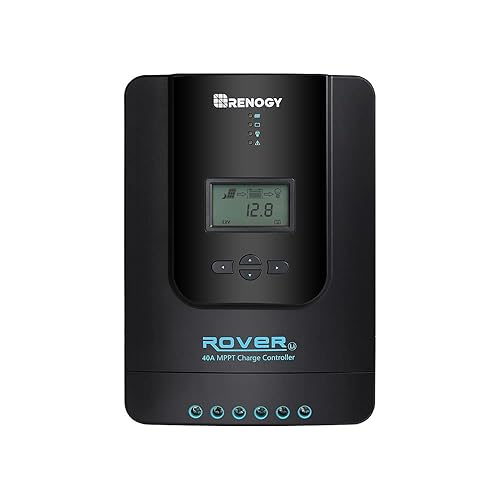 Best for 12V and 24V builds with a 40A needRenogy Solar Charge Controller Rover 40A 12V24V Auto Parameter MPPTView on Amazon
- 5
 Best for remote monitoringVictron Energy MPPT Solar Charge Controller L181 Remote ConfigurationView on Amazon
- 6
 Best for compact 15A loadsVictron Energy BlueSolar MPPT Solar Charge Controller 75V 15AView on Amazon
Our Top Picks
| Product | Best for | Key feature |
|---|---|---|
| Victron Energy SmartSolar MPPT 100V 50A | Best overall | Bluetooth monitoring, 100V input |
| Renogy Rover 30A MPPT | Small 12V systems | LCD display, auto voltage |
| Renogy Rover Lite 60A MPPT | Mid-size arrays | 150V max solar input |
| Renogy Rover 40A MPPT | 12V and 24V builds | Adjustable battery parameters |
| Victron Energy MPPT (L181) | Remote monitoring | Remote configuring and monitoring |
| Victron Energy BlueSolar MPPT 75V 15A | Compact 15A loads | 75V input, 12/24V |
Victron Energy SmartSolar MPPT Solar Charge Controller 100V, 50A, 12/24V
Victron EnergyBluetooth Charge Controllers for Solar Panels, Certified to UL1741 SmartSolar MPPT Solar Charge Controller 100V, 50A, 12/24V
Best for: Best overall
This suits builders who want a high-voltage input and phone-based monitoring for a system that may grow later.
Pros
- Bluetooth monitoring for live charge data
- 100V input allows longer panel strings
Cons
- Higher output than small systems need
Renogy Rover 30A 12V/24V Auto DC Input MPPT Solar Charge Controller
Renogy Rover 30A 12V/24V Auto DC Input MPPT Solar Charge Controller Parameter Adjustable LCD Display Solar Panel Regulator fit for Gel Sealed Flooded and Lithium Battery, Rover 30A,Black
Best for: Best for small 12V systems
A fit for weekend cabins, sheds, and small camper setups running a single 12V battery bank.
Pros
- LCD display shows charge status at a glance
- Adjustable parameters for gel, flooded, and lithium batteries
Cons
- 30A ceiling limits array size
Renogy 60A MPPT Solar Charge Controller 12V/24V/36V/48V Auto
Renogy 60A MPPT Solar Charge Controller 12V/24V/36V/48V Auto, 150V Maximum Solar Input, for Gel Sealed Flooded and Lithium Battery, Rover Lite 60A
Best for: Best for mid-size arrays
Works for builders stepping up to a larger array who want 12V through 48V compatibility in one unit.
Pros
- Supports 12V, 24V, 36V, and 48V systems
- 150V maximum solar input
Cons
- Needs careful wire sizing at 60A output
Renogy Solar Charge Controller Rover 40A 12V24V Auto Parameter MPPT
Renogy Solar Charge Controller Rover 40A 12V24V Auto Parameter DC Input MPPT Charge Controllers for Solar Panels Adjustable LCD for Gel Sealed Flooded Lithium Battery
Best for: Best for 12V and 24V builds with a 40A need
A practical middle option for off-grid cabins where 30A feels tight and 60A is more than needed.
Pros
- Adjustable LCD for battery type settings
- Auto 12V and 24V detection
Cons
- Owners often report a learning curve on parameter menus
Victron Energy MPPT Solar Charge Controller L181 Remote Configuration
Controllers for Solar Panels L181 Victron Energy MPPT Control – Remote configuring and monitoring
Best for: Best for remote monitoring
Suited to installs where the controller sits out of reach, such as a barn or a rooftop enclosure.
Pros
- Remote configuring and monitoring
- Brand known for detailed charge data
Cons
- Requires added accessories for remote links
Victron Energy BlueSolar MPPT Solar Charge Controller 75V 15A
Charge Controllers for Solar Panels, Certified to UL1741 Victron Energy BlueSolar MPPT Solar Charge Controller 75V, 15A, 12/24V
Best for: Best for compact 15A loads
A good match for small lighting, pump, or charging loads where a full-size controller would be oversized.
Pros
- 75V input for flexible string design
- Works with 12V and 24V banks
Cons
- 15A output is limited for larger arrays
Buying Guide
Match charge current to your array
Divide total panel wattage by battery voltage to estimate amps, then add a margin. Manufacturers specify rated output, so choose a unit with headroom above that number.
Check battery chemistry support
Lead-acid, gel, and lithium batteries need different charge profiles. Confirm the controller lets you set or select your battery type.
FAQ
What size charge controller do I need for my solar array?
Add up the wattage of your panels and divide by your battery bank voltage to estimate the amperage the controller must handle. Choose a unit rated above that figure so it has headroom for hot days and bright sun. Staying within the manufacturer’s maximum solar input voltage is just as important as the amp rating.
Is an MPPT controller better than a PWM controller for DIY systems?
MPPT controllers track the panel’s maximum power point and usually harvest more energy, especially when panel voltage is well above battery voltage. PWM controllers are simpler and cost less, but they work best when the panel and battery voltages closely match. For most mid-sized DIY builds, MPPT is the more efficient choice.
Can I use a charge controller with lithium batteries?
Many modern controllers support lithium chemistries, but you should confirm that the charging profile matches your specific battery. Lithium batteries need different absorption and float voltages than lead-acid types. Check the settings menu or app to make sure you can select or customize the correct battery type.
Do I need Bluetooth or a remote display?
These features are optional but very helpful for monitoring battery state, daily yield, and fault codes without climbing up to the controller. A built-in LCD is convenient for quick checks, while Bluetooth or remote monitoring lets you track performance from your phone. If your system is in a hard-to-reach spot, remote access is worth the extra cost.
Can I connect more than one charge controller to a single battery bank?
Yes, you can run multiple controllers in parallel to increase charging capacity, as long as each one is properly wired to the battery bank and configured with the same battery settings. Make sure the total array and controller ratings stay within safe limits. Consult the manufacturer’s guidance for parallel installations to avoid imbalanced charging.
Where should I mount a charge controller?
Mount the controller in a dry, ventilated location close to the battery bank but away from direct heat sources. Keep wire runs short to reduce voltage drop, and use appropriately sized fuses or breakers. Good airflow helps the unit stay cool and deliver its full rated output.
Conclusion
For larger DIY systems that need high current and remote monitoring, the Victron SmartSolar 50A and the Victron MPPT with remote configuration are strong options. Mid-sized builds with a 12V or 24V battery bank will generally find the Renogy 30A, 40A, or 60A Rover models a practical balance of features and value, with the 60A unit suited to higher-voltage arrays.
Smaller setups, such as a compact van or a modest off-grid shed, can get good results from the Victron BlueSolar 15A, which is simple to install and easy to manage. Match the controller’s amperage, voltage limits, and battery chemistry to your own system before you buy, and the right choice will be clear.
Related reading
- Top 6 MPPT Solar Charge Controllers for Lithium Batteries Compared
- Top 5 Rich Solar Charge Controllers Compared for DIY Systems
- Top 5 Mppt Solar Charge Controller 12v Options Compared for DIY Systems
- Top 5 40amp MPPT Solar Charge Controllers Compared for DIY Systems
- Solar Charge Controller Repair: A Step-by-Step Guide for DIY Builders
- Solar Charge Controller Lithium Ion: How to Choose and Wire One (Step-by-Step)
About Graham Fisher
Graham Fisher is part of our editorial team and reviews and edits our DIY solar power systems guides, checking product details against manufacturer specifications and owner feedback.


