 By Claire Whitaker
Updated November 2026
Shoppers looking for a wholesale solar panel kit usually want more capacity for less money per watt, but the cheapest-looking bundle is not always the best value once you add up inverters, batteries, mounts and cable. This list compares seven complete kits on the criteria that matter most for DIY installs: total panel wattage, inverter output and voltage, battery capacity and chemistry, charge controller type, and how well each kit suits a specific use such as an RV, a cabin, a shed or a full home backup system. Specifications below come from manufacturer listing names and published component types, and owner feedback patterns were considered where they were consistent.
Our top picks at a glance
- 1
 TOP CHOICEBest overallECO-WORTHY 10000W Output Complete Off-Grid Solar Panel Kit for HomeView on Amazon
- 2
 TOP CHOICEBest for small RV buildsECO-WORTHY 200 Watts 12 Volt/24 Volt Solar Panel KitView on Amazon
- 3
 TOP CHOICEBest budget pickZOUPW 220 Watt Solar Panel Kit for 12V/24V BatteryView on Amazon
- 4
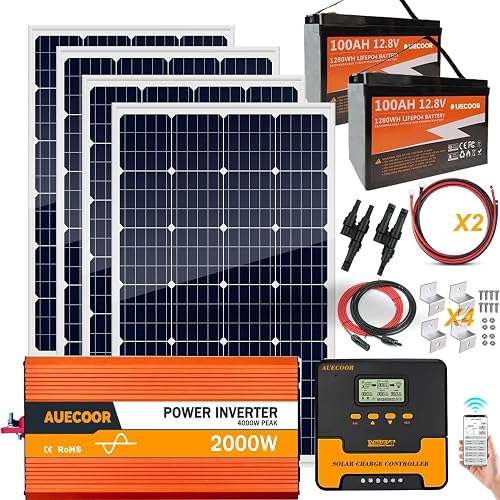 Best for camper and trailer power92KWH Complete Solar Panel Kit for RV Off Grid Solar SystemView on Amazon
- 5
 Best for battery maintenance100W Solar Panel Kit 12V Battery MaintainerView on Amazon
- 6
 Best mid-size home systemECO-WORTHY 1170W Solar Panel Kit Complete System 48V 3500W OutputView on Amazon
- 7
 Best for large home backupSolar Panel Kit 12PCS 195W Solar Panels 10KW Off Grid SystemView on Amazon
Our Top Picks
Quick Comparison
| Product | Best for | Key feature |
|---|---|---|
| ECO-WORTHY 10000W Output Complete Off-Grid Solar Panel Kit for Home | Full home off-grid power | 10 kW split-phase 120V/240V inverter with 32.2 kWh storage |
| ECO-WORTHY 1170W Solar Panel Kit Complete System 48V 3500W Output | Mid-size home or workshop | 48V 3500W inverter with 2.56 kWh lithium battery |
| ECO-WORTHY 200 Watts 12 Volt/24 Volt Solar Panel Kit | Small RV and camper use | Selectable 12V/24V system with 30A PWM controller |
| ZOUPW 220 Watt Solar Panel Kit for 12V/24V Battery | Budget battery charging | Two 110W panels with 30A LCD PWM controller |
| 1.92KWH Complete Solar Panel Kit for RV Off Grid Solar System | Trailers, campers and marine | 2x100Ah 12.8V batteries with 2000W inverter and MPPT controller |
| 100W Solar Panel Kit 12V Battery Maintainer | Keeping a battery topped off | 20A charge controller with 16.4 ft extension cables |
| Solar Panel Kit 12PCS 195W Solar Panels 10KW Off Grid System | Large home backup | 2340W array with 9.36 kWh battery and 10 kW inverter |
ECO-WORTHY 10000W Output Complete Off-Grid Solar Panel Kit for Home
ECO-WORTHY 10000W Output Complete Off-Grid Solar Panel Kit for Home| 10KW 120V/240V Output Split Phase Inverter| 2pcs 48V 314Ah 32.2kWh High Capacity Energy Storage| 10620 Watts Solar Panel PV
Best for: Full home off-grid power with the highest capacity in this list
This kit suits homeowners who want to run most household loads from solar and storage, including those planning a whole-house backup. It is a large system and needs careful sizing and a qualified electrician for the main panel connection.
Key specs
- 10 kW inverter output, 120V/240V split phase
- Two 48V 314Ah batteries, about 32.2 kWh total storage
- Approximately 10,620 W of solar PV capacity
Pros
- Split-phase output supports standard US household wiring
- Very large storage capacity for extended outages
- Covers the full array, inverter and battery in one package
Cons
- Heavy battery packs require two people and proper lifting
- Overkill for cabins or RVs with modest loads
Bottom line: Best for homeowners planning a serious off-grid or whole-home backup system with professional help available.
ECO-WORTHY 1170W Solar Panel Kit Complete System 48V 3500W Output
6PCS 195W N-Type Bifacial Solar Panel(1170W)+48V 50Ah Lithium Battery(2.56kWh)+48V 3500W Solar Inverter+Solar Cables&Mounts ECO-WORTHY 1170W Solar Panel Kit Complete System 48V 3500W Output
Best for: Mid-size home or workshop needing a balanced system
This kit fits users who want real household capacity without the scale of a 10 kW system. It works well for a garage workshop, a guest cottage or a home that wants partial backup.
Key specs
- Six 195W N-type bifacial panels, 1170W total
- 48V 50Ah lithium battery, about 2.56 kWh
- 48V 3500W solar inverter
Pros
- Higher 48V architecture reduces current and cable losses
- Bifacial panels can gain output from reflected light on suitable mounts
- Includes cables and mounts in the listing
Cons
- Battery capacity is modest for full-time home use
- Bifacial gain depends heavily on mounting height and ground surface
Bottom line: A sensible middle option for people outgrowing a small RV kit but not ready for a full home system.
ECO-WORTHY 200 Watts 12 Volt/24 Volt Solar Panel Kit
ECO-WORTHY 200 Watts 12 Volt/24 Volt Solar Panel Kit with High Efficiency Monocrystalline Solar Panel and 30A PWM Charge Controller for RV, Camper, Vehicle, Caravan and Other Off Grid Applications
Best for: Small RV, camper and vehicle use
This is a classic entry kit for people who want to keep a 12V battery charged while camping, boating or living in a small vehicle. Its 12V/24V selectable design gives flexibility across common battery banks.
Key specs
- 200W total monocrystalline panel array
- 12V and 24V system compatibility
- 30A PWM charge controller
Pros
- Monocrystalline panels are a well-established, efficient type
- Works across both 12V and 24V battery systems
- Straightforward plug-and-play setup for beginners
Cons
- PWM controllers are less efficient than MPPT in cold or low-light conditions
- No inverter included, so AC loads need a separate unit
Bottom line: A good first kit for RV owners who mainly need battery charging for lights, pumps and fans.
ZOUPW 220 Watt Solar Panel Kit for 12V/24V Battery
ZOUPW 220 Watt Solar Panel Kit for 12V/24V Battery, 2Pcs 110W 25% High-Efficiency Monocrystalline PV Module Power Charger with 30A LCD PWM Charge Controller for Off-Grid RV Marine Boat Rooftop
Best for: Budget battery charging on a 12V or 24V system
This kit is aimed at shoppers who want two modest panels and a simple controller for charging a battery bank. It suits boats, sheds and small rooftop applications.
Key specs
- Two 110W monocrystalline panels, 220W total
- 30A LCD PWM charge controller
- Compatible with 12V and 24V batteries
Pros
- Simple two-panel layout is easy to mount
- LCD controller shows battery and charging status
- Suitable for marine and rooftop use
Cons
- No battery or inverter included
- PWM controller limits harvest compared with MPPT designs
Bottom line: A practical choice for budget-minded buyers who already have batteries and need a charging source.
1.92KWH Complete Solar Panel Kit for RV Off Grid Solar System
1.92KWH Complete Solar Panel Kit for RV Off Grid Solar System |2x100Ah 12.8V Batteries 2560WH| 4x120W Mono Rigid Solar Panels |2000W Power Inverter|MPPT Controller|Trailer, Camper, Marine
Best for: Trailers, campers and marine systems that need AC power
This kit combines panels, batteries, an inverter and an MPPT controller, which makes it more complete than a charging-only kit. It is aimed at people who want to run small AC appliances away from hookups.
Key specs
- Four 120W monocrystalline rigid panels
- Two 100Ah 12.8V batteries, 2560Wh total
- 2000W power inverter with MPPT controller
Pros
- MPPT controller generally harvests more energy than PWM
- Includes inverter for AC appliances
- Rigid panels suit fixed roof mounting
Cons
- 2000W inverter cannot run high-draw appliances like large heaters
- Total storage is limited for multi-day off-grid use
Bottom line: Well suited to RV owners who want AC capability for laptops, fans and small appliances.
100W Solar Panel Kit 12V Battery Maintainer
Monocrystalline, with 20A Solar Charge Controller +16.4Ft Extension Cables for RV Marine Boat Off Grid System 100W Solar Panel Kit 12V Battery Maintainer
Best for: Keeping a 12V battery topped off in storage
This smaller kit is meant for trickle charging and maintenance rather than powering loads. It suits seasonal vehicles, boats and equipment that sit unused for long periods.
Key specs
- 100W monocrystalline panel
- 20A solar charge controller
- 16.4 ft extension cables
Pros
- Long extension cable helps with panel placement
- Compact footprint for small spaces
- Appropriate for maintaining a battery between uses
Cons
- Output is too small for running appliances
- Not designed for expanding into a larger system
Bottom line: A focused maintenance kit for people who only need to keep a single battery healthy.
Solar Panel Kit 12PCS 195W Solar Panels 10KW Off Grid System
Solar Panel Kit:12PCS 195W Solar Panels(2340W)+2PCS 48V 100AH Cubix Lithium Battery(10.24kWh)+10KW Solar Inverter 120V/240V ECO-WORTHY 10KW Output 9.36KWH Off Grid Solar System Complete Kit for Home
Best for: Large home backup with a high-capacity array
This is the largest array in the list, pairing twelve 195W panels with a 10 kW inverter and about 9.36 kWh of lithium storage. It targets homes with substantial daily consumption and space for a big roof or ground array.
Key specs
- Twelve 195W panels, 2340W total
- Two 48V 100Ah lithium batteries, about 10.24 kWh listed
- 10 kW solar inverter, 120V/240V output
Pros
- Substantial array capacity for daily energy needs
- Split-phase inverter output suits US homes
- Scalable design for a complete home setup
Cons
- Requires a large mounting area and significant roof or ground space
- Installation should involve a licensed electrician and permit review
Bottom line: Best for homeowners with the space, budget for professional installation and a real need for daily off-grid energy.
Buying Guide
Total panel wattage and array size
Start with your daily energy use in watt-hours. A common rule of thumb is to multiply daily consumption by 1.3 to allow for system losses, then divide by about 4 to 5 peak sun hours to estimate the panel wattage you need. For example, a cabin using 3 kWh per day would need roughly 3,900 Wh divided by 4.5 hours, or about 870W of panels. Check that the kit’s array matches that estimate before you compare prices across listings.
Good picks for this: ECO-WORTHY 1170W Solar Panel Kit; ECO-WORTHY 10000W Output Complete Off-Grid Solar Panel Kit
Inverter output and voltage
Add up the running watts of every appliance you plan to power at the same time, and confirm the inverter’s continuous rating covers that total with margin. Surge ratings matter for motors and compressors. Split-phase 120V/240V output is what most US homes use, while 12V systems mainly serve DC loads in vehicles and boats.
Good picks for this: Solar Panel Kit 12PCS 195W with 10KW inverter; 1.92KWH Complete Solar Panel Kit for RV
Battery capacity and chemistry
Battery capacity is usually listed in amp-hours at a nominal voltage, so multiply to get watt-hours. A 100Ah 12.8V battery is about 1,280 Wh. Lithium iron phosphate batteries typically tolerate deeper discharge and more cycles than lead-acid, but check the stated usable capacity, not just the nominal number.
Good picks for this: 1.92KWH Complete Solar Panel Kit; ECO-WORTHY 1170W Solar Panel Kit
Charge controller type
PWM controllers are simpler and less costly, but MPPT controllers usually extract more power from the panels, especially when the array voltage is well above the battery voltage or when temperatures are cold. Look at the controller rating in amps and make sure it can handle the array’s short-circuit current.
Good picks for this: ZOUPW 220 Watt Solar Panel Kit (PWM); 1.92KWH Complete Solar Panel Kit (MPPT)
Panel type and efficiency
Monocrystalline panels are a widely used type with generally high efficiency per square foot. Bifacial panels can capture some reflected light from the back, but their gain depends on mounting height, tilt and the reflectivity of the surface beneath them. Rigid panels mount more permanently than flexible ones and tend to last longer on roofs.
Good picks for this: ECO-WORTHY 1170W Solar Panel Kit; ECO-WORTHY 200 Watts 12 Volt/24 Volt Solar Panel Kit
Mounting, cabling and wire gauge
Voltage drop on long runs is a common installation problem. Keep runs short where possible and size conductors for the current, not just the wattage. Confirm that the kit includes the mounts, cables and connectors you need, and check whether extension cables are long enough for your layout. Use UV-rated outdoor cable and weatherproof connectors for exposed runs.
Good picks for this: 100W Solar Panel Kit 12V Battery Maintainer (16.4 ft extension cables); ECO-WORTHY 1170W Solar Panel Kit (cables and mounts included)
Use case and portability
Decide whether the system will stay fixed or move with you. Vehicle and marine installs need vibration-resistant mounting and compact components, while cabins and homes can accept heavier batteries and larger arrays. Match the kit to the environment rather than choosing the largest option by default.
Good picks for this: ECO-WORTHY 200 Watts 12 Volt/24 Volt Solar Panel Kit; ZOUPW 220 Watt Solar Panel Kit
FAQ
What is a wholesale solar panel kit?
A wholesale solar panel kit is a bundled package of panels, and often a charge controller, inverter, battery and wiring, sold at a lower per-unit cost than buying components separately. The bundle still needs to be sized correctly for your loads.
How do I know what size kit I need?
Calculate your daily watt-hour use, add about 30 percent for losses, then divide by your location’s peak sun hours to estimate array wattage. Compare that figure with the panel total and battery capacity in the kit listing.
Can I run a home on a 200W kit?
A 200W kit is generally suited to small loads like lights, fans, phone charging and a small fridge in an RV or cabin. Running a full home usually requires a much larger array and storage bank.
Is PWM or MPPT better?
MPPT controllers usually harvest more energy from the same panels, particularly in cold weather or when array voltage exceeds battery voltage. PWM controllers are simpler and can be adequate for small, low-demand systems.
Do I need a permit or electrician to install a solar kit?
Requirements vary by jurisdiction. Grid-adjacent or whole-home systems often require permits and inspection, and a licensed electrician should handle main panel connections. Consult a professional and your local authority having jurisdiction before installing any system that connects to household wiring.
What should I check before buying a kit?
Verify inverter continuous and surge ratings, battery usable capacity, controller type and amperage, included cables and mounts, and the system voltage. Confirm the components are compatible with each other.
Conclusion
For most readers, the right wholesale solar panel kit depends on load, space and whether AC power is needed. Small RV and battery-maintenance needs are well served by the 100W, 200W and 220W kits, while the 1.92 kWh RV system adds AC capability for campers. Mid-size home and workshop users will look closer at the 1170W bifacial kit, and homeowners planning full backup should compare the two 10 kW systems carefully against their daily energy use. Size the system to your numbers first, then choose the kit that matches.
Sources
- Guidance on residential solar systems, components and how to estimate energy needs (energy.gov)
- Research on photovoltaic performance, including bifacial modules and charge controller efficiency (nrel.gov)
- National Electrical Code requirements relevant to solar installations and wiring safety (nfpa.org)
Before you buy: helpful guides
Related reading
- Top 7 DIY Solar Panel Installation Kit Options Compared for Beginners
- Top 7 200 W Solar Panel Kit Options Compared for Off-Grid Use (2026)
- Top 5 Solar Panel Systems for Off Grid Cabin Kits Compared (2026)
About Claire Whitaker
Claire Whitaker is part of our editorial team and reviews and edits our DIY solar power systems guides, checking product details against manufacturer specifications and owner feedback.


