By Graham Fisher
Updated November 2026
Choosing an mppt 30a solar charge controller comes down to battery chemistry, system voltage, and how much headroom your array needs. A 30-amp MPPT controller suits small off-grid cabins, RV installs, and 12V or 24V DIY builds where a PWM unit would waste panel output. This guide compares six models on voltage support, battery compatibility, monitoring, and the owner feedback patterns that show up most often. Use it as a starting point, then check your own array wattage against the controller’s limits.
Note: Always confirm maximum PV input voltage and wattage against the manufacturer’s manual before wiring. If you are unsure about sizing, consult a licensed electrician or a qualified solar installer.
Our top picks at a glance
- 1
 TOP CHOICEBest overallRenogy Rover 30A 12V/24V Auto DC Input MPPT Solar Charge ControllerView on Amazon
- 2
 TOP CHOICEBest for Bluetooth monitoringVictron Energy SmartSolar MPPT 100V 30 amp 12/24-Volt Solar Charge Controller (Bluetooth)View on Amazon
- 3
 TOP CHOICEBest for UL 1741 complianceVictron Energy BlueSolar MPPT Solar Charge ControllerView on Amazon
- 4
 Best budget pick[Upgraded] 30A MPPT Solar Charger Controller 12V/24V Solar Panel BatteView on Amazon
- 5
 Best for LCD readoutsRenogy Charge Controller Rover 30A MPPT 12V/24V Auto-Detect LCD DisplayView on Amazon
- 6
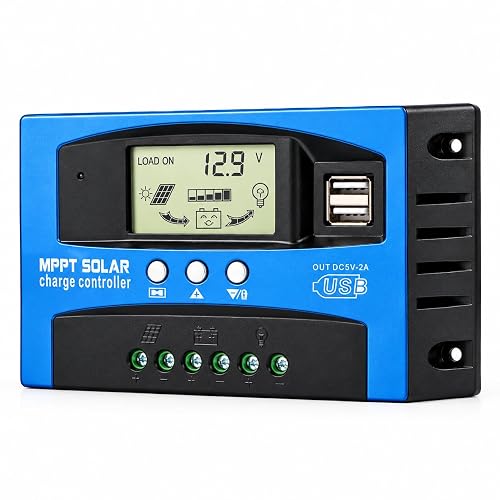 Best for mixed battery typesSolar Charge Controller MPPT 12/24V Auto-Switch Universal Controller fView on Amazon
Our Top Picks
Quick Comparison
| Product | Best for | Key feature |
|---|---|---|
| Renogy Rover 30A 12V/24V MPPT | General 12V/24V DIY systems | Auto DC input with adjustable LCD |
| Victron Energy SmartSolar MPPT 30A | Monitoring-focused builds | Bluetooth app telemetry |
| Victron Energy BlueSolar MPPT | Installs needing UL 1741 listing | UL 1741 certified design |
| Upgraded 30A MPPT Solar Charger | Tight budgets, small systems | Built-in LCD display |
| Renogy Charge Controller Rover 30A | Users who want on-unit readouts | Auto-detect LCD display |
| Universal MPPT 12/24V Auto-Switch | Lead-acid and lithium mixes | Universal battery support |
Renogy Rover 30A 12V/24V Auto DC Input MPPT Solar Charge Controller
Renogy Rover 30A 12V/24V Auto DC Input MPPT Solar Charge Controller Parameter Adjustable LCD Display Solar Panel Regulator fit for Gel Sealed Flooded and Lithium Battery, Rover 30A,Black
Best for: General-purpose 12V and 24V DIY systems. We also found 6 Best Charge Controllers for Small Solar Panel Picks for Every Need (2026) useful on this point.
This is a common first choice for small off-grid setups, RVs, and sheds. Its auto-detect input suits builders who may change battery voltage later.
Key specs:
- 30A rated charge current
- 12V/24V auto system voltage
- Adjustable parameters via LCD
Pros:
- Auto voltage detection
- Adjustable charge settings
- Widely documented wiring
Cons:
- No built-in Bluetooth
- Limited high-end monitoring
Bottom line: A solid default for builders who want straightforward MPPT charging at 30 amps.
Victron Energy SmartSolar MPPT 100V 30 amp 12/24-Volt Solar Charge Controller (Bluetooth)
Victron Energy SmartSolar MPPT 100V 30 amp 12/24-Volt Solar Charge Controller (Bluetooth)
Best for: Builders who want detailed monitoring from a phone.
Suits users who track yield and battery state over time. The Bluetooth link is the main reason owners choose this model.
Key specs:
- 30A charge current
- 100V maximum PV voltage
- 12/24V battery systems
Pros:
- Bluetooth app monitoring
- High PV voltage ceiling
- Strong brand support
Cons:
- Higher cost tier
- Needs phone for full data
Bottom line: Best for DIYers who value data and remote visibility.
Victron Energy BlueSolar MPPT Solar Charge Controller
Charge Controllers for Solar Panels, Certified to UL1741 Victron Energy BlueSolar MPPT Solar Charge Controller 100V 30A 12/24V
Best for: Installs where UL 1741 listing is a requirement.
Useful for grid-tied or inspected installations that call for listed equipment. Check local code before choosing it.
Key specs:
- MPPT charging at 30A class
- 12/24V battery compatibility
- UL 1741 certification per listing
Pros:
- Certification-focused design
- Established Victron build quality
- Works across common battery types
Cons:
- Fewer on-unit display features
- Requires separate monitoring setup
Bottom line: Choose it when certification drives the decision.
Upgraded 30A MPPT Solar Charger Controller 12V/24V Solar Panel Battery Intelligent Regulator with LCD
[Upgraded] 30A MPPT Solar Charger Controller 12V/24V Solar Panel Battery Intelligent Regulator with LCD Display, Dual USB Port and Timer Setting Fit for Lead-Acid Open Sealed AGM and Li Battery Grey
Best for: Small systems on a tight budget.
Fits compact solar kits and first-time builders testing a 30-amp array. Verify settings match your battery type before first power-up.
Key specs:
- 30A MPPT rating
- 12V/24V operation
- LCD status display
Pros:
- Budget-friendly option
- On-unit LCD readout
- Simple setup
Cons:
- Less brand track record
- Limited documentation depth
Bottom line: A reasonable pick for small, low-stakes projects.
Renogy Charge Controller Rover 30A MPPT 12V/24V Auto-Detect LCD Display
Renogy Charge Controller-Rover 30A MPPT 12V/24V Auto-Detect LCD Display | 99.9% Efficiency for Gel/Flooded/Lithium Batteries | Dual-Peak Tracking & Modbus Support
Best for: Users who want readouts directly on the controller.
Good for installs where a phone is not always nearby. The display shows key charging data at a glance.
Key specs:
- 30A MPPT charging
- 12V/24V auto-detect
- LCD display
Pros:
- Clear on-unit display
- Auto-detect voltage
- Familiar Renogy platform
Cons:
- No Bluetooth monitoring
- Manufacturer efficiency claims vary by setup
Bottom line: Pick it if you want local readouts without extra hardware.
Solar Charge Controller MPPT 12/24V Auto-Switch Universal Controller for Lead-Acid and Lithium Batteries (30A)
Solar Charge Controller MPPT 12/24V Auto-Switch Universal Controller for Lead-Acid & Lithium Batteries (30A)
Best for: Systems that may switch between lead-acid and lithium batteries.
Suits builders who expect to change battery chemistry. Confirm the charge profile for your specific battery before connecting.
Key specs:
- 30A MPPT rating
- 12V/24V auto-switch
- Lead-acid and lithium battery support
Pros:
- Universal battery support
- Auto-switch voltage
- Flexible for upgrades
Cons:
- Less established brand history
- Profiles need manual verification
Bottom line: Useful when battery chemistry may change over time.
Buying Guide
System voltage and battery bank
Match the controller to your battery bank voltage, 12V or 24V. Auto-detect models reduce setup errors, but you should still confirm the detected voltage on the display before connecting loads. A mismatch can damage batteries or the controller.
Good picks for this: Renogy Rover 30A 12V/24V, Victron Energy SmartSolar MPPT 30A
Maximum PV input voltage
Calculate your array’s open-circuit voltage at the coldest expected temperature. The total must stay below the controller’s maximum PV rating. Series-wired panels push voltage up quickly, so check this figure before buying.
Good picks for this: Victron Energy SmartSolar MPPT 30A, Victron Energy BlueSolar MPPT
Monitoring and display
Decide whether you need data on the unit, on a phone, or neither. Bluetooth models give yield history and alerts, while LCD models work without a phone. Pick the option that matches how often you will check the system.
Good picks for this: Renogy Charge Controller Rover 30A, Victron Energy SmartSolar MPPT 30A
Battery chemistry compatibility
Lead-acid and lithium batteries need different charge profiles. Confirm the controller offers the setting for your battery type. Mixed-chemistry users should look for universal models and verify every charge parameter manually.
Good picks for this: Solar Charge Controller MPPT 12/24V Auto-Switch Universal Controller, Victron Energy BlueSolar MPPT
Certification and code requirements
Some inspections require listed equipment such as UL 1741 certification. Check your local electrical code and permit requirements before purchase. Listed equipment often simplifies inspection even when it is not strictly mandatory.
Good picks for this: Victron Energy BlueSolar MPPT, Renogy Rover 30A 12V/24V
FAQ
Is a 30A MPPT controller enough for my system?
It depends on your array wattage and battery voltage. Divide array watts by system voltage to estimate amps. If the result stays under 30 amps with margin, the controller is suitable. Check the manufacturer’s sizing guidance.
What is the difference between MPPT and PWM?
MPPT tracks the maximum power point of the panels and converts excess voltage into charging current. PWM simply connects the panels to the battery. MPPT usually harvests more energy, especially when panel voltage is well above battery voltage.
Can I use a 30A controller with lithium batteries?
Yes, if the controller supports lithium charge profiles. Set the correct battery type and voltage limits. Lithium packs often have their own battery management system, so confirm compatibility with the battery manufacturer.
Do I need Bluetooth monitoring?
No, but it helps if you want history and alerts. LCD-only models work well for basic checks. Choose based on whether you will look at data regularly.
Should I consult a professional for installation?
Yes, especially for systems connected to a home or requiring permits. Wiring errors can damage equipment or create fire risk. A licensed electrician or solar installer can verify sizing and code compliance.
Conclusion
For most small DIY systems, the Renogy Rover 30A is a practical default. Choose the Victron SmartSolar if remote monitoring matters, and the Victron BlueSolar when UL 1741 listing is required. Budget builders may consider the upgraded LCD model, while mixed-chemistry users should look at the universal auto-switch controller. Match the choice to voltage, battery type, and inspection needs.
Sources
- Guidance on solar energy system components and considerations for homeowners (energy.gov)
- Research and technical resources on photovoltaic systems and charge control (nrel.gov)
- Standards and certification information, including UL 1741 for inverters and controllers (ul.com)
Before you buy: helpful guides
Related reading
- Top 6 MPPT Solar Charge Controllers for Lithium Batteries Compared
- Top 5 Solar Charge Controller 12V 30A Picks Compared for DIY Systems
- Top 5 Mppt Solar Charge Controller 12v Options Compared for DIY Systems
About Graham Fisher
Graham Fisher is part of our editorial team and reviews and edits our DIY solar power systems guides, checking product details against manufacturer specifications and owner feedback.