By Ethan Brooks
Updated November 2026
Charging an electric vehicle from your own roof is one of the most practical diy solar ev charger projects you can take on. The right choice depends on how much power your array can supply, whether you want a grid-tied Level 2 station or a smaller portable unit, and how well the charger works with a battery or controller. This list compares seven options on those criteria: solar compatibility, charging speed, mounting and wiring needs, and weather protection.
Our top picks at a glance
- 1
 TOP CHOICEBest overallPlug-In 40 Amp EV Charger Level 2View on Amazon
- 2
 TOP CHOICEBest for smart load controlHome EV Charger Level 2, 50AView on Amazon
- 3
 TOP CHOICEBest portable optionLevel 1+2 Portable EV Charger for Electric CarsView on Amazon
- 4
 Best budget pick for small loadsSUNER POWER 12V 50W Solar Battery Charger MaintainerView on Amazon
- 5
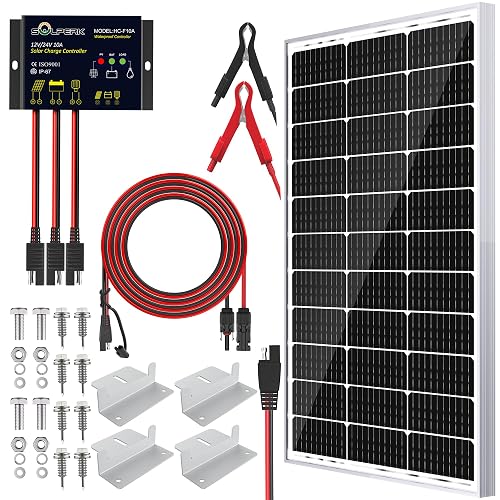 Best starter kitSolar Panel Kit 100W 24V with 10A PWM ControllerView on Amazon
- 6
 Best controller for vehicles and trailersMPPT Charge Controller, WaterproofView on Amazon
- 7
 Best weatherproof outdoor unitNEMA 14-50 EV Charger, IP67 WeatherproofView on Amazon
Our Top Picks
| Product | Best for | Key feature |
|---|---|---|
| Plug-In 40 Amp EV Charger Level 2 | Homeowners with a solar array feeding the house | Solar energy compatible, 25 ft cable |
| Home EV Charger Level 2, 50A | Smart charging with load management | Active load management, solar modes, OCPP |
| Level 1+2 Portable EV Charger | Renters and flexible setups | 16A portable unit with LCD display |
| SUNER POWER 12V 50W Solar Battery Charger | Small batteries and maintenance charging | Built-in MPPT controller |
| Solar Panel Kit 100W 24V | First-time builders | Waterproof 10A PWM controller |
| MPPT Charge Controller, Waterproof | Vehicles, RVs and trailers | Waterproof MPPT charge control |
| NEMA 14-50 EV Charger, IP67 | Outdoor installs exposed to weather | IP67 rating, UL 2594 listed, 24 ft cable |
Plug-In 40 Amp EV Charger Level 2
Plug-In 40 Amp EV Charger Level 2, Electric Vehicle Charging Station Solar Energy Compatible, 25ft Cable, Outdoor & Indoor Wallbox Pulsar Plus Level 2 Ev Charger 40A, Electric Car Charger EVSE J1772
Best for: Homeowners who want a Level 2 station that works with a solar array.
Suited to owners with a dedicated circuit who plan to charge mostly from daytime solar production.
Key specs:
- 40 amp rating
- Level 2 charging
- 25 ft cable
Pros:
- Solar-compatible design
- Long cable reach
- Straightforward plug-in setup
Cons:
- Needs a dedicated 240V circuit
- Limited smart features
Bottom line: A strong pick for a fixed home install paired with a grid-tied solar system.
Home EV Charger Level 2, 50A
Home EV Charger Level 2, Active Load Management, Solar Charging Modes, OCPP Compatible & Future-Proof, 50A Hardwired EVSE with J1772 Connector
Best for: Smart charging that balances solar output and household load.
Best for builders who want the charger to adjust current based on what the house and array are already using.
Key specs:
- 50A rating
- Active load management
- OCPP compatible
Pros:
- Solar charging modes
- Future-proof networking
- Good for managed loads
Cons:
- Setup takes more planning
- Higher wiring demands
Bottom line: Choose this if you want the charger to coordinate with your energy system.
Level 1+2 Portable EV Charger for Electric Cars
Level 1+2 Portable EV Charger for Electric Cars, 16A 3.5KW with 1.8 Inch LCD Display, 110V-240V, 6-20P Power Plug, J1772 Compatible, Applicable to Household Electricity
Best for: Flexible charging on standard outlets or a 240V connection.
Fits renters and drivers who want one charger that moves between locations.
Key specs:
- 16A, 3.5 kW output
- 110V to 240V input
- 1.8 inch LCD display
Pros:
- Portable design
- Works on multiple outlet types
- Readable status display
Cons:
- Slower than fixed Level 2
- Outlet capacity must match
Bottom line: A practical choice when mobility matters more than speed.
SUNER POWER 12V 50W Solar Battery Charger Maintainer
SUNER POWER 12V 50W Solar Battery Charger Maintainer, Built-in UltraSmart MPPT Controller, Adjustable Mount Bracket, Waterproof 50 Watt Solar Panel Kit for 12 Volt SLA Deey Cycle AGM Lifepo4 Battery
Best for: Maintaining a small 12V battery in a DIY charging setup.
Suited to a small battery bank or a secondary battery that needs trickle charging, not vehicle-scale energy.
Key specs:
- 12V, 50W panel
- Built-in MPPT controller
- Adjustable mount
Pros:
- Built-in MPPT control
- Simple mounting
- Good for maintenance charging
Cons:
- Too small for EV charging
- Low output for daily use
Bottom line: A supporting part for battery upkeep rather than a full EV solution.
Solar Panel Kit 100W 24V with 10A PWM Controller
Solar Panel Kit 100W 24V, Intelligent Waterproof 10A PWM Controller, Home Outdoor Solar Battery Charger for RV Car Boat Marine Tractor Camping, 24 Volt Batteries Solar Panel Charger
Best for: A first complete solar kit for learning system sizing.
Good for builders who want to understand panel, controller and battery matching before scaling up.
Key specs:
- 100W panel
- 24V system
- 10A PWM controller
Pros:
- Complete kit format
- Waterproof controller
- Useful for learning
Cons:
- PWM is less efficient than MPPT
- Limited output for EV charging
Bottom line: A good entry point for small-scale builds and experiments.
MPPT Charge Controller, Waterproof
MPPT Charge Controller | Waterproof Solar Panel Battery Charger | for Car RV Boat Marine Trailer | Adjustable Mount Bracket 50W Solar Panel Kit 12V Solar Battery Trickle Charger & Maintainer
Best for: Matching a panel array to a battery in vehicles and marine setups.
Best for builders adding a controller to an existing array for trailers, RVs or boats.
Key specs:
- MPPT charge control
- Waterproof housing
- Adjustable settings
Pros:
- MPPT efficiency
- Weather-resistant
- Versatile applications
Cons:
- Requires correct sizing
- Needs a separate charger hookup
Bottom line: A solid controller for mobile or marine solar builds.
NEMA 14-50 EV Charger, IP67 Weatherproof
ETL listed to UL 2594, Energy Star, NEMA 14-50 Plug, 4X and IP67 weatherproof, 24ft cable with holster, 3-year warranty LENZ Level 2 EV Charger, 40A 240V 9.6KW Wall Charging Station for J1772 EVs
Best for: Outdoor EV charging with a NEMA 14-50 plug.
Fits owners who want a weather-rated charger on a standard RV-style outlet.
Key specs:
- NEMA 14-50 plug
- IP67 weatherproof rating
- 24 ft cable with holster
Pros:
- Strong weather protection
- UL 2594 listed
- Holster keeps cable tidy
Cons:
- Relies on a 14-50 outlet
- Charge rate depends on the circuit
Bottom line: Best for owners with an outdoor 14-50 outlet fed by a solar system.
Buying Guide
Charging level and power
Level 2 chargers run on 240V and add far more range per hour than Level 1. Check the amp rating and make sure your array and inverter can supply the load you plan to draw.
Good picks for this: Plug-In 40 Amp EV Charger Level 2, Home EV Charger Level 2, 50A
Solar compatibility
Not every charger works with solar input. Look for stated compatibility, and confirm the charger can run from an inverter output rather than only from the grid.
Good picks for this: Plug-In 40 Amp EV Charger Level 2, Level 1+2 Portable EV Charger
Controller type
MPPT controllers extract more energy from panels than PWM, especially in cool or low-light conditions. For larger arrays, MPPT is generally the better choice.
Good picks for this: MPPT Charge Controller, Waterproof; Solar Panel Kit 100W 24V
Weather rating and mounting
Outdoor chargers should carry a clear ingress rating such as IP67. Mount units out of direct water flow and keep connections above ground level.
Good picks for this: NEMA 14-50 EV Charger, IP67; SUNER POWER 12V 50W Solar Battery Charger
Wiring and circuit capacity
Size the branch circuit, breaker and wire gauge for the charger’s continuous current, typically 125 percent of the load under NEC practice. Confirm details with a licensed electrician.
Good picks for this: Home EV Charger Level 2, 50A; NEMA 14-50 EV Charger, IP67
FAQ
Can I run an EV charger directly from solar panels?
Yes, but most Level 2 chargers need stable 240V AC. Panels usually feed a battery or inverter first, and the charger draws from that system. Sizing the array to the charging load is essential.
Is a Level 1 or Level 2 charger better for a solar build?
Level 2 charges much faster but needs more power. Level 1 suits smaller arrays and overnight charging. Match the charger to how many kilowatt-hours your system can supply each day.
Do I need a battery for a solar EV charger?
Not always. A grid-tied system can send surplus power to the car. A battery helps when you want to charge at night or during outages, but it adds cost and complexity.
What rating should an outdoor charger have?
Look for a clear weatherproof rating such as IP67 and a listing to recognized standards like UL 2594. These indicate tested protection against dust and water.
Should a licensed electrician install it?
Yes, for any fixed 240V circuit or grid connection. Electrical codes and permits vary by location, so consult a licensed professional before wiring.
Conclusion
For most homeowners, the Plug-In 40 Amp Level 2 charger or the 50A smart model offers the best balance of speed and solar compatibility. Choose the portable unit for flexibility, and the MPPT controller or starter kit if you are still building your array. Match the charger to your panel output, circuit capacity and weather exposure before you buy.
Sources
- Guidance on electric vehicle charging levels and home installation (energy.gov)
- Electrical code information relevant to branch circuits and EV charging (nfpa.org)
- Safety standards and listing information for EV supply equipment (ul.com)
Before you buy: helpful guides
Related reading
- Top 7 DIY Solar Powered Phone Charger Options Compared for Camping and Backup
- Top 6 Solar Cell Charger DIY Kits Compared for Small Projects
About Ethan Brooks
Ethan Brooks is part of our editorial team and reviews and edits our DIY solar power systems guides, checking product details against manufacturer specifications and owner feedback.