 By Graham Fisher
Updated November 2026
Choosing an aims solar charge controller comes down to a few practical questions: what battery voltage your system runs at, how much array power you plan to add, whether you need MPPT efficiency or a simpler PWM design, and how much mounting flexibility your enclosure allows. This guide compares five AIMS models using those criteria, covering voltage compatibility, charging current, controller type, and the features owners most often mention. Use it to narrow the field before you check the wiring and sizing math for your own build.
Our top picks at a glance
- 1
 TOP CHOICEBest overallAIMS 60A MPPT Solar Charge Controller 12/24/36/48V SCC60AMPPTView on Amazon
- 2
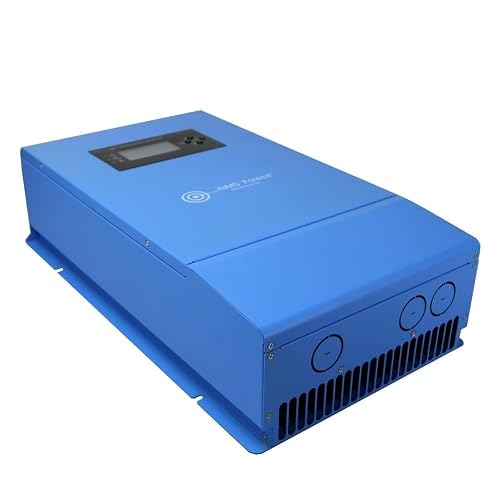 TOP CHOICEBest for large multi-voltage arraysAIMS Power SCC80AMPPT 80 Amp MPPT Solar Charge ControllerView on Amazon
- 3
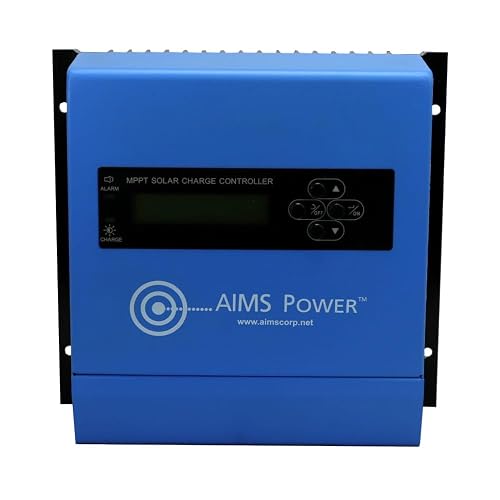 TOP CHOICEBest for compact 12V and 24V systemsAIMS 30A MPPT Solar Charge Controller 12/24V SCC30AMPPTView on Amazon
- 4
 Best budget pickAIMS 30A PWM Solar Charge Controller 12/24V Flush Mount SCC30AFMView on Amazon
- 5
 Best for flush-mount installsAIMS 30A MPPT Solar Charge Controller 12V and 24V SCC30MPPTView on Amazon
Our Top Picks
The five models below are arranged roughly from the broadest fit to the most specialized. Each entry lists the use case it suits best, the specifications stated in the listing, and the trade-offs owners commonly describe. Confirm every spec against the manufacturer’s manual before you buy, since model revisions can change terminal labels, sensor options, and firmware behavior. A related read: How Solar Generators Work: Battery, Inverter and Charge Controller Explained.
Quick Comparison
| Product | Best for | Key feature |
|---|---|---|
| AIMS 60A MPPT SCC60AMPPT | Mid-size off-grid systems | Auto 12/24/36/48V detection with 60A output |
| AIMS SCC80AMPPT 80A | Large or stackable arrays | 80A rating with battery type selector |
| AIMS 30A MPPT SCC30AMPPT | Compact 12V and 24V builds | MPPT tracking at 30A |
| AIMS 30A PWM SCC30AFM | Budget-conscious small systems | Flush-mount PWM with LCD and USB port |
| AIMS 30A MPPT SCC30MPPT | Flush-mount MPPT installs | Multi-stage charging at 12V and 24V |
AIMS 60A MPPT Solar Charge Controller 12/24/36/48V SCC60AMPPT
60 Amp MPPT Solar Charge Controller, 12V, 24V, 36V, 48V Systems, High Efficiency, Multi-stage Charging, Off-grid, Backup AIMS 60A MPPT Solar Charge Controller 12/24/36/48V SCC60AMPPT
Best for: Mid-size off-grid systems that may move between battery voltages
This controller suits DIY builders who want one unit that can handle several battery banks as the system grows. It is a good match for cabin or workshop setups with a moderate array and a battery bank that might change from 12V to 48V over time.
Key specs
- 60A MPPT rating
- System voltages: 12V, 24V, 36V, 48V (per listing)
- Multi-stage charging
Pros
- Covers four nominal battery voltages from one model
- MPPT tracking helps recover harvest from higher-voltage panel strings
- Useful headroom for a larger array
Cons
- Larger footprint than the 30A models
- Requires careful array voltage planning to stay within input limits
Bottom line: A strong choice if you want a single controller that spans several voltage platforms and expects to add panels later.
AIMS Power SCC80AMPPT 80 Amp MPPT Solar Charge Controller
AIMS Power SCC80AMPPT 80 Amp MPPT Solar Charge Controller; Charges 12, 24, 36 and 48 Volt Solar Systems; 4 Stage Charging; Battery Type Selector; Stackable; Over Temp Protection
Best for: Large multi-voltage arrays
Builders running a bigger battery bank or a high-output array benefit most from this model. The battery type selector and stackable design make it a reasonable option for systems expected to grow.
Key specs
- 80A MPPT rating
- Charges 12V, 24V, 36V and 48V systems (per listing)
- 4-stage charging with battery type selector
Pros
- High current capacity for larger arrays
- Battery type selector simplifies setup for different chemistries
- Stackable configuration is listed as a feature
Cons
- Overkill for small systems and costs more in wire and fusing
- Bulkier to mount inside a compact enclosure
Bottom line: Pick this if your array is large enough to need the 80A headroom and you want a controller that can be stacked later.
AIMS 30A MPPT Solar Charge Controller 12/24V SCC30AMPPT
AIMS 30A MPPT Solar Charge Controller 12/24V SCC30AMPPT
Best for: Compact 12V and 24V systems
This is a sensible middle ground for small cabin, van, or shed systems where a 30A MPPT controller covers the array without oversizing the wiring. It works well when your battery bank is either 12V or 24V and does not need the wider voltage range of the 60A model.
Key specs
- 30A MPPT rating
- Battery voltages: 12V and 24V
Pros
- Compact size for tight enclosures
- MPPT tracking improves harvest over PWM at the same array size
- Straightforward for 12V and 24V builds
Cons
- Limited to 30A, so larger arrays need a bigger model
- Does not cover 36V or 48V banks
Bottom line: A practical pick for small 12V or 24V systems that benefit from MPPT tracking.
AIMS 30A PWM Solar Charge Controller 12/24V Flush Mount SCC30AFM
PWM Flush Mount Solar Charge Controller, 12V and 24V Systems, Multi-stage Charging, USB Port, LCD Display, AGM, Lithium AIMS 30A PWM Solar Charge Controller 12/24V – Flush Mount SCC30AFM
Best for: Budget-conscious small systems
PWM controllers are a reasonable choice when the array voltage closely matches the battery voltage and the system is small. This flush-mount model suits builders who want a clean panel-mounted install with a visible LCD readout.
Key specs
- 30A PWM rating
- 12V and 24V systems
- Flush-mount design, LCD display, USB port (per listing)
Pros
- Flush-mount layout keeps the front panel tidy
- LCD and USB port are useful for monitoring and charging small devices
- Budget pick for small systems
Cons
- PWM does not harvest the extra voltage from higher-voltage arrays
- Less efficient than MPPT when panel voltage is much higher than battery voltage
Bottom line: Best for small systems where array voltage matches battery voltage and cost control matters more than peak efficiency.
AIMS 30A MPPT Solar Charge Controller 12V and 24V SCC30MPPT
30 Amp MPPT Solar Charge Controller, 12V and 24V Systems, Multi-stage Charging, High Efficiency, Off-grid AIMS 30A MPPT Solar Charge Controller 12V and 24V SCC30MPPT
Best for: Flush-mount MPPT installs
This model is suited to builders who want MPPT performance in a flush-mount enclosure at a 30A rating. It fits small 12V and 24V banks where the panel string runs at a higher voltage than the battery.
Key specs
- 30A MPPT rating
- 12V and 24V systems
- Multi-stage charging, high efficiency (per listing)
Pros
- MPPT tracking for higher-voltage panel strings
- Flush-mount option suits panel or enclosure mounting
- Multi-stage charging for lead-acid and lithium banks when settings are correct
Cons
- Limited to 12V and 24V
- Fewer high-current options for large arrays
Bottom line: A good fit for compact MPPT installs that need flush mounting and 12V or 24V compatibility.
Buying Guide
Battery voltage compatibility
Confirm whether your battery bank is 12V, 24V, 36V or 48V nominal before comparing models. Controllers that list several voltages can auto-detect or be set by the user, but a 30A model will not serve a 48V bank the way a dedicated multi-voltage unit will. Check the voltage rating printed on the unit and in the manual.
Good picks for this: AIMS 60A MPPT SCC60AMPPT, AIMS Power SCC80AMPPT
Controller type: MPPT or PWM
MPPT controllers convert excess panel voltage into charging current, which matters most when the array voltage is well above the battery voltage. PWM controllers are simpler and lower-cost but work best when the array and battery voltages are close. See MPPT vs PWM Charge Controllers: How to Match One to Your System for a side-by-side sizing approach.
Good picks for this: AIMS 30A PWM SCC30AFM, AIMS 30A MPPT SCC30AMPPT
Charging current rating
Size the controller so its rated current is at least 1.25 times the short-circuit current of your array divided by the number of strings, with the rating matched to your battery voltage. Sizing math and worked examples are covered in Solar Charge Controller 100 Amp: How to Size and Wire One Safely, and smaller-system sizing is covered in Solar Charge Controller 20 Ampere: How to Size and Wire One (2026).
Good picks for this: AIMS 30A MPPT SCC30AMPPT, AIMS 30A MPPT SCC30MPPT
Battery chemistry settings
Lead-acid, AGM, gel and lithium iron phosphate batteries each require different absorption, float and cutoff voltages. Look for a battery type selector or adjustable charging profiles. Lithium banks often need a controller that can be set to the battery’s low-voltage cutoff and charge voltage, so check the manufacturer’s specification sheet before connecting. For lithium-specific guidance, see LiFePO4 Battery Voltage Chart: State of Charge Reference for Solar Builders.
Good picks for this: AIMS Power SCC80AMPPT, AIMS 60A MPPT SCC60AMPPT
Mounting and enclosure fit
Measure the space before you buy. Flush-mount designs suit panel-mounted builds, while larger units need wall or rack space and room for airflow. Leave clearance for wire bend radius and for the fuse or breaker that protects the battery connection.
Good picks for this: AIMS 30A PWM SCC30AFM, AIMS 30A MPPT SCC30MPPT
Monitoring and display
An LCD readout, status LEDs or a data port makes it easier to confirm charging stages and fault codes without a meter. Some owners prefer a simple display, while others want remote monitoring. Decide how much visibility you need before choosing a model with or without a display.
Good picks for this: AIMS 30A PWM SCC30AFM, AIMS 60A MPPT SCC60AMPPT
Protection features
Look for over-temperature protection, reverse polarity protection and short-circuit protection in the listed features. These do not replace external fusing, which should be sized to the wire gauge and the controller’s maximum current. Consult a licensed electrician if your system connects to a home electrical panel.
Good picks for this: AIMS Power SCC80AMPPT, AIMS 30A MPPT SCC30AMPPT
FAQ
What does an aims solar charge controller do?
It regulates the current flowing from your solar panels into the battery bank, preventing overcharging and protecting the battery from excessive voltage. MPPT models also optimize the panel’s operating point to recover more energy.
Can I use an MPPT controller with lithium batteries?
Yes, provided the controller allows you to set the charge voltage, absorption and cutoff values to match the lithium battery manufacturer’s specification. Confirm these settings before connecting the battery.
How do I know if I need MPPT or PWM?
If your array voltage is much higher than your battery voltage, MPPT usually recovers more energy. If the two voltages are close and the system is small, PWM can be a simpler choice.
Do I need a fuse between the battery and the controller?
Yes. A correctly sized fuse or breaker on the battery side protects the wiring and the controller from short circuits. Size it according to the controller’s maximum current and the wire gauge.
Can I connect two controllers in parallel?
Some models are listed as stackable, but parallel operation requires matching units and manufacturer-approved wiring. Check the manual before connecting controllers in parallel.
Should I consult a professional for installation?
Yes, especially if the system ties into a home electrical panel or uses high-voltage battery banks. A licensed electrician or qualified solar installer can verify wiring, grounding and protection before you energize the system.
Conclusion
For most DIY builders, the right aims solar charge controller depends on battery voltage, array size and whether MPPT efficiency is worth the step up. The 60A SCC60AMPPT and 80A SCC80AMPPT suit larger or multi-voltage systems, the 30A SCC30AMPPT and SCC30MPPT fit compact 12V and 24V builds, and the 30A PWM SCC30AFM works for small systems where array and battery voltages are close. Match the controller to your battery chemistry and wiring plan, and verify every setting against the manufacturer’s documentation before you connect the system.
Sources
- Guidance on solar energy systems, components and safety considerations for home installations (energy.gov)
- National Electrical Code standards relevant to photovoltaic wiring, overcurrent protection and grounding (nfpa.org)
- Research on photovoltaic system performance, including charge controller and array efficiency (nrel.gov)
Before you buy: helpful guides
- Solar Charge Controller DIY: Wire and Size One in 7 Steps
- Solar Charge Controller Lithium Ion: How to Choose and Wire One (Step-by-Step)
- Solar Charge Controller 100 Amp: How to Size and Wire One Safely
- Solar Charge Controller Repair: A Step-by-Step Guide for DIY Builders
- Solar Charge Controller 20 Ampere: How to Size and Wire One (2026)
About Graham Fisher
Graham Fisher is part of our editorial team and reviews and edits our DIY solar power systems guides, checking product details against manufacturer specifications and owner feedback.


