By Ethan Brooks
Updated November 2026
Choosing the best off-grid solar system for home use comes down to how much power your house actually draws, how many hours of backup you need on a cloudy week, and whether you want a sealed kit or a system you can expand later. This list compares seven complete kits built around panels, batteries and inverters. Each one was assessed on published specifications, brand reputation for documentation and support, and the patterns owners tend to report about installation and day-to-day performance. We did not install or run these systems ourselves, so treat the notes below as a research summary, not lab results.
Our top picks at a glance
- 1
 TOP CHOICEBest overallWhole House System: 10KW 120V/240V Split Phase Solar Inverter with 16kWh StorageView on Amazon
- 2
 TOP CHOICEBest for mid-size homesSolar Panel Kit 10KW with 9.36kWh Lithium StorageView on Amazon
- 3
 TOP CHOICEBest budget pick3000W 24V Solar Power System Complete Kit with 5.12kWh BatteryView on Amazon
- 4
 Best for 5kW homesOff Grid Solar Panel Kit 5KW with 48V InverterView on Amazon
- 5
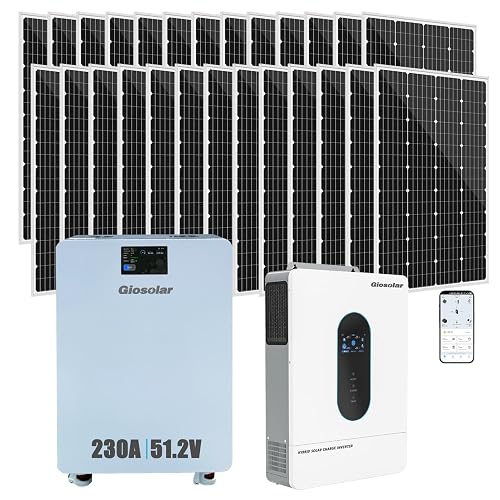 Best for large loads12000W Solar Power System Kit with 12kWh BatteryView on Amazon
- 6
 Best for small homes and cabins168kWh 800W Solar Panel Kit with UPS Inverter ChargerView on Amazon
- 7
 Best for weekend or backup use92kWh Complete Solar Panel Kit with 2000W InverterView on Amazon
Our Top Picks
The table below gives a fast overview. The product sections that follow explain the specifications and trade-offs in more detail. Ordering reflects how well each kit matches the selection criteria, starting with complete whole-home capacity and moving toward smaller systems.
Quick Comparison
| Product | Best for | Key feature |
|---|---|---|
| Whole House System 10KW Split Phase | Full-home off-grid living | 120V/240V split phase with 16kWh storage |
| Solar Panel Kit 10KW (ECO-WORTHY) | Mid-size homes | 2340W array with 9.36kWh lithium storage |
| 3000W 24V Complete Kit | Budget-conscious homes | 1440W array with pure sine wave inverter |
| Off Grid Solar Panel Kit 5KW | 5kW-class homes | 2340W array with 48V inverter and 100Ah battery |
| 12000W Solar Power System Kit | High-demand households | 12kW split phase hybrid inverter with WiFi |
| 7.168kWh 800W Solar Panel Kit | Small homes and cabins | 60A MPPT controller with UPS-style inverter charger |
| 1.92kWh Complete Kit | Weekend and backup use | Mono rigid panels with 2000W inverter |
Whole House System: 10KW 120V/240V Split Phase Solar Inverter with 16kWh Storage
Whole House System:10KW 120V/240V Split Phase Solar Inverter| 48V 314Ah 16kWh High Capacity Energy Storage| 2950W Solar Panel ECO WORTHY 10000W Output Complete Off-Grid Solar Panel Kit for Home
Best for: Full-home off-grid living with high daily loads
This kit suits homeowners who want 120V and 240V outlets for appliances like well pumps, electric ranges and heat pumps, with enough stored energy to ride through several cloudy days. The listing pairs a 10kW split-phase inverter with a 48V, 314Ah lithium bank and a 2950W panel array.
Key specs (per listing):
- Inverter output: 10kW, 120V/240V split phase
- Battery: 48V, 314Ah, approximately 16kWh
- Solar array: 2950W
- Advertised complete system output: 10,000W
Pros:
- Split-phase output supports standard US household circuits
- Large battery capacity for extended backup
- Single-kit approach reduces component matching
Cons:
- Requires a licensed electrician for installation and permits in most jurisdictions
- Heavy battery needs a planned mounting location
Bottom line: The strongest match on this list for homeowners who want whole-home capacity and are prepared for professional-level installation.
Solar Panel Kit 10KW with 9.36kWh Lithium Storage
Solar Panel Kit:12PCS 195W Solar Panels(2340W)+2PCS 48V 100AH Cubix Lithium Battery(10.24kWh)+10KW Solar Inverter 120V/240V ECO-WORTHY 10KW Output 9.36KWH Off Grid Solar System Complete Kit for Home
Best for: Mid-size homes that need solid daily output without the largest battery bank
A good fit for households with moderate loads such as refrigeration, lighting, laundry and a heat pump on a sunny site. The 12-panel array and dual 48V lithium batteries give a balanced profile between generation and storage.
Key specs (per listing):
- Panels: 12 × 195W (2340W total)
- Batteries: 2 × 48V 100Ah lithium (approximately 10.24kWh)
- Inverter: 10kW, 120V/240V
Pros:
- Modular battery pair simplifies handling
- Good balance of array size and storage
- Split-phase inverter output
Cons:
- Panel array is modest for a 10kW inverter, so sun hours will limit output
- Electrician involvement is still recommended
Bottom line: A practical choice for mid-size homes with sunny exposure and realistic daily loads.
3000W 24V Solar Power System Complete Kit with 5.12kWh Battery
3000W 24V Solar Power System Complete Kit with 1440W (12×120W) Solar Panel 3KW Peak 6KW Pure Sine Wave Inverter, 5.12KWH Battery,PV Combiner Box,MPPT Solar Controller,Off-Grid Home RV Backup
Best for: Budget-conscious homes and small off-grid houses
This kit is aimed at smaller homes, guest houses and owners who want to start with a modest system and expand later. The 24V architecture keeps current lower than 12V setups at the same power level.
Key specs (per listing):
- Panels: 12 × 120W (1440W total)
- Inverter: 3kW continuous, 6kW peak, pure sine wave
- Battery: approximately 5.12kWh
- Includes PV combiner box and MPPT controller
Pros:
- Pure sine wave output suits sensitive electronics
- Lower entry point among whole-home-capable kits
- Includes combiner box and controller
Cons:
- 3kW continuous output limits simultaneous high-draw appliances
- Smaller array means slower recharge in winter
Bottom line: Best for homes with careful load management or as a first step toward a larger system.
Off Grid Solar Panel Kit 5KW with 48V Inverter
Off Grid Solar Panle Kit with Battery & Inverter:12x195W Panels, 48V 5000W Solar Inverter, 48V 100AH Cubix LiFePO4 Battery ECO-WORTHY 5KW Off Grid Solar System Complete Kit 2340W
Best for: 5kW-class homes with moderate daily consumption
This kit is sized for homes that run mostly essential loads and can time heavy appliances to midday sun. It pairs twelve 195W panels with a 5kW inverter and a 100Ah 48V lithium battery.
Key specs (per listing):
- Panels: 12 × 195W (2340W total)
- Inverter: 5000W, 48V
- Battery: 48V 100Ah LiFePO4
Pros:
- Lower inverter rating is easier to match to typical loads
- LiFePO4 chemistry is known for long cycle life
- Straightforward expansion path with added batteries
Cons:
- Single 100Ah battery gives limited overnight capacity
- Not suited to 240V heavy appliances
Bottom line: A sensible option for a smaller home or a seasonal residence that needs core loads covered.
12000W Solar Power System Kit with 12kWh Battery
12000W Solar Power System Kit: 12KW 48V Split Phase Hybrid Solar Inverter with Dual 200A MPPT & WiFi, 12KWh 51.2V 230Ah Battery, 26pcs 120W Rigid Solar Panels for Home Off-Grid/Backup Power
Best for: High-demand households and homes with electric heating or EV charging needs
This is the highest-capacity kit in the comparison. The 12kW split-phase hybrid inverter, dual 200A MPPT inputs and 26 rigid panels target homes that need serious daily energy.
Key specs (per listing):
- Inverter: 12kW 48V split phase hybrid with dual 200A MPPT and WiFi
- Battery: 51.2V 230Ah, approximately 12kWh
- Panels: 26 × 120W rigid (approximately 3120W)
Pros:
- Hybrid inverter with WiFi monitoring
- Dual MPPT inputs add array flexibility
- Substantial battery capacity for high-load homes
Cons:
- Significant installation complexity and permitting requirements
- Requires a dedicated electrical plan and professional wiring
Bottom line: Suited to experienced builders or homeowners working with an electrician on a whole-home system.
7.168kWh 800W Solar Panel Kit with UPS Inverter Charger
4PCS 195W Solar Panels, 3000W UPS Inverter Charger, 2PCS 12.8V 280AH Lithium Batteries, 60A MPPT Controller Bluetooth ECO-WORTHY 7.168KWH 800W Solar Panel Kit for RV Off Grid Complete System
Best for: Small homes, cabins and backup-focused setups
The UPS-style inverter charger here allows grid or generator input alongside solar, which helps with backup in areas with variable weather. Four 195W panels and two 12.8V 280Ah lithium batteries form the core.
Key specs (per listing):
- Panels: 4 × 195W (780W, listed as 800W system)
- Batteries: 2 × 12.8V 280Ah lithium (approximately 7.168kWh)
- Inverter: 3000W UPS inverter charger
- Controller: 60A MPPT with Bluetooth
Pros:
- UPS-style charging supports backup power transfer
- Bluetooth controller aids monitoring
- Good storage relative to array size
Cons:
- Four panels limit daily generation in cloudy regions
- Designed with RV and cabin use in mind, so whole-home loads may exceed it
Bottom line: A strong pick for smaller homes that prioritize battery backup and grid-assisted reliability.
1.92kWh Complete Solar Panel Kit with 2000W Inverter
1.92KWH Complete Solar Panel Kit for RV Off Grid Solar System |2x100Ah 12.8V Batteries 2560WH| 4x120W Mono Rigid Solar Panels |2000W Power Inverter|MPPT Controller|Trailer, Camper, Marine
Best for: Weekend, emergency and light-duty backup use
This is the most modest system here. It fits well as a backup for essential circuits, a remote workspace or a tiny home, rather than full-time whole-house power.
Key specs (per listing):
- Panels: 4 × 120W mono rigid (480W total)
- Batteries: 2 × 12.8V 100Ah (2560Wh total)
- Inverter: 2000W
- Includes MPPT controller
Pros:
- Lowest complexity on this list
- Mono rigid panels are durable and efficient for their size
- Suitable for trailers, campers and small backup loads
Cons:
- Capacity is too small for full-home daily use
- 2000W inverter restricts high-draw appliances
Bottom line: The right entry point for backup or light off-grid use, not for a full household.
Buying Guide
Daily Energy Use (kWh per Day)
Add up the wattage and daily run time of every appliance you plan to power, including refrigeration, well pumps, heating and cooling. Multiply each by hours of use to get watt-hours, then total them. This number drives your battery size and panel count more than any other factor. Aim to size panels at roughly 1.3 to 1.5 times your daily load to account for weather and losses.
Good picks for this: Solar Panel Kit 10KW (B0FN3KW7PQ) and Whole House System 10KW (B0GWJ5MWLQ)
Inverter Output and Surge Rating
Check continuous wattage and surge (peak) wattage separately. Well pumps, air conditioners and compressors can draw several times their running wattage at startup. A 120V/240V split-phase inverter is needed for standard US whole-home wiring and 240V appliances such as electric ranges.
Good picks for this: 12000W Solar Power System Kit (B0HKNQN15N) and 3000W 24V Complete Kit (B0G8KQQKM1)
Battery Chemistry and Capacity
Lithium iron phosphate (LiFePO4) batteries are widely used in off-grid systems because they tolerate deep discharge and have long cycle life compared with lead-acid. Check usable capacity rather than nominal capacity, and confirm the battery management system (BMS) matches your inverter voltage.
Good picks for this: Off Grid Solar Panel Kit 5KW (B0DKP24MKD) and 7.168kWh 800W Kit (B0FH4TMXSY)
Panel Array Size and Sun Exposure
Panel wattage is only useful if your roof or ground mount gets enough direct sun. Count peak sun hours for your location, typically available from the National Renewable Energy Laboratory’s solar resource maps. Shading from trees or nearby structures can cut output significantly, so plan for the worst-case season.
Good picks for this: Whole House System 10KW (B0GWJ5MWLQ) and 1.92kWh Complete Kit (B0FRYW7HXR)
Expandability and Compatibility
Systems that accept additional batteries or panels later protect your investment as household needs grow. Confirm the maximum battery bank size and maximum array voltage the inverter and controller support before buying.
Good picks for this: Off Grid Solar Panel Kit 5KW (B0DKP24MKD) and 3000W 24V Complete Kit (B0G8KQQKM1)
Installation Requirements and Permits
Most whole-home off-grid installations require electrical permits, load calculations and inspection. Grounding, conductor sizing and overcurrent protection must follow the National Electrical Code as adopted locally. Hiring a licensed electrician is strongly recommended for any system connected to a home’s main panel. Consult a professional before wiring to your household circuits.
Good picks for this: 12000W Solar Power System Kit (B0HKNQN15N) and Solar Panel Kit 10KW (B0FN3KW7PQ)
Monitoring, Protection and Durability
Look for built-in battery protection, overcharge and short-circuit protection, and remote monitoring if you want to track performance from indoors. Panel frame quality and weather ratings matter for long-term outdoor exposure, and mono rigid panels are often specified for durability in mobile and fixed applications.
Good picks for this: 7.168kWh 800W Kit (B0FH4TMXSY) and 1.92kWh Complete Kit (B0FRYW7HXR)
FAQ
How many solar panels do I need to power a whole house off-grid?
It depends on daily energy use and sun hours. A typical home using 20 to 30 kWh per day in a region with about five peak sun hours may need roughly 6 to 10 kW of panels, plus storage for nights and cloudy days. Calculate your own load before choosing an array size.
Can an off-grid solar system run central air conditioning?
Often only with a large array and battery bank, or with a high-efficiency mini-split instead of central air. Central air units draw substantial surge current, so confirm inverter surge ratings and consult an installer before relying on them.
What is the difference between a split-phase and single-phase inverter?
Split-phase inverters output 120V/240V, the standard for most US homes and needed for 240V appliances such as electric ranges and dryers. Single-phase units typically supply 120V only and suit smaller loads or cabins.
How long will batteries last in an off-grid system?
LiFePO4 batteries are commonly specified for several thousand charge cycles at moderate depth of discharge. Actual lifespan depends on temperature, depth of discharge and charging settings. Check manufacturer warranty terms for cycle counts.
Do I need a backup generator with an off-grid solar system?
Many owners keep a generator for extended cloudy periods or winter months. Systems with UPS-style or hybrid inverters can accept generator input, which simplifies backup. Confirm compatibility before purchase.
Is it legal to go completely off-grid in the US?
In most areas yes, but local zoning, building codes and utility interconnection rules vary. Some counties require permits even for standalone systems. Check with your local building department before installing.
Conclusion
For most whole-home off-grid households, the 10kW split-phase kits offer the most complete starting point, with the 12000W kit suited to heavier loads and experienced installers. Mid-size homes with moderate usage will find the 10kW ECO-WORTHY kit and the 5kW kit well matched to daily needs. Budget-minded buyers and smaller homes can start with the 3000W 24V kit, while cabins, RVs and backup-focused users will get the most value from the 7.168kWh UPS-style kit or the 1.92kWh compact system. Match your choice to measured daily energy use, and involve a licensed electrician for any whole-home installation.
Sources
- Federal guidance on off-grid and home solar system planning, including sizing and safety basics (energy.gov)
- Solar resource maps and peak sun hour data for estimating panel output by location (nrel.gov)
- National Electrical Code standards that govern home electrical installations and grounding (nfpa.org)
Related reading
- Top 7 Full Off-Grid Solar System Options Compared for Homes
- Top 7 DIY Off Grid Solar System Kits Compared for Homes (2026)
- Top 5 Off Grid Solar Panel Systems for Home Options Compared in 2026
About Ethan Brooks
Ethan Brooks is part of our editorial team and reviews and edits our DIY solar power systems guides, checking product details against manufacturer specifications and owner feedback.