By Ethan Brooks
Updated November 2026
Grounding an off-grid solar system protects people, equipment and the structure from lightning strikes and electrical faults by giving stray current a low-resistance path to earth. Choosing the right hardware matters because a loose clamp or undersized lug can leave a panel frame floating at a dangerous potential. This list focuses on grounding clamps, lugs and bonding connectors that are widely used on PV mounting systems, plus one reference guide for wiring the whole setup. Each pick was assessed on compatibility with common wire and rail sizes, material suitability for outdoor exposure, installation simplicity, and the consistency of owner feedback.
Our top picks at a glance
- 1
 TOP CHOICEBest overallWhole House System 10KW 120V/240V Split Phase Solar Inverter KitView on Amazon
- 2
 TOP CHOICEBest for PV mounting rails16 Pack Solar Panel Grounding Clamps Set – Aluminum Alloy (Silver)View on Amazon
- 3
 TOP CHOICEBest for bare wire and pipe5Sets Solar Panel Grounding Lugs Solar Mounting System Metal Grounding ClipsView on Amazon
- 4
 Best for combiner boxesSilver Bonding Connector Tinned Copper Quick Install Metal Solar Grounding ClipView on Amazon
- 5
 Best for planning referenceThe DIY Off Grid Solar Power BibleView on Amazon
- 6
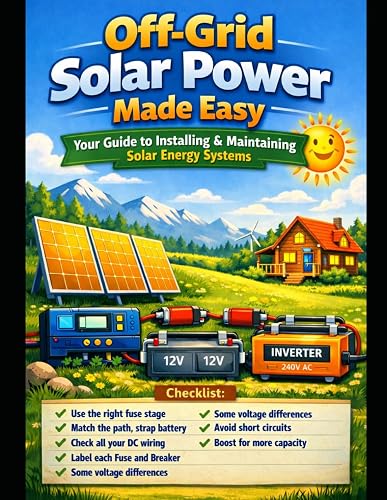 Best for step-by-step buildingOff Grid Solar Power Made Easy: Build Your Own Off-Grid Solar SystemView on Amazon
Our Top Picks
| Product | Best for | Key feature |
|---|---|---|
| Whole House System 10KW Off-Grid Kit | Complete home off-grid build | Split-phase 120V/240V inverter with 16 kWh storage |
| 16 Pack Solar Panel Grounding Clamps Set | PV mounting rail bonding | Aluminum alloy clips in bulk quantity |
| 5Sets Solar Panel Grounding Lugs | Bare wire and pipe grounding | Clamp design for bare copper and pipe |
| Silver Bonding Connector | Combiner box and wire bonding | Tinned copper, quick-install clip |
| The DIY Off Grid Solar Power Bible | Planning and grounding theory | Ten-in-one guide covering design and maintenance |
| Off Grid Solar Power Made Easy | First-time builders | Step-by-step build walkthrough |
Whole House System 10KW 120V/240V Split Phase Solar Inverter Kit
Whole House System:10KW 120V/240V Split Phase Solar Inverter| 48V 314Ah 16kWh High Capacity Energy Storage| 2950W Solar Panel ECO WORTHY 10000W Output Complete Off-Grid Solar Panel Kit for Home
Best for: Complete home off-grid systems that need a grounded inverter and battery bank in one package.
This kit suits homeowners who want a full whole-house system rather than piecing together individual components. Grounding is handled at the inverter, battery and array, so the kit’s documentation is worth reading before you connect the equipment-grounding conductor.
Key specs (per listing name):
- 10 kW inverter, 120V/240V split phase
- 48V battery, 314Ah, approximately 16 kWh
- 2950W solar panel array
- 10000W stated output
Pros:
- Covers inverter, storage and array in one purchase
- Split-phase output suits standard US household loads
- Large storage capacity for extended cloudy periods
Cons:
- Grounding hardware is not clearly itemized in the listing name, so verify it separately
- Installation requires a licensed electrician in most jurisdictions
Bottom line: Best for households building a complete off-grid home system who will have the installation inspected.
16 Pack Solar Panel Grounding Clamps Set – Aluminum Alloy (Silver)
16 Pack Solar Panel Grounding Clamps Set – Aluminum Alloy Thunder Protection Grounding Clips for PV Mounting Systems (Silver)
Best for: Bonding PV module frames to aluminum mounting rails in ground-mount or roof-mount arrays.
Owners building arrays with many panels often need a consistent supply of clamps. A sixteen-pack keeps spares on hand for each row and simplifies a single-material bonding scheme.
Key specs:
- Quantity: 16 pieces
- Material: aluminum alloy, silver finish
- Designed for PV mounting system bonding
Pros:
- Bulk quantity covers a full array
- Aluminum alloy suits outdoor mounting rails
- Straightforward clip-style installation
Cons:
- Clips alone do not replace a continuous equipment-grounding conductor
- Compatibility with specific rail profiles should be confirmed before buying
Bottom line: A practical choice for DIY builders bonding a multi-panel array to aluminum rails.
5Sets Solar Panel Grounding Lugs Solar Mounting System Metal Grounding Clips
5Sets Solar Panel Grounding Lugs Solar Mounting System Metal Grounding Clips PV Grounding Clip Cable Solar Panel Clamps for Bare Wire and Pipe
Best for: Grounding bare copper wire and metal pipe connections in the array.
This set is aimed at builders who need to terminate a bare grounding conductor onto a frame or pipe. It is useful when running a bare copper ground wire along a mounting structure.
Key specs:
- Quantity: 5 sets
- Designed for bare wire and pipe
- Metal clip-style grounding lugs
Pros:
- Works with bare wire and pipe, not only panel frames
- Small quantity suits a single-array build
- Metal construction for solid mechanical contact
Cons:
- Lug torque and wire-size range should be checked against the manufacturer’s specification
- Owners sometimes report that tightening must be checked periodically
Bottom line: Good for builders whose grounding path runs over bare copper and metal pipe.
Silver Bonding Connector Tinned Copper Quick Install Metal Solar Grounding Clip
Silver Bonding Connector, Easy Removal, Supports Combiner Boxes, Photovoltaic Systems, Off-grid Systems, Electricians 2pcs Metal Solar Grounding Clip Tinned Copper Quick Install for Wires
Best for: Bonding combiner boxes and wires in photovoltaic and off-grid systems.
Tinned copper resists corrosion better than bare copper in damp environments, which makes this connector a reasonable choice for enclosures and junctions exposed to weather.
Key specs:
- Quantity: 2 pieces
- Material: tinned copper
- Quick-install clip design, silver finish
Pros:
- Tinned copper improves corrosion resistance
- Quick installation and removal
- Suitable for combiner boxes and wire bonding
Cons:
- Only two pieces, so larger arrays need more units
- Wire size range should be confirmed against the connector’s rating
Bottom line: A targeted pick for bonding enclosures and junctions in a small off-grid system.
The DIY Off Grid Solar Power Bible
The DIY Off Grid Solar Power Bible: [10 in 1] The Most Complete and Updated Guide to Design, Install, and Maintain Solar Energy Systems for Tiny Homes, Cabins, Rvs, and Boats
Best for: Builders who want a reference covering grounding theory alongside design and maintenance.
This book is a planning resource rather than hardware. It suits readers who want to understand why each grounding decision is made before ordering clamps or lugs.
Key specs:
- Format: book, ten-in-one guide
- Covers design, installation and maintenance
- Aimed at tiny homes, cabins, RVs and boats
Pros:
- Broad coverage from design through maintenance
- Useful context for choosing grounding hardware
- Applies to several off-grid building types
Cons:
- Guidance may not match the National Electrical Code edition in force where you live
- Broad scope means less depth on any single topic
Bottom line: Best for readers who want to understand the design logic behind grounding before they build.
Off Grid Solar Power Made Easy: Build Your Own Off-Grid Solar System
off grid solar power made easy: Build Your Own Off-Grid Solar System (Step-by-Step for Homes & Cabins)
Best for: First-time builders who want a step-by-step walkthrough for homes and cabins.
This guide is written for readers who prefer a sequenced build process. It helps beginners see where grounding fits within the wider wiring plan.
Key specs:
- Format: book, step-by-step instructions
- Covers homes and cabins
- Focuses on building an off-grid system
Pros:
- Sequenced steps suit beginners
- Places grounding within the full wiring workflow
- Accessible writing for non-electricians
Cons:
- Advanced builders may want more engineering detail
- Code requirements vary by location, so cross-check local rules
Bottom line: A good starting point for a first off-grid build where grounding is part of a larger project.
For background on how grounded and bonded systems fit into the wider design, see Off-Grid Solar System Means: What It Is and How to Build One and Planning an Off-Grid Solar System: 8 Steps to Size It Right.
Buying Guide
Grounding Electrode Connection
The grounding electrode is the earth-contact point, usually one or more driven rods or a ground ring. Confirm the electrode system meets NEC Article 250 requirements for your jurisdiction, and that the electrode conductor is sized correctly for the system.
Good picks for this: Whole House System 10KW Off-Grid Kit, The DIY Off Grid Solar Power Bible
Lug and Clamp Material
Aluminum is common on mounting rails, while tinned copper resists corrosion when connecting copper conductors. Avoid mixing dissimilar metals in wet locations without an appropriate joint compound or design.
Good picks for this: 16 Pack Solar Panel Grounding Clamps Set, Silver Bonding Connector
Wire Size and Lug Rating
Check each lug or clamp’s listed wire-size range against your equipment grounding conductor. An undersized conductor can overheat during a fault, while an oversized one may not seat properly in the clamp.
Good picks for this: 5Sets Solar Panel Grounding Lugs, Silver Bonding Connector
Compatibility With Mounting Rails
Rail profiles differ between manufacturers. Confirm the clamp fits your specific rail and module frame before ordering in bulk, and check whether the manufacturer specifies bonding hardware.
Good picks for this: 16 Pack Solar Panel Grounding Clamps Set, 5Sets Solar Panel Grounding Lugs
Corrosion Resistance and Outdoor Exposure
Outdoor hardware faces UV, moisture and salt spray depending on location. Stainless or tinned surfaces and proper torque help maintain a low-resistance bond over years of weather exposure.
Good picks for this: Silver Bonding Connector, 16 Pack Solar Panel Grounding Clamps Set
System Scale and Use Case
A small cabin with a few panels needs different hardware than a full home array with a large battery bank. Match the number of clamps and lugs to the number of modules and the length of run.
Good picks for this: Whole House System 10KW Off-Grid Kit, Off Grid Solar Power Made Easy
Documentation and Code Compliance
Written guidance helps you understand grounding decisions, but local codes govern what is required. Check your authority having jurisdiction and, where in doubt, consult a licensed electrician before energizing the system.
Good picks for this: The DIY Off Grid Solar Power Bible, Off Grid Solar Power Made Easy
For sizing the conductors that connect into these grounding points, see Solar Off-Grid System Design Calculation PDF: A Step-by-Step Guide and Renogy Off-Grid Solar System: How to Size and Wire One (Step-by-Step).
FAQ
Why do off-grid solar systems need grounding?
Grounding limits voltage on metal parts during a fault or lightning event, reducing shock risk and helping protective devices operate. It also gives surge energy a controlled path to earth.
Is a grounding clamp enough to ground a solar array?
Clamps bond panel frames and rails to each other, but the system also needs a continuous equipment-grounding conductor connected to an approved grounding electrode. Clamps alone are not a complete ground path.
What size grounding conductor do I need?
The size depends on the overcurrent protection rating and the code edition in force. NEC Article 250 provides the tables, so check the current edition with your local inspector.
Can I bond aluminum rails to copper wire?
Dissimilar metals can corrode where they meet in damp conditions. Use hardware rated for the combination, apply a suitable anti-oxidant compound if the manufacturer recommends it, and inspect joints periodically.
How often should grounding connections be inspected?
Many installers check connections at commissioning and again after the first year, then periodically. Look for loose hardware, discoloration or corrosion, and retighten to the manufacturer’s torque value.
Should I hire an electrician for grounding?
Grounding affects shock and fire safety, and requirements vary by jurisdiction. A licensed electrician can confirm the design and pass inspection, which is strongly recommended for any system connected to a home.
Conclusion
For a complete system, the whole-house kit covers the most components, but you will still need to confirm its grounding hardware separately. For bonding panels to rails, the 16-pack of aluminum clamps suits multi-panel arrays. The 5-set grounding lugs fit bare wire and pipe runs, while the tinned-copper bonding connector is a targeted choice for combiner boxes. The two books fill the knowledge gap: the Bible for design context and the step-by-step guide for first-time builders. Whatever you choose, verify compatibility and have the installation checked against local code.
Sources
- Federal guidance on solar energy systems, including safety and system design basics (energy.gov)
- NFPA 70 (National Electrical Code) requirements for grounding and bonding in PV systems (nfpa.org)
- Product safety standards and listing information for grounding and bonding hardware (ul.com)
About Ethan Brooks
Ethan Brooks is part of our editorial team and reviews and edits our DIY solar power systems guides, checking product details against manufacturer specifications and owner feedback.