By Ethan Brooks
Updated November 2026
Choosing a home solar power kits DIY project starts with knowing what you need the system to do. Some homeowners want a small backup setup for a freezer and router, while others want to run a full household off the grid. This list covers three books and guides that help you pick, size, and wire a kit with confidence. The selection criteria were practical: depth of sizing and wiring instruction, coverage of home-scale (not just RV or camping) systems, and how well each resource supports a first-time builder who is buying a kit rather than designing from scratch.
Our top picks at a glance
- 1
 TOP CHOICEBest overallThe DIY Off-Grid Solar Power Systems Bible: Install Panels with ConfidView on Amazon
- 2
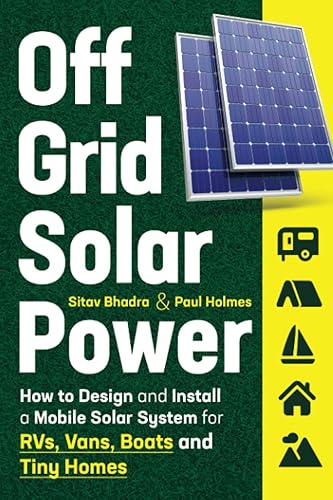 Best for mobile and vehicle setupsOff Grid Solar Power: How to Design and Install a Mobile Solar SystemView on Amazon
- 3
 Best for beginners on a budgetThe Beginner's Guide to DIY Off-Grid Solar Power: The 7-Step Sizing PlView on Amazon
Our Top Picks
Quick Comparison
| Product | Best for | Key feature |
|---|---|---|
| The DIY Off-Grid Solar Power Systems Bible | Home-scale kit selection and installation | Covers panels, kit choice, battery sizing, and home and AC loads |
| Off Grid Solar Power: How to Design and Install a Mobile Solar System | Vehicle and small-footprint builds | Step-by-step mobile system design and installation |
| The Beginner’s Guide to DIY Off-Grid Solar Power | First-time builders on a limited budget | 7-step sizing plan with four complete build examples |
The DIY Off-Grid Solar Power Systems Bible: Install Panels with Confidence, Choose Better Kits, Size Batteries, and Plan for Home, RV, and Air Conditioner Use
The DIY Off-Grid Solar Power Systems Bible: Install Panels with Confidence, Choose Better Kits, Size Batteries, and Plan for Home, RV, and Air Conditioner Use
Best for: Home-scale kit selection and installation
This is the most complete pick for someone who wants a home solar power kits DIY project that can run real household loads, including an air conditioner. It suits buyers who want to understand a kit’s components before ordering one and who plan to size batteries carefully.
Key specs:
- Covers panel installation, kit selection, and battery sizing
- Addresses home, RV, and air conditioner load planning
Pros:
- Strong focus on choosing a kit that matches actual household loads
- Battery sizing guidance is useful for avoiding undersized systems
- Covers both home and mobile applications in one reference
Cons:
- Broad scope means some sections go deeper than a basic backup builder needs
- Readers looking only for step-by-step wiring diagrams may want a more focused guide
Bottom line: Pick this if you are planning a real home system and want to size it correctly before buying a kit. Read the sizing sections first, since they will shape every other decision.
Off Grid Solar Power: How to Design and Install a Mobile Solar System for RVs, Vans, Boats and Tiny Homes (DIY Solar Power)
Off Grid Solar Power: How to Design and Install a Mobile Solar System for RVs, Vans, Boats and Tiny Homes (DIY Solar Power)
Best for: Vehicle and small-footprint builds
This guide targets people who want a compact, self-contained system. It is a good fit for tiny homes and cabins as well as vehicles, and it helps readers understand how the same design principles apply at a smaller scale before scaling up to a full home kit.
Key specs:
- Focus on mobile and small-footprint system design
- Covers RVs, vans, boats, and tiny homes
Pros:
- Clear design logic that transfers well to small home systems
- Useful for weight, space, and mounting considerations
- Good companion for readers building a modest backup system
Cons:
- Less focus on whole-house loads and large battery banks
- Some mobile-specific advice does not apply to a fixed home installation
Bottom line: A strong choice for a smaller home, cabin, or tiny house project. If your goal is a full-size household system, pair it with a home-focused reference.
The Beginner’s Guide to DIY Off-Grid Solar Power: The 7-Step Sizing Plan, Real Wiring Diagrams & 4 Complete Builds: Solar Box, Van/RV, Cabin/Tiny Home, Standalone Blackout Backup – Plus a Boat Bridge
The Beginner's Guide to DIY Off-Grid Solar Power: The 7-Step Sizing Plan, Real Wiring Diagrams & 4 Complete Builds: Solar Box, Van/RV, Cabin/Tiny Home, Standalone Blackout Backup – Plus a Boat Bridge
Best for: Beginners on a budget
This book is aimed at readers who have never sized a solar system. Its structured seven-step sizing plan and included wiring diagrams make it an approachable starting point for a first home solar power kits DIY project, especially for backup power.
Key specs:
- 7-step sizing plan
- Wiring diagrams and four complete build examples
Pros:
- Beginner-friendly sizing method with a clear sequence
- Multiple build examples help match a plan to your own use
- Wiring diagrams make the connections easier to follow
Cons:
- Build examples are smaller in scale than a full-time home system
- Advanced readers may find the basics repetitive
Bottom line: Best for a first-time builder who wants a backup or cabin-scale system. Use the sizing plan to check any kit’s specifications before you buy.
Buying Guide
Kit Capacity and Daily Energy Use
Start by adding up the watt-hours your home uses per day. Read the energy use on each appliance label or check your utility bill, then size the panel array and battery bank to cover that load plus a margin for cloudy days. Undersized kits are the most common complaint owners report.
Good picks for this: The DIY Off-Grid Solar Power Systems Bible, The Beginner’s Guide to DIY Off-Grid Solar Power
Battery Bank Size and Chemistry
Batteries usually determine how long a system runs overnight. Check the usable capacity, not just the nominal rating, and compare lead-acid and lithium options by cycle life and depth of discharge. Calculate the bank size from your daily load and the number of days of autonomy you want.
Good picks for this: The DIY Off-Grid Solar Power Systems Bible, The Beginner’s Guide to DIY Off-Grid Solar Power
Inverter Rating and Surge Capacity
The inverter must handle your continuous load and the startup surge of motors, such as a well pump or refrigerator compressor. Choose an inverter rated above your highest combined running load, and confirm its surge rating from the manufacturer’s specifications.
Good picks for this: The DIY Off-Grid Solar Power Systems Bible, Off Grid Solar Power: How to Design and Install a Mobile Solar System
Charge Controller Compatibility
Match the charge controller to both the panel voltage and the battery voltage. Confirm that the controller’s maximum input voltage and current limits are not exceeded by your array configuration, especially if you wire panels in series.
Good picks for this: Off Grid Solar Power: How to Design and Install a Mobile Solar System, The Beginner’s Guide to DIY Off-Grid Solar Power
Wiring Gauge and Safety Protection
Undersized cable causes voltage drop and heat. Size conductors for the current and run length, and include fuses or breakers at the battery and array. Install these components to the National Electrical Code as adopted in your area, and consult a licensed electrician for any connection to your main service panel. 6 Best Boom Pow DIY Solar Kits for Beginners in 2026 goes further into this.
Good picks for this: The Beginner’s Guide to DIY Off-Grid Solar Power, The DIY Off-Grid Solar Power Systems Bible
Installation Space and Mounting
Measure the roof or ground area available and check the panel dimensions before ordering. Consider tilt angle, shading from trees or nearby structures, and the weight your roof can support. A site that gets full sun for most of the day produces far more usable energy than a larger but shaded one.
Good picks for this: Off Grid Solar Power: How to Design and Install a Mobile Solar System, The DIY Off-Grid Solar Power Systems Bible
Expansion Path and Long-Term Maintenance
Choose a kit whose components can be expanded later, such as adding panels or a second battery string. Plan for periodic inspection of connections, battery water levels if applicable, and panel cleaning. Keep a log of performance so you can spot a drop in output early.
Good picks for this: The DIY Off-Grid Solar Power Systems Bible, The Beginner’s Guide to DIY Off-Grid Solar Power
FAQ
Can a beginner install a home solar power kits DIY project without professional help?
Many beginners install small backup or off-grid systems themselves, especially with a clear sizing plan and wiring diagrams. Connecting a system to your home’s electrical service, however, should be done by a licensed electrician to meet code and protect your home and utility crew.
How many panels do I need for a basic home kit?
It depends on your daily watt-hour use and your location’s peak sun hours. Divide your daily energy need by the peak sun hours at your site, then add a margin for system losses. Work through the sizing steps in a dedicated guide before choosing an array.
What is the difference between a kit and a custom build?
A kit bundles panels, controller, inverter, and wiring that are already matched. A custom build lets you select each component separately. Kits are simpler for beginners, while custom builds allow more control over cost and performance.
How long do the batteries last in a home solar system?
Lead-acid batteries often last fewer cycles than lithium batteries, and both are affected by depth of discharge and temperature. Check the manufacturer’s cycle-life rating and design your bank so you rarely discharge it deeply.
Do I need a permit for a home solar installation?
Requirements vary by city, county, and utility. Many jurisdictions require a permit for any system connected to the building’s wiring, and some require one even for off-grid setups. Check with your local building department before installing.
Can a solar kit run an air conditioner?
Air conditioners draw large startup surges and continuous power, so they require a substantially larger array, battery bank, and inverter than a basic kit. Size the system for the air conditioner’s rated load before attempting it.
Are solar kits safe to install around the house?
They can be, when wired with proper fusing, correct conductor sizing, and appropriate disconnects. Battery systems carry risks from high current and gas release, so follow manufacturer and code guidance, and consult a qualified professional if you are unsure.
Conclusion
For most readers planning a full home system, The DIY Off-Grid Solar Power Systems Bible offers the broadest sizing and kit-selection guidance. If your project is a vehicle, tiny home, or cabin, the mobile design guide is the more focused choice. First-time builders on a limited budget should start with The Beginner’s Guide to DIY Off-Grid Solar Power, then use its sizing plan to check any kit before buying.
Sources
- Federal guidance on solar energy basics, system types, and planning considerations for homeowners (energy.gov)
- Research data on solar resource, peak sun hours, and performance modeling for residential systems (nrel.gov)
- National Electrical Code standards that govern wiring, overcurrent protection, and interconnection requirements (nfpa.org)
Related reading
- 6 Best DIY Solar Power System Kit Options for Off-Grid Homes (2026)
- 6 Best DIY Off Grid Solar Power Kits for Homes and Cabins (2026)
- Top 7 DIY Off Grid Solar System Kits Compared for Homes (2026)
- How to Install Off Grid Solar Power System: DIY Kit vs Custom Build
About Ethan Brooks
Ethan Brooks is part of our editorial team and reviews and edits our DIY solar power systems guides, checking product details against manufacturer specifications and owner feedback.