 By Claire Whitaker
Updated November 2026
Choosing an off grid solar power system for home with battery storage means matching panel wattage, battery capacity and inverter output to your actual daily load. The picks below were chosen by reviewing manufacturer specifications, brand reputation and common owner feedback patterns for each kit. Criteria included total usable storage, inverter voltage and surge capacity, panel count, and how complete the kit is out of the box.
Our top picks at a glance
- 1
 TOP CHOICEBest overallWhole House System 10KW 120V/240V Split Phase Solar KitView on Amazon
- 2
 TOP CHOICEBest for mid-size homesSolar Panel Kit 12PCS 195W with 10KW InverterView on Amazon
- 3
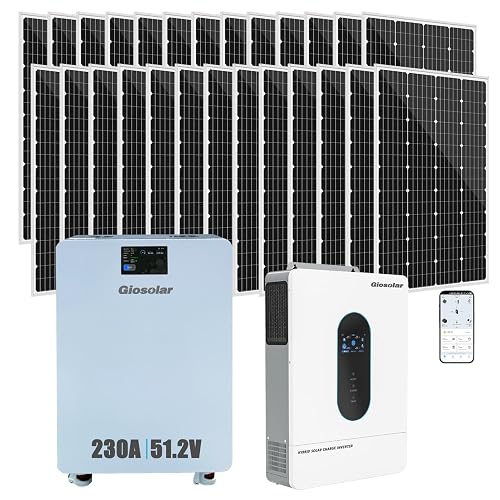 TOP CHOICEBest for high-load homes12000W Solar Power System Kit with 12KWh BatteryView on Amazon
- 4
 Best for small homes and cabins3000W 24V Solar Power System Complete Kit with 5.12KWh BatteryView on Amazon
- 5
 Best for budget-minded whole-home backupSUNGOLDPOWER 6500W Off Grid System Complete Solar KitView on Amazon
Our Top Picks
| Product | Best for | Key feature |
|---|---|---|
| Whole House System 10KW Split Phase | Full-home backup | 16kWh LiFePO4 storage |
| ECO-WORTHY 10KW Off Grid Kit | Mid-size homes | 12 panels, 2340W array |
| 12000W Hybrid Solar Power Kit | High-load homes | 12kWh battery, dual MPPT |
| 3000W 24V Complete Kit | Small homes and cabins | 24V low-voltage system |
| SUNGOLDPOWER 6500W Off Grid Kit | Budget whole-home backup | UL-listed inverter and battery |
Whole House System 10KW 120V/240V Split Phase Solar Kit
Whole House System:10KW 120V/240V Split Phase Solar Inverter| 48V 314Ah 16kWh High Capacity Energy Storage| 2950W Solar Panel ECO WORTHY 10000W Output Complete Off-Grid Solar Panel Kit for Home
Best for: Full-home backup with generous battery storage
This kit suits homeowners who want a split-phase 120V/240V system able to run major appliances, including well pumps and electric ranges, from a single large battery bank.
Pros
- Large 16kWh high-capacity battery bank
- Split-phase output matches standard US household wiring
Cons
- Installation demands careful sizing and a licensed electrician for panel integration
Solar Panel Kit 12PCS 195W with 10KW Inverter
Solar Panel Kit:12PCS 195W Solar Panels(2340W)+2PCS 48V 100AH Cubix Lithium Battery(10.24kWh)+10KW Solar Inverter 120V/240V ECO-WORTHY 10KW Output 9.36KWH Off Grid Solar System Complete Kit for Home
Best for: Mid-size homes that need a balanced panel-to-battery ratio
Owners building a moderate off-grid setup with 120V/240V loads often pair this kit with a generator for winter backup. The 2340W array is a practical match for a 10kWh battery.
Pros
- Panel and battery capacity are well balanced
- Split-phase 10kW inverter covers typical whole-home loads
Cons
- Battery capacity may run short during multi-day cloudy stretches
12000W Solar Power System Kit with 12KWh Battery
12000W Solar Power System Kit: 12KW 48V Split Phase Hybrid Solar Inverter with Dual 200A MPPT & WiFi, 12KWh 51.2V 230Ah Battery, 26pcs 120W Rigid Solar Panels for Home Off-Grid/Backup Power
Best for: High-load homes with electric heating or HVAC
This kit targets homes with heavier continuous loads. The dual 200A MPPT controllers and 26 panels provide substantial daytime generation capacity.
Pros
- Dual MPPT controllers handle larger arrays efficiently
- Large 12kWh battery supports sustained loads
Cons
- Requires significant roof or ground-mount space for 26 panels
3000W 24V Solar Power System Complete Kit with 5.12KWh Battery
3000W 24V Solar Power System Complete Kit with 1440W (12×120W) Solar Panel 3KW Peak 6KW Pure Sine Wave Inverter, 5.12KWH Battery,PV Combiner Box,MPPT Solar Controller,Off-Grid Home RV Backup
Best for: Small homes, cabins and backup-focused setups
A 24V architecture keeps wiring currents lower than 12V systems at this scale, which suits smaller homes that mainly run lighting, refrigeration and electronics.
Pros
- Lower-voltage design with a manageable footprint
- Includes combiner box and MPPT controller in the kit
Cons
- Limited surge capacity for large motor loads
SUNGOLDPOWER 6500W Off Grid System Complete Solar Kit
SUNGOLDPOWER 6500W Off Grid System Complete Solar Kit, 1 * 6500W 120/240Vac Solar Inverter UL1741+6 * 370W Mono Solar Panels + 1 * 100Ah 51.2V Lifepo4 Battery UL1973, for House Storage (SGM-655M)
Best for: Budget-minded whole-home backup with UL-listed components
Owners often cite the UL-listed inverter and LiFePO4 battery as reasons for choosing this kit for a backup role. It is a sensible option for a home that needs core circuits powered rather than full electrification.
Pros
- Inverter and battery carry UL listings
- Panel and battery sizing suit a moderate load profile
Cons
- A 100Ah battery is modest for full-time off-grid living
Buying Guide
Calculate Your Daily Energy Use
Add up the watt-hours each appliance uses per day, then add a 20 percent margin. This number determines how much battery capacity you need, so start here before comparing kits.
Match Battery Capacity to Autonomy
Decide how many days you want to run without sun. Multiply daily use by that number, then divide by usable depth of discharge. Lithium iron phosphate batteries are commonly rated for deeper discharge than lead-acid. For sizing guidance, see Off Grid Solar Power System Calculator: How to Size Your Setup Step-by-Step.
Good picks for this: Whole House System 10KW and 12000W Solar Power System Kit
FAQ
How much battery storage do I need for an off grid home?
The right amount depends on your daily energy use and how many days of backup you want during cloudy weather. Start by adding up the kilowatt-hours your appliances use in a typical day, then size the battery to cover that load plus a margin for losses. Many homeowners aim for one to two days of autonomy when they live fully off grid.
Can a 120V/240V split phase inverter run a whole house?
A split phase inverter with 120V/240V output is designed to power standard household circuits, including larger 240V appliances such as well pumps, electric ranges and central air conditioning. Check the inverter’s continuous and surge ratings against your largest appliances before you buy. Heavy motor loads often need a higher surge capacity than their running wattage suggests.
Do I need a backup generator with an off grid solar system?
A generator is not strictly required, but it is a common safeguard for long stretches of poor weather or high seasonal demand. Some systems can accept generator input to top up the battery when solar production is low. Discuss your location and climate with a licensed installer to decide whether a backup source makes sense for you.
How many solar panels are needed to charge the battery?
Panel count depends on your daily energy use, local sunlight hours and the efficiency of the system. Divide your daily kilowatt-hour need by the average peak sun hours at your site, then add extra capacity to account for losses and seasonal dips. Oversizing the array slightly is a common way to keep the battery charged during winter months.
Is a DIY installation safe for an off grid home system?
Many people install smaller kits themselves, but high-voltage battery and inverter wiring carries real electrical and fire risks. Local electrical codes and permit requirements also apply to most home installations. Hiring a qualified electrician or solar installer is the safest choice for whole-house systems.
How long do lithium batteries last in an off grid system?
Lithium iron phosphate batteries typically last many years and thousands of charge cycles when used within the manufacturer’s recommended depth of discharge. Lifespan varies with temperature, charging habits and maintenance of the overall system. Review the warranty terms for cycle count and years of coverage before you commit.
Conclusion
For most whole-house off grid setups with high daily loads, the larger 10KW split phase systems and the 12000W kit are the better fit, especially if you run electric heating, well pumps or central air. Homes with moderate, everyday use will likely find the mid-size 10KW kit with about 10kWh of storage a practical balance of cost and capacity.
Smaller households, cabins, RVs and backup-only setups can be well served by the 3000W 24V kit or the SUNGOLDPOWER 6500W system, which offer solid capacity without the expense of the largest packages. Match your choice to your measured daily energy use, and consult a professional installer before finalizing your purchase.
Related reading
- 4 Best Off Grid Solar Power System Battery Banks for Homes (2026)
- Top 6 Off Grid Solar Power Systems for Sale Options for Homes (2026)
- Top 5 Off Grid Solar PV Systems with Battery Options Compared for Homes
- Top 5 DIY Home Solar Power System Options for Off-Grid Homes
- Top 4 Off Grid Solar Systems with Battery Storage Options for Homes (2026)
- Top 3 Off Grid Solar System Battery Bank Options Compared for Homes
- DIY Off Grid Solar Power System for Home: A Step-by-Step Guide
- Complete 5kw Solar Power System Off Grid for Home: A Practical Guide (2026)
About Claire Whitaker
Claire Whitaker is part of our editorial team and reviews and edits our DIY solar power systems guides, checking product details against manufacturer specifications and owner feedback.


