 By Graham Fisher
Updated November 2026
A solar charge controller RV owners can rely on regulates the current flowing from your panels into your house batteries, which protects them from overcharging and keeps your charging efficient. This list compares six units by battery chemistry support, charging method (MPPT or PWM), current rating, display and programmability, and how well each suits a typical camper’s 12V or 24V system.
Our top picks at a glance
- 1
 TOP CHOICEBest overallVictron Energy SmartSolar MPPT 100V 50AView on Amazon
- 2
 TOP CHOICEBest for small rigsRenogy 30A 12V/24V PWM Solar Charge ControllerView on Amazon
- 3
 TOP CHOICEBest for Bluetooth monitoringVictron Energy SmartSolar MPPT 100V 30 amp 12/24-Volt Solar Charge ControllerView on Amazon
- 4
 Best for adjustable settingsRenogy Rover 30A 12V/24V Auto DC Input MPPT Solar Charge ControllerView on Amazon
- 5
 Best for USB-powered accessoriesSUNAPEX MPPT Solar Charge Controller 12V 10A for LiFePO4 AGM Gel BatteriesView on Amazon
- 6
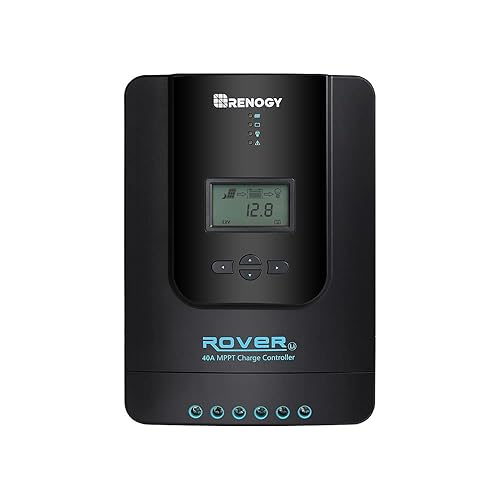 Best for larger arraysRenogy Rover 40A 12V/24V Auto Parameter MPPT Solar Charge ControllerView on Amazon
Our Top Picks
| Product | Best for | Key feature |
|---|---|---|
| Victron Energy SmartSolar MPPT 100V 50A | High-output systems | Bluetooth, 100V input |
| Renogy 30A PWM Adventurer | Small RV setups | Flush mount, LCD display |
| Victron Energy SmartSolar MPPT 30A | Phone-based monitoring | Bluetooth, 12/24V |
| Renogy Rover 30A MPPT | Custom battery profiles | Adjustable parameters |
| SUNAPEX MPPT 12V 10A | Accessory charging | USB-C output |
| Renogy Rover 40A MPPT | Larger arrays | 40A rating, LCD |
Victron Energy SmartSolar MPPT 100V 50A
Victron EnergyBluetooth Charge Controllers for Solar Panels, Certified to UL1741 SmartSolar MPPT Solar Charge Controller 100V, 50A, 12/24V
Best for: High-output systems
This unit suits builders running larger arrays who want a single controller with room to grow and Bluetooth monitoring from a phone.
Pros
- High 50A rating and 100V input tolerance
- Bluetooth app for monitoring and settings
Cons
- Higher output than most small RV systems need
Renogy 30A 12V/24V PWM Solar Charge Controller
Renogy 30A 12V/24V PWM Solar Charge Controller with LCD Display Flush Mount Design Negative Ground, Compatible with Sealed, Gel, Flooded and Lithium Batteries, Adventurer 30A,black
Best for: Small RV setups
Owners with a modest panel count and a basic 12V battery bank often choose this flush-mount PWM unit for its simple layout and clear LCD.
Pros
- Flush-mount design fits tight cabinet spaces
- Compatible with lithium, sealed, gel and flooded batteries
Cons
- PWM charging wastes more energy than MPPT in cool, bright conditions
Victron Energy SmartSolar MPPT 100V 30 amp 12/24-Volt Solar Charge Controller
Victron Energy SmartSolar MPPT 100V 30 amp 12/24-Volt Solar Charge Controller (Bluetooth)
Best for: Phone-based monitoring
This mid-size MPPT model suits campers who want to check yield, battery voltage and charge stage from a smartphone while parked.
Pros
- Bluetooth monitoring and configuration
- Supports both 12V and 24V battery banks
Cons
- Monitoring depends on a phone within Bluetooth range
Renogy Rover 30A 12V/24V Auto DC Input MPPT Solar Charge Controller
Renogy Rover 30A 12V/24V Auto DC Input MPPT Solar Charge Controller Parameter Adjustable LCD Display Solar Panel Regulator fit for Gel Sealed Flooded and Lithium Battery, Rover 30A,Black
Best for: Custom battery profiles
Builders who run unusual battery chemistries or want to fine-tune absorption and float voltages will find the adjustable parameters useful.
Pros
- Adjustable charging parameters on the LCD
- Auto-detects 12V or 24V system voltage
Cons
- Parameter menus take time to learn without a manual at hand
SUNAPEX MPPT Solar Charge Controller 12V 10A for LiFePO4 AGM Gel Batteries
SUNAPEXType-C & USB Output | LCD Voltage & Current Display | LED Charging Status | Smart Battery Protection | Zero Battery Drain MPPT Solar Charge Controller 12V 10A for LiFePO4 AGM Gel Batteries
Best for: Accessory charging
This small 10A unit suits a compact camper or van with a few panels and a need for USB-C output alongside battery charging.
Pros
- USB-C output for phones and small devices
- LCD shows voltage and current at a glance
Cons
- 10A limit restricts larger panel arrays
Renogy Rover 40A 12V/24V Auto Parameter MPPT Solar Charge Controller
Renogy Solar Charge Controller Rover 40A 12V24V Auto Parameter DC Input MPPT Charge Controllers for Solar Panels Adjustable LCD for Gel Sealed Flooded Lithium Battery
Best for: Larger arrays
Owners stepping up from a 30A unit to a bigger roof array will find the 40A rating leaves headroom for additional panels.
Pros
- 40A rating for larger arrays
- Adjustable LCD settings for multiple battery types
Cons
- Oversized for very small single-panel setups
Buying Guide
Match the controller to your battery chemistry
LiFePO4 batteries need a charge profile that differs from lead-acid types, so confirm the controller lists your battery chemistry before buying. Many owners set the voltage limits manually on adjustable units.
FAQ
What is the difference between MPPT and PWM solar charge controllers?
MPPT controllers track the panel’s maximum power point and convert excess voltage into extra charging current, which usually makes them more efficient, especially when panel voltage is well above battery voltage. PWM controllers simply pulse the connection on and off and are typically less expensive, but they work best when the panel voltage closely matches the battery voltage.
Do I need to match the controller to my battery type?
Yes. Lead-acid batteries such as AGM, gel, and flooded types need different charge profiles than lithium iron phosphate (LiFePO4) batteries, and using the wrong setting can shorten battery life. Choose a controller that supports your chemistry or one with adjustable settings you can program to match it.
How do I size a solar charge controller for my RV?
Start by adding up the wattage of your solar panels and dividing by your system voltage (12V or 24V) to estimate the maximum current. Choose a controller rated somewhat higher than that figure to leave room for headroom and future panel additions. Check the maximum panel voltage input as well, since exceeding it can damage the controller.
Can I install a solar charge controller myself?
Many RV owners install a controller themselves if they are comfortable with basic wiring, but you should always disconnect power before working on the system and follow the manufacturer’s diagram. Use wire gauge and fuses appropriate for your current rating, and consult a qualified technician if you are unsure about any step.
Why would I want a controller with Bluetooth or an LCD display?
A display or Bluetooth connection lets you check battery voltage, charging current, and charging status without climbing into storage compartments or guessing from indicator lights. This makes it easier to spot problems early and adjust settings when your battery bank or usage changes.
Will a solar charge controller drain my batteries when the sun goes down?
A quality controller is designed to prevent reverse current flow from the battery back to the panels at night, which keeps your batteries from draining through the controller. Look for models that specifically advertise low or zero standby drain if you plan to leave your rig parked for long periods.
Conclusion
If you want the most capable and flexible option for a larger off-grid setup, the higher-rated MPPT controllers with Bluetooth monitoring are the strongest choice, especially if you plan to add more panels later. Campers with smaller 12V systems who want a simple, budget-friendly controller will be well served by a PWM model with a clear display.
For owners running lithium batteries or who want fine-grained control over charging profiles, an adjustable MPPT controller offers the most room to tune performance. Match your choice to your panel wattage, battery chemistry, and how much monitoring you actually need, and you will get reliable charging without overspending.
Related reading
- Top 6 MPPT Solar Charge Controllers for Lithium Batteries Compared
- Top 5 Rich Solar Charge Controllers Compared for DIY Systems
- Top 5 Mppt Solar Charge Controller 12v Options Compared for DIY Systems
- Solar Charge Controller Repair: A Step-by-Step Guide for DIY Builders
- Solar Charge Controller Lithium Ion: How to Choose and Wire One (Step-by-Step)
About Graham Fisher
Graham Fisher is part of our editorial team and reviews and edits our DIY solar power systems guides, checking product details against manufacturer specifications and owner feedback.


