By Ethan Brooks
Updated November 2026
Anyone planning a solar power system DIY project faces a crowded field of guides, and the right book can save weeks of trial and error. The picks below were chosen by checking product listings, publisher information and the patterns owners commonly describe in their feedback. Selection criteria: clear sizing methods, real wiring diagrams, coverage of batteries and charge controllers, and a fit for a specific build type.
Our top picks at a glance
- 1
 TOP CHOICEBest overallThe DIY Off Grid Solar Power BibleView on Amazon
- 2
 TOP CHOICEBest for beginnersThe Beginner's Guide to DIY Off-Grid Solar Power: The 7-Step Sizing PlView on Amazon
- 3
 TOP CHOICEBest for a quick overviewDIY Solar Power: How To Power Everything From The SunView on Amazon
- 4
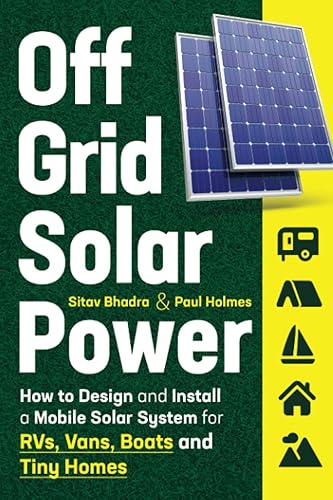 Best for RVs and vansOff Grid Solar Power: How to Design and Install a Mobile Solar SystemView on Amazon
- 5
 Best for battery sizing and costsThe All-in-One DIY Off-Grid Solar Power ManualView on Amazon
- 6
 Best for small portable buildsDIY Portable Solar Power BoxView on Amazon
Our Top Picks
| Product | Best for | Key feature |
|---|---|---|
| The DIY Off Grid Solar Power Bible | Full off-grid builds | Design, install and maintenance coverage |
| The Beginner’s Guide to DIY Off-Grid Solar Power | First-time builders | 7-step sizing plan |
| DIY Solar Power: How To Power Everything From The Sun | General overview | Broad introduction to concepts |
| Off Grid Solar Power: Mobile Solar System | RVs, vans and boats | Mobile installation focus |
| The All-in-One DIY Off-Grid Solar Power Manual | Battery sizing and budgeting | Step-by-step projects with diagrams |
| DIY Portable Solar Power Box | Compact and emergency systems | Small-scale project builds |
The DIY Off Grid Solar Power Bible
The DIY Off Grid Solar Power Bible: [10 in 1] The Most Complete and Updated Guide to Design, Install, and Maintain Solar Energy Systems for Tiny Homes, Cabins, Rvs, and Boats
Best for: Full off-grid builds
This book suits readers who want one reference covering design, installation and upkeep for tiny homes, cabins, RVs and boats. For another angle, check out Solar Off-Grid System Design: 5 Best Books for DIY Builders (2026).
Pros
- Covers the whole lifecycle from design to maintenance
- Broad scope across several build types
Cons
- Breadth can mean less depth on any single build
The Beginner’s Guide to DIY Off-Grid Solar Power: The 7-Step Sizing Plan, Real Wiring Diagrams & 4 Complete Builds
The Beginner's Guide to DIY Off-Grid Solar Power: The 7-Step Sizing Plan, Real Wiring Diagrams & 4 Complete Builds: Solar Box, Van/RV, Cabin/Tiny Home, Standalone Blackout Backup – Plus a Boat Bridge
Best for: First-time builders
Readers new to solar who want a structured sizing method and worked wiring examples will find this the most approachable option.
Pros
- Step-by-step sizing plan with clear logic
- Four complete build examples
Cons
- Advanced builders may want more technical detail
DIY Solar Power: How To Power Everything From The Sun
DIY Solar Power: How To Power Everything From The Sun
Best for: General overview
This title works for readers who want to understand the core concepts before committing to a specific project.
Pros
- Accessible explanation of how systems fit together
- Useful background before buying parts
Cons
- Less project-level detail than the more specialized guides
Off Grid Solar Power: How to Design and Install a Mobile Solar System for RVs, Vans, Boats and Tiny Homes
Off Grid Solar Power: How to Design and Install a Mobile Solar System for RVs, Vans, Boats and Tiny Homes (DIY Solar Power)
Best for: RVs and vans
Owners of mobile setups, where space, vibration and weight shape every decision, will find the focus here useful.
Pros
- Addresses mobile-specific installation concerns
- Practical focus on compact layouts
Cons
- Less relevant for stationary home builds
The All-in-One DIY Off-Grid Solar Power Manual
The All-in-One DIY Off-Grid Solar Power Manual: Build a Reliable Solar System to Fit Your Needs & Budget — Step-by-Step Projects, Clear Wiring Diagrams, Battery Sizing & Costs for Homes, Cabins & RVs
Best for: Battery sizing and budgeting
Builders who want to match battery capacity to real daily loads will benefit from the sizing and cost-planning sections.
Pros
- Clear battery sizing methods
- Diagrams for homes, cabins and RVs
Cons
- Cost planning will vary with local supplier pricing
DIY Portable Solar Power Box
DIY Portable Solar Power Box: Build Your Own Compact Off-Grid Energy System for Home, Travel & Emergencies
Best for: Compact and emergency systems
Readers who need a small, self-contained power source for travel or backup will find this project-focused title a good starting point.
Pros
- Focused on small, buildable projects
- Suits travel and emergency use
Cons
- Not designed for whole-home loads
Buying Guide
Match the Book to Your Build Type
A stationary cabin, a van and a portable box all have different load profiles and wiring needs. Choose a guide whose examples mirror your project.
Look for Real Wiring Diagrams
Diagrams that show fuses, disconnects and grounding make the difference between a working system and a fire risk. Check the sample pages before buying.
Check Sizing Methods
A good guide walks through daily watt-hour totals, battery bank sizing and panel output. Confirm the math is shown, not just stated.
FAQ
Do I need an electrical background to build a DIY off-grid solar system?
Not necessarily, but you should be comfortable reading wiring diagrams and following safety rules. Books that include step-by-step builds and clear sizing methods make the learning curve much easier. If you are unsure about any connection, consider having a licensed electrician check the work before you power it up.
Which book is best if I only want a small portable setup?
A focused guide on compact portable power boxes is the better fit for small setups used for travel, camping or emergency backup. These titles concentrate on a single build rather than covering whole homes. That focus keeps the material practical and easier to apply to a modest budget.
Do these books cover batteries and charge controllers?
Most of the guides in this list address battery sizing, charge controller selection and basic system protection. Coverage depth varies, so check the table of contents before buying if battery chemistry is a priority for you. Pairing a book with current manufacturer datasheets will help you confirm specific component details.
Are these books useful for RVs, vans and boats?
Several titles in this roundup are written with mobile builds in mind, including RVs, vans and boats. Mobile systems have unique constraints such as vibration, limited roof space and shifting loads, so look for guides that address those issues directly. A book aimed at mobile use will usually be more helpful than a general home-focused manual.
Will a book keep my information current on solar equipment?
Solar technology and product standards change over time, so a book is best used as a foundation rather than the final word. Check the publication date and cross-reference equipment specifications with the manufacturer. Local electrical codes also vary, so confirm requirements with your local authority.
Should I buy more than one book?
Many builders find that one comprehensive guide plus one project-focused book works well together. The comprehensive title supplies theory and sizing methods, while the project book provides a concrete build to follow. Choose based on whether you need depth, hands-on projects or both.
Conclusion
If you want one broad reference covering design, installation and maintenance, the comprehensive guides are the strongest starting point. Beginners who learn best by following a build should look at the step-by-step beginner and project-focused titles. Those planning a compact or emergency setup will get the most value from the portable power box guide.
Match the book to your build type, check that it includes real wiring diagrams and sizing methods, and verify key figures against current manufacturer information before you buy components.
Related reading
- Off-Grid Solar Power System Diagram: A Step-by-Step Layout for DIY Builders
- Diy Solar and Wind Power Systems: How to Plan, Size and Wire a Hybrid Setup
- DIY Off Grid Solar Power System for Home: A Step-by-Step Guide
About Ethan Brooks
Ethan Brooks is part of our editorial team and reviews and edits our DIY solar power systems guides, checking product details against manufacturer specifications and owner feedback.