 By Ethan Brooks
Updated November 2026
A typical off-grid solar system pairs solar panels, a battery bank, a charge controller and an inverter so a home can run without a utility connection. Picking the right kit depends on daily energy use, whether you need 120V or split-phase 120V/240V output, battery chemistry, and how much of the wiring and sizing you want to handle yourself. The five options below were selected from product listings, brand reputation and common owner feedback patterns. We did not test them ourselves.
Our top picks at a glance
- 1
 TOP CHOICEBest overallWhole House System: 10KW 120V/240V Split Phase Solar Inverter 48V 314Ah 16kWhView on Amazon
- 2
 TOP CHOICEBest for mid-size homesSolar Panel Kit: 12PCS 195W Panels with 10KW Inverter and 9.36kWh Lithium BatteryView on Amazon
- 3
 TOP CHOICEBest for small cabins and RVsSUNGOLDPOWER 3000W 24V Off Grid System Solar Kit CompleteView on Amazon
- 4
 Best for learning the designThe DIY Off Grid Solar Power BibleView on Amazon
- 5
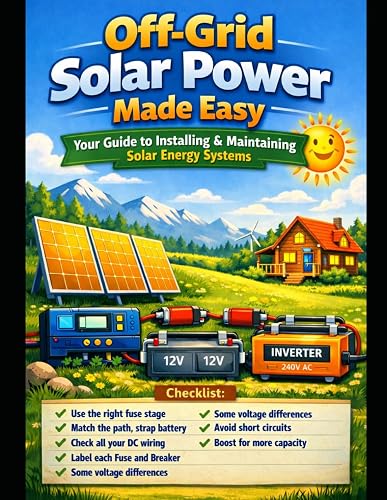 Best for a step-by-step buildOff Grid Solar Power Made Easy: Build Your Own Off-Grid Solar SystemView on Amazon
Our Top Picks
| Product | Best for | Key feature |
|---|---|---|
| Whole House System 10KW | Full-home power | 16kWh storage, split-phase output |
| ECO-WORTHY 10KW Kit | Mid-size homes | 12 panels, 10.24kWh battery |
| SUNGOLDPOWER 3000W 24V Kit | Cabins and RVs | Compact 24V battery bank |
| The DIY Off Grid Solar Power Bible | Learning system design | Covers sizing and maintenance |
| Off Grid Solar Power Made Easy | Guided DIY builds | Step-by-step build instructions |
Whole House System: 10KW 120V/240V Split Phase Solar Inverter 48V 314Ah 16kWh
Whole House System:10KW 120V/240V Split Phase Solar Inverter| 48V 314Ah 16kWh High Capacity Energy Storage| 2950W Solar Panel ECO WORTHY 10000W Output Complete Off-Grid Solar Panel Kit for Home
Best for: Full-home power with high daily loads
Suited to homeowners who want to run major appliances, including electric HVAC or a well pump, from a single split-phase system. The listing specifies 2950W of panels and 10,000W of inverter output. A related read: 7 Best 50kw Off Grid Solar System Options for Homes (2026).
Pros:
- Split-phase 120V/240V output supports standard US household loads
- Large 16kWh battery bank for extended cloudy periods
Cons:
- Requires careful sizing and a qualified electrician for panel integration
Solar Panel Kit: 12PCS 195W Panels with 10KW Inverter and 9.36kWh Lithium Battery
Solar Panel Kit:12PCS 195W Solar Panels(2340W)+2PCS 48V 100AH Cubix Lithium Battery(10.24kWh)+10KW Solar Inverter 120V/240V ECO-WORTHY 10KW Output 9.36KWH Off Grid Solar System Complete Kit for Home
Best for: Mid-size homes wanting a complete kit
Fits households with moderate daily consumption that want panels, lithium batteries and an inverter bundled together. Owners often report that the bundled format simplifies ordering.
Pros:
- Panels, batteries and inverter sized to work together
- 120V/240V split-phase inverter output
Cons:
- Total battery capacity may fall short for all-electric homes
SUNGOLDPOWER 3000W 24V Off Grid System Solar Kit Complete
SUNGOLDPOWER 3000W 24V Off Grid System Solar Kit Complete,1 * 3000W 120Vac Solar Inverter+4 * 200W Solar Panels+2pcs 24V 100Ah LifePO4 Battery,for RV,House Storage, Farm,Off Grid System
Best for: Small cabins and RVs
Works for smaller loads such as lights, a refrigerator and small electronics. The 24V battery architecture keeps current lower than a 12V setup at the same power level. If you want more background, see Top 6 Best Off-Grid Solar System in Indias for Homes (2026).
Pros:
- Compact 24V LiFePO4 battery bank
- Includes 4 panels and a 3000W inverter
Cons:
- Limited capacity for whole-home electric loads
The DIY Off Grid Solar Power Bible
The DIY Off Grid Solar Power Bible: [10 in 1] The Most Complete and Updated Guide to Design, Install, and Maintain Solar Energy Systems for Tiny Homes, Cabins, Rvs, and Boats
Best for: Learning how to design and wire a system
Aimed at readers who want to understand the math behind sizing, wiring and maintenance before buying hardware. It covers tiny homes, cabins, RVs and boats.
Pros:
- Broad coverage of sizing and wiring fundamentals
- Useful reference across many off-grid building types
Cons:
- A book, so it does not include any hardware
Off Grid Solar Power Made Easy: Build Your Own Off-Grid Solar System
off grid solar power made easy: Build Your Own Off-Grid Solar System (Step-by-Step for Homes & Cabins)
Best for: A guided, step-by-step DIY build
Suited to first-time builders who want a sequence to follow from site planning through final connections. Pair it with a sizing worksheet for your own loads.
Pros:
- Organized as a build sequence for homes and cabins
- Accessible language for beginners
Cons:
- Does not replace local electrical code requirements
Buying Guide
Daily Energy Use
Add up the watt-hours your appliances use per day. This total sets the minimum battery capacity and panel wattage you need, and it is the first number to pin down before comparing kits.
Battery Chemistry and Voltage
Lithium iron phosphate (LiFePO4) batteries are common in typical off-grid systems because they tolerate deeper discharge. Higher system voltage such as 48V reduces current for the same power, which means thinner wire runs. We also found 5 Best Off Grid 2kW Solar Systems for Homes (2026) useful on this point.
Inverter Output
Confirm whether you need 120V only or split-phase 120V/240V for large loads like electric dryers or well pumps. Match the continuous rating to your largest simultaneous load, with headroom for surge.
Expansion Room
Choose a kit whose inverter and charge controller can accept more panels or batteries later. Many owners start small and add capacity over time.
Good picks for this: Whole House System 10KW and Solar Panel Kit 10KW
FAQ
What does a typical off-grid solar system include?
A typical off-grid solar system includes solar panels to generate power, a battery bank to store it, a charge controller to regulate charging, and an inverter to convert stored DC power into the AC power your appliances use. Some kits also include mounting hardware and wiring. Choosing a complete kit can simplify matching these components.
How do I know how big an off-grid system my home needs?
Start by estimating your daily energy use in kilowatt-hours by adding up the wattage and daily run time of the appliances you plan to power. Size the panels to replenish that energy in your local sunlight conditions, and size the battery bank to cover your needs through cloudy days or overnight. A licensed installer or solar designer can help refine these numbers for your location.
What is the difference between 120V and split-phase 120V/240V output?
A 120V system provides single-phase power suitable for most standard household outlets and smaller loads. Split-phase 120V/240V output provides both 120V and 240V, which is needed for larger appliances such as electric ranges, clothes dryers, and well pumps. If your home has 240V appliances, a split-phase inverter is generally required.
Is lithium or lead-acid battery storage better for an off-grid home?
Lithium batteries, such as LiFePO4, typically offer longer cycle life, higher usable capacity, and lighter weight than lead-acid batteries. Lead-acid batteries have a lower upfront cost but usually require more maintenance and replacement over time. Many off-grid homeowners choose lithium for its long-term value and performance.
Can I install an off-grid solar system myself?
Some homeowners with electrical experience install kits themselves, especially with step-by-step guides available. However, off-grid systems involve high-voltage DC wiring, battery safety considerations, and local electrical code requirements. Hiring a qualified electrician or solar installer is recommended for safety and to ensure proper permitting.
Do off-grid solar systems work during winter or cloudy weather?
Solar output drops during winter months and on cloudy days, so production can be significantly lower than in summer. A well-sized battery bank and panel array help bridge these periods. Many off-grid homes also include a backup generator to cover extended stretches of low sun.
Conclusion
Homeowners who need to power a full house, including larger 240V appliances, should look at the Whole House System or the ECO-WORTHY 10KW kit with their higher storage capacity. Those with smaller homes, cabins, or RV-style needs will likely find the SUNGOLDPOWER 3000W kit a better fit for its lower output and simpler setup.
If you prefer to design and build the system yourself, the DIY guides are a good place to start, but be sure your plan is verified by a qualified professional before installation. Whichever option you choose, matching the system to your actual daily energy use is the most important step.
Related reading
- Off-Grid, Backup and Hybrid Solar Systems: How They Differ
- Wiring Diagram for Off-Grid Solar System: A Step-by-Step Guide
- Wind Solar Hybrid Off Grid System: How to Size and Wire One
- Whole House Off-Grid Solar System: Sizing Steps and Parts for Your Home
- What Is Needed for Off-Grid Solar System: A Step-by-Step Parts Checklist
- What Is Meant by Off Grid Solar System? A Plain-English Answer
- What Do I Need for Off-Grid Solar System: A Step-by-Step Parts Guide
- V Guard Off Grid Solar System: Sizing, Parts and Wiring Guide (2026)
About Ethan Brooks
Ethan Brooks is part of our editorial team and reviews and edits our DIY solar power systems guides, checking product details against manufacturer specifications and owner feedback.


