 By Claire Whitaker
Updated November 2026
Choosing a 5000 watt solar power inverter means balancing surge capacity, battery voltage, built-in charge controllers and wiring flexibility. This list compares five 5000 watt models based on manufacturer specifications, listing details and common owner feedback patterns. Each pick is matched to a specific need so you can narrow the field quickly.
Our top picks at a glance
- 1
 TOP CHOICEBest overallSurge 10000W with 4 AC OutletView on Amazon
- 2
 TOP CHOICEBest for portable LCD control5000 watt Power Inverter DC 12V to AC 110V/120V ConverterView on Amazon
- 3
 TOP CHOICEBest for 48V battery banks with MPPTSolar Inverter 5000 Watt 48V to 120VView on Amazon
- 4
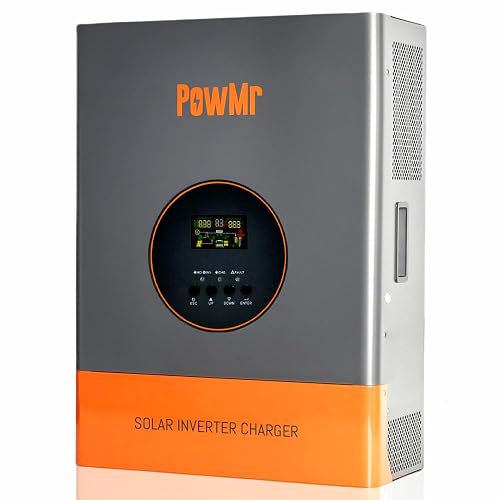 Best for hybrid off-grid systemsPowMr 5000W Hybrid Solar Inverter 48VDC to 110/220VACView on Amazon
- 5
 Best for UL-listed installationsSUNGOLDPOWER UL1741 5000W Solar Inverter 48V DC to 110V/120V ACView on Amazon
Our Top Picks
Quick Comparison
| Product | Best for | Key feature |
|---|---|---|
| Surge 10000W with 4 AC Outlet | RVs and vehicles | 200ft remote control |
| 5000 watt Power Inverter 12V to 110V/120V | Portable camping setups | LCD display and wireless controller |
| Solar Inverter 5000 Watt 48V to 120V | 48V battery banks | Built-in 100A MPPT charger |
| PowMr 5000W Hybrid Solar Inverter | Hybrid off-grid homes | Built-in 120A MPPT controller |
| SUNGOLDPOWER UL1741 5000W Solar Inverter | Certified off-grid systems | UL1741 listing and 80A MPPT |
Surge 10000W with 4 AC Outlet
RV, Truck, Solar, Home, Off-Grid Surge 10000W with 4 AC Outlet, 2 USB-A Port, 200ft Remote Control and 3 AC Terminal Blocks 5000 Watt Power Inverter 12V DC to 120V/110V AC for Vehicles Car Converter
Best for: RVs, trucks and vehicle-based power needs
This model suits owners who want a 12V DC to 120V AC converter with multiple outlets and remote operation for mobile setups.
Pros
- Four AC outlets and two USB-A ports
- 200ft remote control and three AC terminal blocks
Cons
- A 12V input limits it to smaller battery banks for full 5000 W loads
5000 watt Power Inverter DC 12V to AC 110V/120V Converter
5000 watt Power Inverter DC 12V to AC 110V/120V Converter,10000w Peak.Comes with LCD Display,Wireless Controller, 4AC outlets,1USB.RV Inverter,Suitable for Camping,and Off-Grid Solar Inverter Systems
Best for: Portable camping and RV power with monitoring
Buyers who want an LCD status screen and wireless control for a mobile or temporary off-grid setup will find this model useful.
Pros
- LCD display and wireless controller
- Four AC outlets and one USB port
Cons
- Not a solar charge controller, so a separate MPPT unit is needed for panels
Solar Inverter 5000 Watt 48V to 120V
Solar Inverter 5000 Watt 48V to 120V, inbuilt 100A MPPT Solar Charger, Max PV Input 5500W 500Vdc,Off Grid Pure Sine Wave Inverter Support up to 6 in Parallel for Lead Acid Lithium Battery
Best for: 48V battery banks with integrated solar charging
This model fits DIYers building a fixed off-grid system around a 48V battery bank who want the charger and inverter in one unit.
Pros
- Built-in 100A MPPT solar charger with 5500W PV input
- Supports up to six units in parallel
Cons
- Parallel operation requires careful configuration and matched wiring
PowMr 5000W Hybrid Solar Inverter 48VDC to 110/220VAC
PowMr 5000W Hybrid Solar Inverter 48VDC to 110/220VAC, 5kW Off-Grid w/Built-in 120A MPPT Charge Controller, Pure Sine Wave Inverter for 48V Lead-Acid and Lithium Battery, Peak Power:15000W
Best for: Hybrid off-grid homes with mixed AC voltage needs
Owners who want both 110V and 220V output options and a 120A MPPT charge controller built in will find this model flexible.
Pros
- Built-in 120A MPPT charge controller
- Peak power rating of 15000W for motor starting
Cons
- Peak ratings are short-duration; continuous load is the figure to size against
SUNGOLDPOWER UL1741 5000W Solar Inverter 48V DC to 110V/120V AC
SUNGOLDPOWER UL1741 5000W Solar Inverter,48V DC to 110V/120V AC,All in One,80A MPPT Solar Charger and 40A AC Battery Charger Pure Sine Wave for Off Grid System(NO Parallel)
Best for: Installations where UL1741 listing matters
This all-in-one unit suits builders who want a UL1741-listed inverter with an 80A MPPT charger and a 40A battery charger on a single 48V system.
Pros
- UL1741 listing and pure sine wave output
- 80A MPPT solar charger plus 40A AC battery charger
Cons
- No parallel operation, which limits future expansion
Buying Guide
Battery voltage
Match the inverter’s DC input to your battery bank, typically 12V, 24V or 48V. Higher voltage reduces current and wire size for the same power.
Surge versus continuous rating
Size to the continuous wattage of your loads, then confirm the surge rating covers motor startup. A 5000 W continuous rating means your simultaneous loads should stay under that figure.
Built-in charge controller
An integrated MPPT controller simplifies wiring but check its amperage against your panel array. Confirm the maximum PV input voltage is not exceeded by your series string.
Pure sine wave output
Pure sine wave output is generally needed for sensitive electronics, motors and compressors. Modified sine wave units may cause problems with some equipment.
Good picks for this: SUNGOLDPOWER UL1741 5000W Solar Inverter and Solar Inverter 5000 Watt 48V to 120V
FAQ
What does a 5000 watt inverter power in a home?
A 5000 watt inverter can run several everyday loads at once, such as a refrigerator, lights, a microwave and electronics, as long as the combined continuous draw stays under its rating. High-draw appliances like electric dryers, central air conditioners and electric water heaters usually need a larger system or should be left off the inverter. Check each appliance’s running wattage before you plan your setup.
Why does surge rating matter more than continuous rating for some loads?
Motors in refrigerators, well pumps and air compressors draw a brief spike of power when they start, often several times their running wattage. An inverter with a high surge rating can handle that startup moment without shutting down. The continuous rating, however, is the amount it can supply steadily over time.
Do I need a battery voltage of 48V for a 5000 watt inverter?
Not always, but 48V systems are common for 5000 watt models because higher voltage means lower current for the same power, which allows thinner wiring and less heat loss. Some 12V models can also reach this output, though they draw very high current from the battery bank. Match the inverter’s input voltage to your existing or planned battery setup.
Is a built-in MPPT charge controller worth having?
A built-in MPPT charge controller lets you connect solar panels directly to the inverter, which simplifies wiring and reduces the number of separate components. It is especially useful for off-grid systems that need to charge batteries from the sun. If you already have a separate controller, you may not need this feature.
Why is a pure sine wave output important?
Pure sine wave output produces clean power that matches what comes from a standard wall outlet. This keeps sensitive electronics, medical devices, laptops and motor-driven appliances running smoothly and reduces noise or overheating. Modified sine wave inverters are cheaper but can cause problems with some equipment.
Can I connect more than one 5000 watt inverter together?
Some models support parallel operation, which lets you combine units to increase total output and capacity. Others are designed to run alone, so you should confirm parallel support before buying if you plan to expand later. Always follow the manufacturer’s wiring and setup instructions when linking units.
Conclusion
If you want the most surge headroom and a simple setup for RV, camping or vehicle use, the Surge 10000W model and the 12V LCD inverter are the best fits, depending on your power source. For a larger battery bank paired with solar, the 48V models with built-in MPPT controllers offer the most complete off-grid solution, with the hybrid PowMr unit suited to users who want grid-compatible options.
Choose based on how you will use the inverter: portable and vehicle needs point toward 12V models, while fixed off-grid homes and solar arrays are better served by 48V systems with integrated charging. Confirm battery voltage, surge needs and parallel support before you buy so the inverter matches your setup.
Related reading
- Solar Power Inverter 3000 Watt: How to Size and Wire One (2026)
- Top 6 Solar Inverters for Power Outage Picks for Home Backup
- Top 6 3 Phase Solar Power Inverters Compared for Commercial and Off-Grid Use
- Solar Power Inverter Size: How to Calculate the Right Rating (2026)
About Claire Whitaker
Claire Whitaker is part of our editorial team and reviews and edits our DIY solar power systems guides, checking product details against manufacturer specifications and owner feedback.




