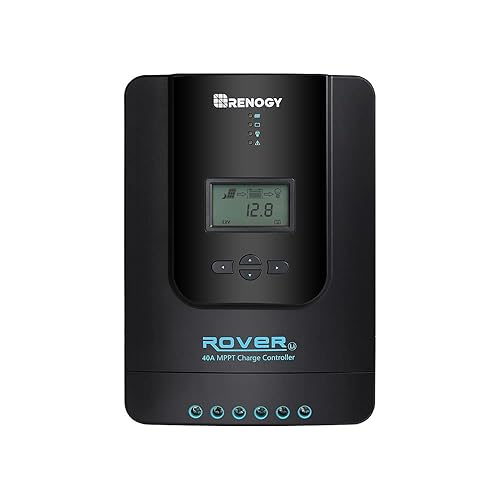
By Claire Whitaker
Updated November 2026
A flexible solar panel kit suits buyers who need to mount power on curved roofs, boat decks, van tops or uneven ground where rigid glass panels won’t sit flat. The right choice depends on total wattage, whether the kit includes a charge controller and what battery voltage it charges. This list compares seven kits on those criteria: wattage per module, controller rating, panel construction, included cabling and how well each fits mobile or off-grid setups.
Our top picks at a glance
- 1
 TOP CHOICEBest overall500 Watt Solar Panel Kit, 2 × 250 Watt Flexible Solar Power Panel PhotView on Amazon
- 2
 TOP CHOICEBest for 12V RV and off-grid home useECO-WORTHY 260Watt 12Volt Flexible Solar Panel KitView on Amazon
- 3
 TOP CHOICEBest for high-output camping setups2pcs 500W Monocrystalline Solar Panel, Portable Photovoltaic Modules fView on Amazon
- 4
 Best for larger RV and home arrays1200W Flexible Solar Panel Kit 2×600W Monocrystalline RV Solar Panels KitView on Amazon
- 5
 Best for inverter-ready off-grid builds800 Watt Solar Panel Kit, 2×400 Watt Flexible Solar Power Panel Photovoltaic ModuleView on Amazon
- 6
 Best for modular series or parallel wiringFour 100W semi-flexible ETFE panels with MC4 leads; series or parallelView on Amazon
- 7
 Best for partial shading and curved surfaces2PCS 200 Watt Solar Panels for RV Marine Rooftop Balcony Curve SurfaceView on Amazon
Our Top Picks
| Product | Best for | Key feature |
|---|---|---|
| 500 Watt Solar Panel Kit, 2 × 250 Watt | General off-grid and camping | 40A controller included |
| ECO-WORTHY 260Watt 12Volt Kit | 12V RV and cabin systems | Y-branch and tray cable |
| 2pcs 500W Monocrystalline Kit | High-output camping setups | 1000W combined array |
| 1200W Flexible Solar Panel Kit | Larger RV and home arrays | 40A controller, 12–48V |
| 800 Watt Solar Panel Kit | Inverter-ready off-grid builds | Controller and inverter listed |
| DOKIO 400W Flexible Set | Modular series or parallel wiring | Four 100W ETFE modules |
| Renogy 400W ShadowFlux | Partial shading and curved roofs | N-type cells, shade tolerance |
500 Watt Solar Panel Kit, 2 × 250 Watt Flexible Solar Power Panel Photovoltaic Module with 40A Solar Charge Controller
500 Watt Solar Panel Kit, 2 × 250 Watt Flexible Solar Power Panel Photovoltaic Module with 40A Solar Charge Controller Monocrystalline Solar Panel for Camping Off Grid Battery Charging Boat
Best for: General off-grid and camping power
A solid starting point for buyers who want around 500 watts with a controller already matched to the array. It suits campers and small boat owners charging a 12V battery bank.
Pros
- Controller included with the kit
- Lightweight flexible modules
Cons
- Output tops out at 500 watts for larger loads
ECO-WORTHY 260Watt 12Volt Flexible Solar Panel Kit
ECO-WORTHY 260Watt 12Volt Flexible Solar Panel Kit for Off Grid Home RV, Boat and Uneven Surfaces:2pcs 130W Mono Solar Panel + 30A 12V Charger Controller + Solar Cable + Tray Cable + Y Branch
Best for: 12V RV and off-grid home use
Fits buyers with a 12-volt battery system who want a compact 260-watt array. The included Y-branch and tray cable simplify two-panel wiring on uneven surfaces.
Pros
- Y-branch and solar cable included
- Suits uneven mounting surfaces
Cons
- Lower wattage than larger kits
2pcs 500W Monocrystalline Solar Panel, Portable Photovoltaic Modules 1000 Watt Flexible Solar Panel Kit
2pcs 500W Monocrystalline Solar Panel, Portable Photovoltaic Modules for RV Boat Tent Camping 1000 Watt Flexible Solar Panel Kit with Charge Controller Off Grid Power
Best for: High-output camping setups
Suited to users who want roughly 1000 watts across two modules for tents, RVs and boats. Plan your controller rating carefully, since combined output can exceed smaller controllers.
Pros
- Two 500-watt modules for higher total output
- Monocrystalline cells for good low-light output
Cons
- Requires careful controller matching
1200W Flexible Solar Panel Kit 2×600W Monocrystalline RV Solar Panels Kit
Portable Photovoltaic Module, 40A Charge Controller, 12-48V Battery Charging, Home Use, Camper 1200W Flexible Solar Panel Kit 2×600W Monocrystalline RV Solar Panels Kit
Best for: Larger RV and home arrays
Aimed at owners running bigger battery banks at 12 to 48 volts. It fits a whole-RV or small home supplemental system where you need headroom.
Pros
- Supports 12–48V battery charging
- Two 600-watt modules for high total output
Cons
- Heavier and needs a sturdy mounting plan
800 Watt Solar Panel Kit, 2×400 Watt Flexible Solar Power Panel Photovoltaic Module
800 Watt Solar Panel Kit, 2×400 Watt Flexible Solar Power Panel Photovoltaic Module with 40A Solar Charge Controller & Inverter Monocrystalline Solar Panel for Camping Off Grid Battery Charging Boat
Best for: Inverter-ready off-grid builds
A good middle-size choice for off-grid cabins or workshops that will pair the array with an inverter. The kit lists a charge controller and inverter in the same package.
Pros
- Controller and inverter included in the listing
- Two 400-watt flexible modules
Cons
- Inverter capacity should be checked against your loads
Buying Guide
Total Wattage and Your Power Needs
Start by estimating how many watt-hours you use each day, then choose a kit whose total wattage can produce that amount under typical sunlight. Kits range from a few hundred watts to over a thousand, so matching the total output to your loads prevents both underpowering and overspending.
Remember that real-world output is usually lower than the rated figure because of angle, shade and temperature. Plan for some margin above your daily needs.
Charge Controller Rating and Battery Voltage
The charge controller regulates power going into your battery, and its amp rating should match or exceed the current the panels can produce. A controller that is too small will limit output and may overheat, while one that matches the system protects your battery.
Confirm that the controller supports your battery voltage, such as 12V or a wider 12 to 48V range. Kits that include a controller save time, but check that it fits your battery bank.
Panel Construction and Flexibility
Flexible panels typically use thin-film or ETFE-laminated cells that bend to follow curved surfaces. Fully flexible modules suit boats and van roofs with contours, while semi-flexible panels offer a bit more durability and efficiency on flat or lightly curved mounts.
Check whether the panels are monocrystalline or another type, since cell technology affects efficiency and how well the panel handles partial shading.
Included Cabling and Connectors
Look at what comes in the box, including extension cables, MC4 connectors, Y branches and tray cable. A kit with the right connectors and wiring options saves you from buying extra parts and helps you wire panels in series or parallel for your voltage.
Make sure the cable length suits your mounting distance from the panels to the controller and battery.
Portability and Mounting Fit
If you plan to move the system between vehicles, campsites or boats, consider weight, folding options and how easily the panels can be stored. For permanent installs, focus instead on mounting hardware compatibility and how the panels will attach to your roof or frame.
FAQ
Can a flexible solar panel kit charge a 12V battery?
Yes, many of the kits on this list include a charge controller designed for 12V battery charging, and some support a wider voltage range. Always confirm the controller’s supported voltage before connecting it to your battery bank. Matching the controller to your battery prevents damage and improves charging efficiency.
Do flexible solar panels produce less power than rigid panels?
Flexible panels generally have lower efficiency than comparable rigid glass panels of the same size. They make up for this with light weight and the ability to mount on curved or uneven surfaces. For many mobile and boat applications, that trade-off is worth it.
Will partial shade stop my flexible panels from working?
Shade on one part of a panel can reduce output from the whole string, especially when panels are wired in series. Some kits use designs intended to handle partial shading better, which can help on trees, buildings or snowy days. Wiring layout also plays a role, so plan your arrangement carefully.
Should I wire the panels in series or parallel?
Series wiring raises the voltage and suits controllers with higher input limits, while parallel wiring keeps the voltage closer to your battery and suits 12V systems. Check the controller’s input specifications before choosing. Kits with series and parallel options give you flexibility to match your setup.
Do I need a separate inverter to run household appliances?
A charge controller alone only charges a battery, so you will need an inverter to power standard AC appliances. Some kits include an inverter, but many do not. Check your appliance loads and choose an inverter sized to match.
Conclusion
For the highest total output and a complete setup with a controller, the larger kits such as the 500 Watt and 1000 Watt options suit buyers powering a home, large RV or off-grid cabin. Buyers focused on a 12V RV, van or small off-grid system will find the mid-sized kits, such as the ECO-WORTHY 260 Watt kit, a practical fit.
Smaller or semi-flexible kits work well for weekend campers, small boats and anyone needing light, portable charging. Match the total wattage, controller rating and battery voltage to your needs, and the right option will follow.
Related reading
- Top 7 DIY Solar Panel Installation Kit Options Compared for Beginners
- Top 7 200 W Solar Panel Kit Options Compared for Off-Grid Use (2026)
- Top 5 Solar Panel Systems for Off Grid Cabin Kits Compared (2026)
- Top 5 Solar Panel Pergola Kits Worth Considering in 2026
- Top 5 Kits for Solar Panel Options Compared for DIY Buyers
- Top 5 Grid Tied Solar Panel Kit Options Compared for Homes (2026)
About Claire Whitaker
Claire Whitaker is part of our editorial team and reviews and edits our DIY solar power systems guides, checking product details against manufacturer specifications and owner feedback.