By Graham Fisher
Updated November 2026
Shoppers looking for a zamp solar charge controller usually want to match a regulator to their battery bank, panel array and charging needs without overspending on features they will never use. This list compares six well-known charge controllers from Victron Energy and Renogy, the brands most often recommended in DIY solar forums. Selection criteria include charger type (MPPT or PWM), maximum solar input voltage, amperage rating, battery chemistry support and monitoring options.
Our top picks at a glance
- 1
 TOP CHOICEBest overallBluetooth Charge Controllers for Solar Panels, Certified to UL1741 VicView on Amazon
- 2
 TOP CHOICEBest for small budget buildsRenogy 30A 12V/24V PWM Solar Charge Controller with LCD Display FlushView on Amazon
- 3
 TOP CHOICEBest for 24V or 48V banksRenogy 60A MPPT Solar Charge Controller 12V/24V/36V/48V Auto, 150V MaxView on Amazon
- 4
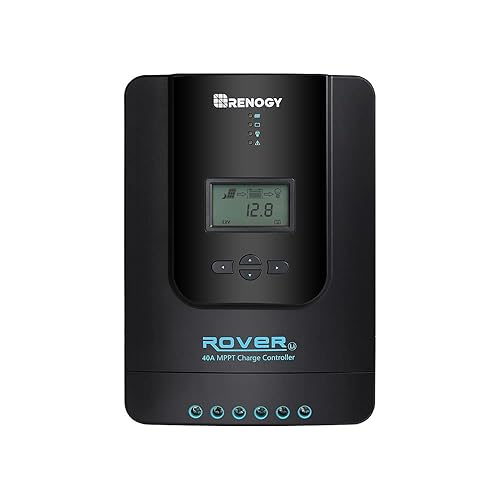
 Best for mid-size arraysRenogy Rover 30A 12V/24V Auto DC Input MPPT Solar Charge Controller PaView on Amazon
- 5
 Best for higher voltage panelsVictron EnergyBluetooth Solar Charge Controllers for Solar Panels, CerView on Amazon
- 6
 Best for compact systemsRenogy𝐌𝐈𝐍𝐈 𝐒𝐈𝐙𝐄, Rover 2, 300W/600W PV, 𝐅𝐢𝐭𝐬 𝟏𝟎𝟎𝐖/𝟐𝟎𝟎𝐖 𝐏𝐚𝐧𝐞𝐥𝐬, LithiumView on Amazon
Our Top Picks
| Product | Best for | Key feature |
|---|---|---|
| Victron EnergyBluetooth SmartSolar MPPT 100V 50A | Best overall | Bluetooth monitoring, UL1741 listed |
| Renogy 30A 12V/24V PWM Adventurer | Small budget builds | Simple PWM, flush mount |
| Renogy 60A MPPT Rover Lite | 24V or 48V banks | Auto voltage, 150V input |
| Renogy Rover 30A MPPT | Mid-size arrays | Parameter-adjustable LCD |
| Victron EnergyBluetooth SmartSolar MPPT 150V 45A | Higher voltage panels | 150V input, 12–48V output |
| Renogy Rover 2 MINI SIZE MPPT 20A | Compact systems | Bluetooth and LCD, 100V input |
Victron EnergyBluetooth Charge Controllers for Solar Panels, Certified to UL1741 SmartSolar MPPT Solar Charge Controller 100V, 50A, 12/24V
Bluetooth Charge Controllers for Solar Panels, Certified to UL1741 Victron Energy SmartSolar MPPT Solar Charge Controller 100V, 50A, 12/24V
Best for: Best overall
This suits builders who want detailed battery and array monitoring from a phone and a widely supported MPPT design.
Pros
- Bluetooth monitoring with app-based settings
- Listed to UL1741 for grid-interactive use
Cons
- Higher cost tier than basic PWM units
Renogy 30A 12V/24V PWM Solar Charge Controller with LCD Display Flush Mount Design Negative Ground, Compatible with Sealed, Gel, Flooded and Lithium Batteries, Adventurer 30A,black
Renogy 30A 12V/24V PWM Solar Charge Controller with LCD Display Flush Mount Design Negative Ground, Compatible with Sealed, Gel, Flooded and Lithium Batteries, Adventurer 30A,black
Best for: Small budget builds
Fits small 12V or 24V setups such as weekend cabins, sheds and basic RV systems where PWM charging is sufficient.
Pros
- Flush mount design with LCD display
- Supports sealed, gel, flooded and lithium chemistries
Cons
- PWM charging wastes more panel output than MPPT
Renogy 60A MPPT Solar Charge Controller 12V/24V/36V/48V Auto, 150V Maximum Solar Input, for Gel Sealed Flooded and Lithium Battery, Rover Lite 60A
Renogy 60A MPPT Solar Charge Controller 12V/24V/36V/48V Auto, 150V Maximum Solar Input, for Gel Sealed Flooded and Lithium Battery, Rover Lite 60A
Best for: 24V or 48V banks
A good match for mid-size off-grid banks that need higher amperage and automatic voltage detection.
Pros
- Automatic 12V to 48V system detection
- 150V maximum solar input allows longer string lengths
Cons
- Larger footprint than mini-class controllers
Renogy Rover 30A 12V/24V Auto DC Input MPPT Solar Charge Controller Parameter Adjustable LCD Display Solar Panel Regulator fit for Gel Sealed Flooded and Lithium Battery, Rover 30A,Black
Renogy Rover 30A 12V/24V Auto DC Input MPPT Solar Charge Controller Parameter Adjustable LCD Display Solar Panel Regulator fit for Gel Sealed Flooded and Lithium Battery, Rover 30A,Black
Best for: Mid-size arrays
Works for builders stepping up from PWM who want adjustable charge parameters without moving to a premium brand.
Pros
- Parameter-adjustable LCD for custom charge profiles
- Auto 12V/24V detection
Cons
- Limited to 30A, so large arrays need a bigger unit
Victron EnergyBluetooth Solar Charge Controllers for Solar Panels, Certified to UL1741 SmartSolar MPPT Charge Controller 150V, 45A, 12/24/36/48V
Victron EnergyBluetooth Solar Charge Controllers for Solar Panels, Certified to UL1741 SmartSolar MPPT Charge Controller 150V, 45A, 12/24/36/48V
Best for: Higher voltage panels
Targets builders running higher-voltage panel strings who want a 45A MPPT controller with 12V to 48V battery support.
Pros
- 150V input supports series-wired arrays
- Covers 12V, 24V, 36V and 48V batteries
Cons
- Requires careful string voltage calculations
Buying Guide
Charger Type: MPPT vs. PWM
MPPT (Maximum Power Point Tracking) controllers convert excess panel voltage into extra charging current, which makes them a better fit for larger arrays or setups where the panel voltage is well above the battery voltage. PWM (Pulse Width Modulation) controllers are simpler and typically suited to smaller systems where the panel voltage closely matches the battery voltage.
Maximum Solar Input Voltage
Check the maximum open-circuit voltage the controller can accept and compare it with the combined voltage of your panels in series, including cold-weather voltage increases. Staying comfortably below the rated limit protects the controller from damage.
Also confirm that the controller’s system voltage (12V, 24V, 36V or 48V) matches your battery bank, since many models offer auto-detection while others require manual setup.
Amperage Rating and Expansion Room
The amperage rating limits how much current the controller can pass from your panels to the batteries. Divide your total panel wattage by your system voltage to estimate the current you will need, and choose a model with some headroom for future panel additions.
Battery Chemistry Support
Not every controller offers charging profiles for every battery type. Make sure the model supports your battery chemistry, such as sealed, gel, flooded or lithium, and that you can adjust charging settings if your battery manufacturer recommends specific values.
Monitoring and Connectivity
An LCD display gives you a quick look at voltage, current and charging status at the controller itself. Bluetooth connectivity or companion apps allow remote monitoring and history tracking, which can help you spot problems early and fine-tune your system over time.
FAQ
Can I use a PWM controller with a large solar array?
PWM controllers can work with larger arrays, but they waste the extra panel voltage that an MPPT controller would convert into charging current. For bigger systems, an MPPT model usually delivers noticeably more energy to the batteries. Matching panel voltage closely to battery voltage is the main situation where PWM makes sense.
How do I know what amperage rating I need?
Add up the wattage of all the panels you plan to connect, then divide by your battery system voltage to estimate the maximum charging current. Choose a controller rated above that number, with some extra margin for future expansion. Staying within the rating helps prevent overheating and unnecessary wear.
Do I need to match the controller voltage to my battery bank?
Yes, the controller must match the nominal voltage of your battery bank, such as 12V, 24V or 48V. Some models detect the voltage automatically, while others need to be set manually. Mismatched settings can lead to undercharging or overcharging.
Is Bluetooth monitoring necessary?
Bluetooth monitoring is not required for a working system, but it is useful if you want to check performance from a phone or track energy production over time. If you prefer a simple setup, an LCD display on the controller may be all you need.
Can these controllers charge lithium batteries?
Many of the controllers in this category list lithium among their supported battery types, but you should always confirm that the specific model includes a lithium charging profile. It is also wise to check your battery manufacturer’s charging voltage recommendations and set the controller accordingly.
What wiring mistakes should I avoid?
Always connect the battery before connecting the solar panels, and disconnect the panels before the battery when shutting down. Use wire sized for the expected current and include a properly rated fuse or breaker on the battery side. Following the manufacturer’s wiring diagram helps avoid damage to the controller and your batteries.
Conclusion
If you have a small, straightforward system with panel voltage close to your battery voltage, a PWM controller from the Renogy lineup can be a practical, budget-minded choice. For larger arrays, higher voltage panels or a desire for Bluetooth monitoring, the MPPT options from Victron Energy and Renogy’s higher-amperage models are better matched to growing DIY systems.
Start by calculating your total panel wattage, confirming your battery voltage and checking the battery chemistry you plan to use. Then pick the controller whose input voltage, amperage rating and features fit those numbers with some room to grow.
Related reading
- Top 6 Wanderer Solar Charge Controllers Compared for DIY Systems
- Top 6 Solar 12V Charge Controller Options Compared for DIY Systems
- Top 6 MPPT Solar Charge Controllers for Lithium Batteries Compared
- Top 5 Solar Charge Controller Lithium Ion Battery Picks Compared (2026)
- Top 5 Rich Solar Charge Controllers Compared for DIY Systems
About Graham Fisher
Graham Fisher is part of our editorial team and reviews and edits our DIY solar power systems guides, checking product details against manufacturer specifications and owner feedback.