 By Claire Whitaker
Updated November 2026
A grid tie solar inverter converts DC power from your panels into AC power that syncs with your utility grid, and this list compares seven units by input voltage range, output voltage, monitoring and suitability for home arrays. The selection criteria are voltage compatibility with your panels, output voltage (110V/120V or 220V/240V), built-in limiting or monitoring features and how well each listing matches common DIY home setups. Read the specs closely before buying, since mismatched voltage is the most common reason a grid tie inverter fails to start. 7 Best Grid Tie Solar Panel Kit Options for Home Systems (2026) goes further into this.
Best overall: Y&H 1400W Grid Tie Inverter – View on Amazon
Best for small 12V panel setups: Y&H 180W MPPT Grid Tie Micro Inverter – View on Amazon
Best for grid export limiting: Y&H 1000W Grid Tie Inverter Power Limiter – View on Amazon
Best for higher-voltage arrays: Y&H 2000W Grid Tie Inverter Power Limiter – View on Amazon
Best for wind and solar combos: Solar Micro Grid Tie Inverter WVC-1200W – View on Amazon
Best for 24V and 36V panels: Y&H 600W Solar Grid Tie Micro Inverter – View on Amazon
Best for hybrid battery backup: POWLAND 12000W Hybrid Solar Inverter – View on Amazon
Our Top Picks
Quick Comparison
| Product | Best for | Key feature |
|---|---|---|
| Y&H 1400W Grid Tie Inverter | Best overall | Stackable MPPT pure sine |
| Y&H 180W MPPT Micro Inverter | Small 12V panel setups | Compact micro inverter design |
| Y&H 1000W Grid Tie Inverter | Grid export limiting | Built-in power limiter |
| Y&H 2000W Grid Tie Inverter | Higher-voltage arrays | LCD display, wide DC input |
| Solar Micro Grid Tie Inverter WVC-1200W | Wind and solar combos | AC data monitoring display |
| Y&H 600W Solar Grid Tie Micro Inverter | 24V and 36V panels | IP65 waterproof rating |
| POWLAND 12000W Hybrid Solar Inverter | Hybrid battery backup | Dual 200A MPPT, WiFi |
Y&H 1400W Grid Tie Inverter Stackable MPPT Pure Sine Wave DC16-28V Solar Input AC90-140V Output for 12V Solar Panel

Y&H 1400W Grid Tie Inverter Stackable MPPT Pure Sine Wave DC16-28V Solar Input AC90-140V Output for 12V Solar Panel
Best for: Overall fit for small home arrays on a 12V-based panel string For another angle, check out Top 5 String Inverters for Solar Systems Compared for Homes (2026).
Suits DIYers who want a stackable pure sine wave unit for modest grid-tied arrays. 6 Best Solar Power Inverter Grid Tie Options for Homes (2026) goes further into this.
Pros:
- Stackable design for expansion
- Pure sine wave output
Cons:
- Output range is 90–140V, so confirm your grid voltage first
Y&H 180W MPPT Grid Tie Micro Inverter PV Input DC16-26V AC110V/220V Output Home Use Small Solar Power System for 12V Solar Panel
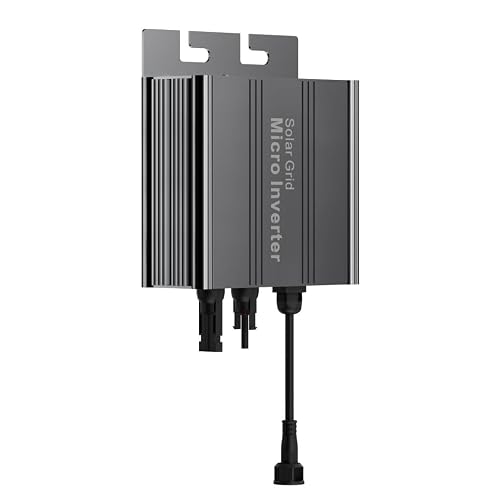
Y&H 180W MPPT Grid Tie Micro Inverter PV Input DC16-26V AC110V/220V Output Home Use Small Solar Power System for 12V Solar Panel
Best for: Small 12V panel setups
Fits users with one or two small panels feeding a single household circuit.
Pros:
- Low output suits small arrays
- Dual 110V/220V output option
Cons:
- Limited capacity for larger homes
Y&H 1000W Grid Tie Inverter Power Limiter DC25-60V Solar Input AC110V/240V Auto Switch

Y&H 1000W Grid Tie Inverter Power Limiter DC25-60V Solar Input AC110V/240V Auto Switch
Best for: Grid export limiting
Works for households that need to cap exported power to match utility rules.
Pros:
- Automatic 110V/240V switching
- Built-in power limiter
Cons:
- Limiter setup requires a compatible meter or sensor
Y&H 2000W Grid Tie Inverter Power Limiter LCD Display DC50-90V Solar Input AC185-265V Output SUN-2000GTIL2-H

Y&H 2000W Grid Tie Inverter Power Limiter LCD Display DC50-90V Solar Input AC185-265V Output SUN-2000GTIL2-H
Best for: Higher-voltage arrays
Targets larger series-wired strings running at higher DC voltages.
Pros:
- Wide 50–90V DC input window
- LCD display for monitoring
Cons:
- Requires careful string voltage calculation
Solar Micro Grid Tie Inverter, WVC-1200W MPPT Grid Tie Pure Sine Wave Dc to Ac Solar Grid Tie Micro Inverter Solar & Wind Power Inverter with AC Data Monitoring Display LCD Screen

Solar Micro Grid Tie Inverter, WVC-1200W MPPT Grid Tie Pure Sine Wave Dc to Ac Solar Grid Tie Micro Inverter Solar & Wind Power Inverter with AC Data Monitoring Display LCD Screen
Best for: Wind and solar combos
Suits builders combining wind and solar sources into one grid-tied output.
Pros:
- AC data monitoring display
- Pure sine wave output
Cons:
- Wind compatibility depends on your turbine’s output
Buying Guide
Match the Input Voltage to Your Solar Panels
Every grid tie inverter has a DC input window, and your panel or array voltage must fall inside it. Check the open-circuit voltage of your panels and confirm it sits within the inverter’s stated range, since a mismatch is the most common reason a unit will not start.
Confirm the AC Output Voltage for Your Home
Units in this list output either 110V/120V or 220V/240V, so make sure the output matches your household service. Using the wrong output voltage can damage appliances or prevent the inverter from syncing with the grid.
Look for Power Limiting and Monitoring Features
Power limiter functions help prevent backfeeding power into the grid beyond what your local rules allow. Built-in LCD screens or AC data monitoring make it easier to track production and spot problems without extra equipment.
Consider Your System Size and Expansion Plans
Small micro inverters suit compact setups, while higher-wattage units and stackable or parallel-capable models are better for larger home arrays. If you may add panels later, choose an inverter that can be expanded without replacing the whole system.
Check Certification and Local Interconnection Rules
Look for listings that reference recognized safety standards such as UL1741, and confirm that your utility permits the type of grid tie system you plan to install. Many utilities require an inspection or an approved interconnection application before the system can be switched on.
FAQ
What is a grid tie solar inverter?
A grid tie solar inverter converts the direct current from your solar panels into alternating current that matches your utility grid. It allows your system to supply power to your home and send any excess back to the grid. It does not store energy, so it only works while the grid is active.
Can I use a grid tie inverter during a power outage?
Standard grid tie inverters shut down during a grid outage for safety reasons, so they will not power your home without the grid. If you need backup power, you would need a hybrid inverter paired with batteries or a separate off-grid setup. Check the specifications of any unit before assuming it provides backup.
Why won’t my grid tie inverter start?
The most common cause is a voltage mismatch, where the panel voltage falls outside the inverter’s DC input range or the output does not match your grid voltage. Confirm your panel open-circuit voltage and your home service voltage against the listing. Loose wiring and grid frequency issues can also prevent startup. 7 Best Solar Cell Micro Inverter Options for Home Grid-Tie Systems (2026) goes further into this.
Do I need a power limiter with my grid tie inverter?
A power limiter is useful if your utility or local rules restrict how much power you can export to the grid, or if you want to avoid exporting excess energy. Some areas require limiting features for certain installations. Check your utility’s interconnection requirements before choosing a model.
How do I know if an inverter is the right size for my panels?
The inverter’s rated power should be compatible with the total wattage of your panels, and the panel array’s voltage should fall within the inverter’s input window. Oversizing or undersizing can reduce efficiency or limit output. A licensed installer can help confirm the right match for your system.
Conclusion
For small or low-voltage setups, the smaller micro inverters in this list are a practical starting point, especially for 12V or 24V panel arrays. Homeowners planning a larger system with room to expand should look at the higher-wattage and stackable options, paying close attention to input voltage and output voltage before buying.
Anyone who needs monitoring or power limiting should prioritize units with an LCD display or AC data monitoring, while those with strict utility rules should confirm certification and interconnection requirements first. Matching the inverter to your panels and home service is the most important step in the decision.
Related reading
- Top 4 Off Grid Solar System 230V Inverters Compared for Homes
- Solar Inverter Grid Tied: How to Choose and Size One (Step-by-Step)
- Off Grid Solar System Inverter: How to Choose and Size One (Step-by-Step)
- 3 Best Sumry Hybrid Solar Inverter 4000W Options for Off-Grid Homes
About Claire Whitaker
Claire Whitaker is part of our editorial team and reviews and edits our DIY solar power systems guides, checking product details against manufacturer specifications and owner feedback.




