 By Ethan Brooks
Updated November 2026
Choosing an off grid solar system for camper use comes down to three questions: how many watt-hours you use each day, how much roof or ground space you have for panels, and whether your rig needs 12V or split-phase 120V/240V power. The six kits below were compared on a common set of criteria: total panel wattage, battery capacity and chemistry, inverter output and type, charge controller design, and how well each package suits a mobile setup. Each listing is described from its stated specifications and general owner feedback patterns, not from hands-on testing.
Our top picks at a glance
- 1
 TOP CHOICEBest overallECO-WORTHY 10KW Output Off Grid Solar System Complete KitView on Amazon
- 2
 TOP CHOICEBest for high-demand homes on wheelsSUNGOLDPOWER 10000W Off Grid Solar system Complete KitView on Amazon
- 3
 TOP CHOICEBest for mid-size RVsECO-WORTHY 7.168KWH 800W Solar Panel Kit for RV Off Grid Complete SystemView on Amazon
- 4
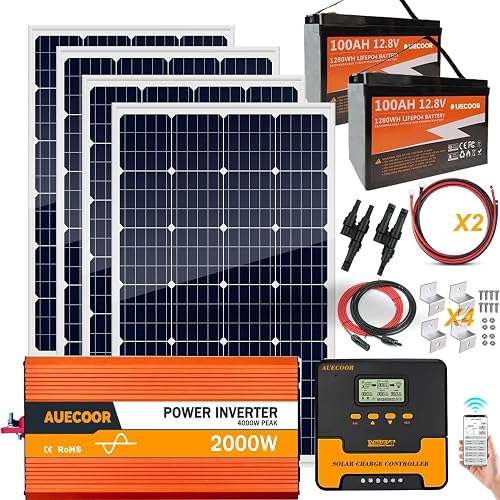 Best budget pick92KWH Complete Solar Panel Kit for RV Off Grid Solar SystemView on Amazon
- 5
 Best for modular expansionECO-WORTHY 10KW Output Off Grid Solar System Complete Kit (12 Panels)View on Amazon
- 6
 Best for compact 48V buildsOff Grid Solar Panle Kit with Battery & Inverter (ECO-WORTHY 5KW)View on Amazon
Our Top Picks
Quick Comparison
| Product | Best for | Key feature |
|---|---|---|
| ECO-WORTHY 10KW Output Off Grid Solar System Complete Kit | Whole-home backup and heavy loads | 10KW split-phase inverter with 20.48kWh storage |
| SUNGOLDPOWER 10000W Off Grid Solar system Complete Kit | Large off-grid loads on a permanent setup | 10KW inverter with 51.2V LiFePO4 battery bank |
| ECO-WORTHY 7.168KWH 800W Solar Panel Kit for RV Off Grid Complete System | Mid-size RVs and travel trailers | 60A MPPT controller with Bluetooth monitoring |
| 1.92KWH Complete Solar Panel Kit for RV Off Grid Solar System | Small campers and weekend use | Rigid mono panels sized for camper roofs |
| ECO-WORTHY 10KW Output Off Grid Solar System Complete Kit (12 panels) | Users who plan to add capacity later | Expandable 195W panel array and 10.24kWh battery |
| Off Grid Solar Panle Kit with Battery & Inverter (ECO-WORTHY 5KW) | Compact 48V setups with moderate loads | 5KW 48V inverter with LiFePO4 battery |
ECO-WORTHY 10KW Output Off Grid Solar System Complete Kit
ECO-WORTHY 10KW Output Off Grid Solar System Complete Kit:10KW 120V/240V Output Split Phase Inverter| 4Pcs 48V 100Ah 20.48kWh High Capacity Energy Storage| 5310 Watts Solar Panel PV
Best for: Whole-home backup and heavy loads
This kit suits owners with large, high-draw equipment such as air conditioning, induction cooking or power tools who want split-phase 120V/240V output. It is oversized for most camper vans but fits a large fifth wheel or a stationary tiny-house-style build.
Key specs
- 10KW output split-phase inverter, 120V/240V
- 4 x 48V 100Ah battery packs, about 20.48kWh total
- About 5310 W of solar PV
Pros
- Large storage capacity for multi-day autonomy
- Split-phase output supports 240V appliances
- Scalable for a permanent installation
Cons
- Heavy and bulky for most camper chassis
- Overkill for weekend trips with light loads
Bottom line: Pick this if your rig is a large, semi-permanent unit with serious power demands. Most camper van owners will find it more than they need.
SUNGOLDPOWER 10000W Off Grid Solar system Complete Kit
SUNGOLDPOWER 10000W Off Grid Solar system Complete Kit, 1*10KW 120V/240Vac Solar inverter (UL1741) + 12*550W solar panel ( 6.6KW) +5 *100Ah 51.2V Lifepo4 Battery (UL1973),For House storage(SGR-10K25S)
Best for: Large off-grid loads on a permanent setup
Owners who want a 10KW inverter with a LiFePO4 battery bank and are comfortable with a larger, fixed installation. It is better suited to a parked trailer or outbuilding than to a vehicle that moves often.
Key specs
- 10KW, 120V/240Vac solar inverter
- 5 x 100Ah 51.2V LiFePO4 batteries
- 12 x 550W panels, about 6.6KW array
Pros
- LiFePO4 chemistry handles deep cycling well
- High array wattage for fast recharge
- Listed UL1741 inverter certification
Cons
- Panel array is large and needs substantial roof or ground space
- Installation complexity is high for a first-time builder
Bottom line: A strong choice for a large, stationary off-grid setup with high loads. It is not a plug-and-go camper kit.
ECO-WORTHY 7.168KWH 800W Solar Panel Kit for RV Off Grid Complete System
4PCS 195W Solar Panels, 3000W UPS Inverter Charger, 2PCS 12.8V 280AH Lithium Batteries, 60A MPPT Controller Bluetooth ECO-WORTHY 7.168KWH 800W Solar Panel Kit for RV Off Grid Complete System
Best for: Mid-size RVs and travel trailers
This package is aimed at RV owners who need a 3000W UPS-style inverter charger and a Bluetooth-capable MPPT controller in one kit. It balances panel area and battery capacity for a 30 to 35 foot rig.
Key specs
- 4 x 195W solar panels
- 3000W inverter charger
- 2 x 12.8V 280Ah lithium batteries
- 60A MPPT charge controller with Bluetooth
Pros
- Bluetooth monitoring simplifies setup and tracking
- Battery and inverter sizing suits typical RV loads
- Inverter charger can also use shore power
Cons
- Four panels may be tight on smaller roofs
- Battery weight needs to be planned for in the rig
Bottom line: A well-rounded pick for owners of mid-size motorhomes or trailers who want one complete kit.
1.92KWH Complete Solar Panel Kit for RV Off Grid Solar System
1.92KWH Complete Solar Panel Kit for RV Off Grid Solar System |2x100Ah 12.8V Batteries 2560WH| 4x120W Mono Rigid Solar Panels |2000W Power Inverter|MPPT Controller|Trailer, Camper, Marine
Best for: Small campers and weekend use
A compact kit with two 100Ah 12.8V batteries and four 120W rigid panels, intended for small trailers, pop-ups and camper vans running lights, fans, a fridge and phone charging.
Key specs
- 2 x 100Ah 12.8V batteries, about 2560Wh
- 4 x 120W mono rigid panels
- 2000W power inverter and MPPT controller
Pros
- Light enough for typical camper roof loads
- Lower total storage suits modest daily use
- Simple layout for a first build
Cons
- Limited capacity for heavy appliances like AC units
- Four panels produce less daily energy than larger arrays
Bottom line: Best for owners with light, predictable loads who want a small, manageable system.
ECO-WORTHY 10KW Output Off Grid Solar System Complete Kit (12 Panels)
Solar Panel Kit:12PCS 195W Solar Panels(2340W)+2PCS 48V 100AH Cubix Lithium Battery(10.24kWh)+10KW Solar Inverter 120V/240V ECO-WORTHY 10KW Output 9.36KWH Off Grid Solar System Complete Kit for Home
Best for: Modular expansion
This kit pairs twelve 195W panels with two 48V 100Ah lithium batteries and a 10KW inverter. It suits builders who expect their needs to grow and want to add batteries or panels over time.
Key specs
- 12 x 195W solar panels, 2340W listed
- 2 x 48V 100Ah Cubix lithium batteries, about 10.24kWh
- 10KW, 120V/240V solar inverter
Pros
- Good panel-to-battery balance for daily cycling
- Clear path to expansion with additional battery modules
- Split-phase inverter output
Cons
- Roof space for twelve panels is significant on most campers
- Works best with a dedicated mounting setup
Bottom line: A good option for a permanent or semi-permanent build that may grow over time.
Off Grid Solar Panle Kit with Battery & Inverter (ECO-WORTHY 5KW)
Off Grid Solar Panle Kit with Battery & Inverter:12x195W Panels, 48V 5000W Solar Inverter, 48V 100AH Cubix LiFePO4 Battery ECO-WORTHY 5KW Off Grid Solar System Complete Kit 2340W
Best for: Compact 48V builds
A 5KW, 48V package with twelve 195W panels and one 48V 100Ah battery. It fits owners who want a mid-capacity system with a single battery module and a simpler wiring layout than the larger kits.
Key specs
- 12 x 195W panels, 2340W listed
- 48V 100Ah LiFePO4 battery
- 48V 5000W solar inverter
Pros
- Single battery keeps weight and wiring manageable
- 48V architecture reduces current for a given power level
- Good match for moderate daily loads
Cons
- Limited storage means less autonomy on cloudy days
- The panel array still needs a large roof or ground mount
Bottom line: A practical mid-range choice for a stationary or semi-stationary camper setup.
Buying Guide
Daily Energy Use (Watt-Hours)
List every device you plan to run, multiply each wattage by hours of use per day, and add the totals. A 12V fridge drawing about 50W running for 10 hours uses roughly 500Wh. Use that daily number to size battery capacity, then add about 20 percent margin for inverter and wiring losses.
Good picks for this: 1.92KWH Complete Solar Panel Kit for RV Off Grid Solar System, ECO-WORTHY 7.168KWH 800W Solar Panel Kit for RV Off Grid Complete System
Solar Array Size and Roof Space
Measure your usable roof area before choosing a panel count. Panel wattage per square foot varies, so check the listed dimensions. Remember that vents, air conditioners and roof racks reduce usable space.
Good picks for this: ECO-WORTHY 7.168KWH 800W Solar Panel Kit for RV Off Grid Complete System, 1.92KWH Complete Solar Panel Kit for RV Off Grid Solar System
Battery Chemistry
Lithium iron phosphate (LiFePO4) batteries tolerate deeper discharge and more cycles than lead-acid types, and they weigh less for the same usable energy. Lead-acid batteries cost less up front but need more care and capacity derating. Most kits on this list use lithium.
Good picks for this: SUNGOLDPOWER 10000W Off Grid Solar system Complete Kit, Off Grid Solar Panle Kit with Battery & Inverter (ECO-WORTHY 5KW)
Inverter Output and Type
Match the inverter to your largest simultaneous load. Pure sine wave output is recommended for sensitive electronics. A 120V-only inverter suits most camper loads, while 120V/240V split-phase is needed for 240V appliances. Confirm surge rating for motors such as compressors.
Good picks for this: ECO-WORTHY 10KW Output Off Grid Solar System Complete Kit, ECO-WORTHY 7.168KWH 800W Solar Panel Kit for RV Off Grid Complete System
Charge Controller and Monitoring
An MPPT controller extracts more energy from panels than a PWM controller, especially when panel voltage is well above battery voltage. Check the controller’s amperage rating against your array’s maximum current. Bluetooth or app monitoring helps you track state of charge while traveling.
Good picks for this: ECO-WORTHY 7.168KWH 800W Solar Panel Kit for RV Off Grid Complete System, ECO-WORTHY 10KW Output Off Grid Solar System Complete Kit
Weight and Mounting
Lithium batteries and rigid panels add weight that affects tire load, suspension and fuel economy. Plan battery location low and near the center of the rig. Use mounting hardware rated for vehicle movement, not just static roof loads.
Good picks for this: 1.92KWH Complete Solar Panel Kit for RV Off Grid Solar System, Off Grid Solar Panle Kit with Battery & Inverter (ECO-WORTHY 5KW)
Expandability
If you plan to add capacity later, choose a kit whose battery modules and inverter can be paralleled or extended. Check whether the controller and inverter have headroom for more panels before you buy.
Good picks for this: ECO-WORTHY 10KW Output Off Grid Solar System Complete Kit (12 panels), SUNGOLDPOWER 10000W Off Grid Solar system Complete Kit
FAQ
How much solar do I need for a camper?
Start with your daily watt-hour use and divide by your location’s average peak sun hours. A camper using about 1000Wh per day in a location with 4 peak sun hours needs roughly 250W of panels, plus losses. Most owners add a margin for cloudy days.
Is lithium better than lead-acid for a camper?
For most mobile setups, yes. LiFePO4 batteries offer more usable capacity, longer cycle life and lower weight. Lead-acid remains a lower-cost option for owners who rarely cycle their batteries deeply.
Can I run an air conditioner on solar alone?
Air conditioners draw a large surge and sustained load. Running one on solar typically requires a large battery bank, a high-output inverter and a substantial array. Many owners use a smaller AC unit or limit run time instead.
Do I need a 120V or 240V inverter?
Most camper appliances run on 120V. Split-phase 240V is only needed if you run 240V equipment such as certain air conditioners or electric ranges. Confirm your appliance requirements before choosing a split-phase kit.
What size charge controller do I need?
Divide your total panel wattage by battery voltage to estimate the maximum charge current, then add a safety margin of about 25 percent. An MPPT controller rated above that figure is generally the safer choice.
Can I install an off-grid solar kit myself?
Many DIY builders install kits successfully, but wiring, fusing and grounding errors can cause fire or equipment damage. If you are unsure about electrical work, consult a licensed electrician or RV technician.
Conclusion
For most camper owners, a kit in the 1.9kWh to 7kWh range offers the best balance of cost of ownership, weight and practical capacity. The 1.92KWH kit suits light weekend use, the 7.168KWH RV kit fits mid-size rigs with moderate loads, and the 5KW 48V package is a practical stationary option. Larger 10KW systems are better suited to permanent installations with heavy loads and ample roof or ground space. Match the kit to your measured daily energy use rather than the biggest number on the box.
Sources
- Guidance on sizing residential and off-grid solar systems and understanding battery and inverter basics (energy.gov)
- Research data on solar resource, peak sun hours and system performance (nrel.gov)
- Safety certification standards for inverters and energy storage equipment (ul.com)
Related reading
- Wind Solar Hybrid Off Grid System: How to Size and Wire One
- What Is Meant by Off Grid Solar System? A Plain-English Answer
- V Guard Off Grid Solar System: Sizing, Parts and Wiring Guide (2026)
About Ethan Brooks
Ethan Brooks is part of our editorial team and reviews and edits our DIY solar power systems guides, checking product details against manufacturer specifications and owner feedback.

