 By Ethan Brooks
Updated November 2026
Off grid solar system camping works best when the gear matches how long you stay, what you plug in, and how much sun you get. This list covers seven portable solar generators, panels, lights and water tools that owners commonly pair for off-grid trips. Selection criteria: stored watt-hours or output rating, number of AC and USB outlets, panel wattage included, portability, and recurring owner feedback patterns. No product here was tested by the author; claims reflect manufacturer specifications and listing details.
Our top picks at a glance
- 1
 TOP CHOICEBest overallJackery Solar Generator 300 and 40W Solar PanelView on Amazon
- 2
 TOP CHOICEBest for larger loads300W Portable Power Station with 60W Solar PanelView on Amazon
- 3
 TOP CHOICEBest for budget setupsMARBERO 155Wh Solar Generator with 30W PanelView on Amazon
- 4
 Best for waterGreeshow Water Purification SystemView on Amazon
- 5
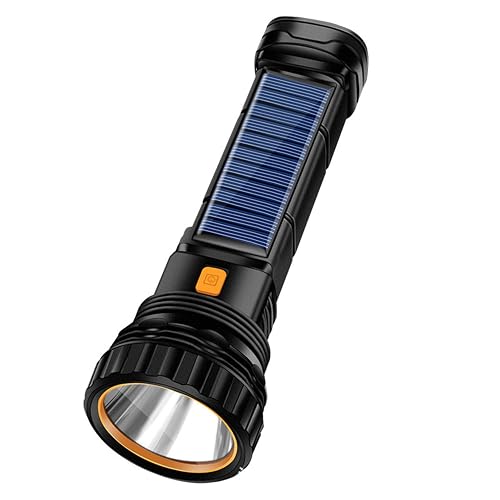 Best for lightingRechargeable Solar Survival FlashlightView on Amazon
- 6
 Best for showersCamping Shower with Heater and Solar Charging PanelView on Amazon
- 7
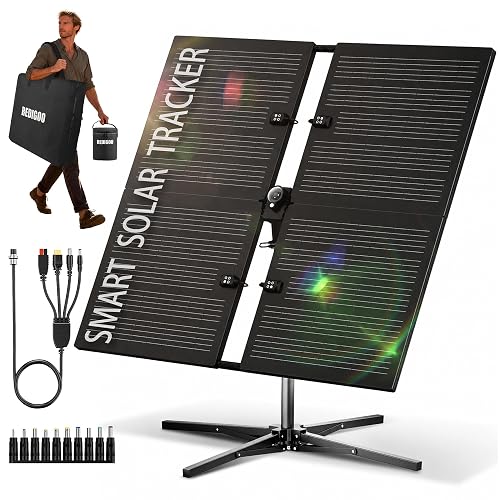 Best for panel outputSmart Tracking System, Solar Tracker Kit for Solar Panel, Dual Axis SoView on Amazon
Our Top Picks
| Product | Best for | Key feature |
|---|---|---|
| Jackery Solar Generator 300 | Everyday camp power | 292Wh, 300W pure sine AC |
| 300W Solar Power Pack (Orange) | Heavier appliances | 280Wh, 300W, QC3.0 USB |
| MARBERO 155Wh Solar Generator | Budget setups | 155Wh with 30W panel |
| Greeshow Water Purification System | Drinking water | 0.01-micron filtration |
| Solar Survival Flashlight | Lighting and backup | Solar and rechargeable |
| Camping Shower with Heater | Hot water showers | 1500W heater, 6000mAh pump |
| REDIGOO Solar Tracker Kit | Maximizing panel output | Dual-axis, 160W panel |
Jackery Solar Generator 300 and 40W Solar Panel
Pure Sine Wave AC Outlet, for RV, Outdoors, Camping, Travel, Blackout Jackery Solar Generator 300 and 40W Solar Panel,292Wh,300W AC
Best for: Everyday camp power
Suits campers running phones, lights, a fan and a small cooler on weekend trips. Manufacturers specify 292Wh capacity and 300W pure sine wave AC output.
Pros
- Pure sine wave output suits sensitive electronics.
- Compact enough for trunk or RV storage.
Cons
- The included 40W panel charges slowly on cloudy days.
300W Portable Power Station with 60W Solar Panel
Portable Solar Generator 300W Portable Power Station with 60W Solar Panel | 110V Pure Sine Wave 280Wh Battery Solar Power Pack with USB QC3.0 DC AC Outlet for Camping Smart Device RV Van Outdoor-Orang
Best for: Heavier appliances
A fit for campers who run a small microwave-class load or charge several devices at once. The listing cites 280Wh capacity, USB QC3.0 and DC plus AC outlets.
Pros
- Multiple outlet types cover most camp gear.
- Panel wattage is higher than many starter kits.
Cons
- Capacity runs out quickly under sustained high draw.
MARBERO 155Wh Solar Generator with 30W Panel
MARBERO 155Wh Solar Generator with Solar Panel Included 30W Solar Panel Kit | Solar Powered Generator 150W Surge Portable Power Station with Solar Panel for Camping Home Emergency Blackout Outdoor Hik
Best for: Budget setups
Good for weekend campers who mainly need phone, light and small device charging. The listing describes a 150W surge rating and a 30W panel included.
Pros
- Lower capacity keeps the kit light and simple.
- Panel is bundled, so setup needs no extra purchases.
Cons
- 155Wh is limited for anything beyond small loads.
Greeshow Water Purification System
0.01-Micron Water Purification System, Solar/Hand-Crank/USB-C Rechargeable, 3000mAh Power Bank & LED Light Greeshow Portable Electric Water Filter for Camping & Emergency
Best for: Drinking water
Useful for campers who need filtered water from streams or lakes without relying on a grid connection. The listing specifies 0.01-micron filtration and a 3000mAh power bank with LED light.
Pros
- Doubles as a power bank and lantern.
- Filtration rating is well suited to bacteria removal.
Cons
- Filter capacity is modest for large groups.
Rechargeable Solar Survival Flashlight
Survival Flashlight for Disaster weather and other power outage scenarios Solar Flashlight, Rechargeable flashlights for Camping, Home
Best for: Lighting and backup
Fits campers who want a reliable light source that charges from the sun and works during outages at home. Owners often report it as a secondary backup rather than a main light.
Pros
- Simple operation with no setup.
- Rechargeable by sun or USB.
Cons
- Brightness and runtime vary across listing reports.
Camping Shower with Heater and Solar Charging Panel
Camping Shower with Heater for USB Solar Charging Panel, Portable Shower Food-Grade Water Jug, 6000mAh Portable Shower Pump, 1500w Immersion Heater with Auto Shut-Off for Outdoor, Camping, Hiking
Best for: Hot water showers
Works for campers who want warm showers at a site without plumbing. The listing cites a 1500W immersion heater with auto shut-off and a 6000mAh pump.
Pros
- Auto shut-off is a useful safety feature.
- Solar panel reduces battery swaps.
Cons
- Heating times depend on sun and water volume.
Buying Guide
Stored Energy (Watt-Hours)
Watt-hours tell you how much energy a power station can hold, which sets how long it can run a phone, lights, or a small fridge before it needs recharging. Match the capacity to the devices you plan to run each day, plus a margin for cloudy days when the panel produces less.
Keep in mind that the usable energy is always somewhat less than the printed capacity because of conversion losses. Plan for real-world output rather than the maximum number on the box.
Solar Input and Panel Wattage
The panel wattage determines how quickly you can refill the battery during daylight. A larger panel recharges faster, but it is also heavier and harder to position, so balance recharge speed against how much you want to carry and set up.
Check whether the panel is included or sold separately, and confirm the maximum solar input the power station accepts so the two components are compatible.
Outlet Types and Charging Ports
Look at how many AC outlets, USB-A ports, and USB-C ports the unit offers, and whether the AC output is a pure sine wave. Pure sine wave output is generally the safer choice for sensitive electronics, laptops, and small appliances.
If you plan to charge several devices at once, count the total ports and the combined output rating so you do not overload the unit.
Portability and Trip Length
For short weekend trips, a compact unit or a small single-panel kit may be enough. Longer stays or group camping usually call for a larger station and a more substantial panel setup, which adds weight and setup time.
Think about how far you will carry the gear and whether you will set up on the ground, on a vehicle roof, or on a table. Lighter components are easier to move but may limit how much power you can store.
FAQ
How much solar panel do I need for off grid camping?
The right panel size depends on how much energy you use each day and how many good sun hours you expect at your site. Add up the watt-hours your devices need, then choose a panel that can refill your station within the daylight hours you have.
Can a portable power station run a camping fridge?
Many portable power stations can run a small compressor fridge for a period of time, but the runtime depends on the fridge’s power draw and the station’s stored energy. Check the fridge’s wattage and daily consumption before relying on this setup for multiple days.
Do solar panels work on cloudy days?
Solar panels still produce some power on overcast days, but output is reduced compared with direct sun. Planning for lower daily recharge on cloudy stretches helps you avoid running the battery down.
Is a pure sine wave inverter necessary?
It is not strictly required for every device, but pure sine wave output is generally gentler on sensitive electronics, laptops, and motor-driven appliances. If you plan to power a range of gear, it is a sensible feature to look for.
How should I store a solar generator between trips?
Store the unit in a cool, dry place and avoid leaving it fully discharged for long periods. Topping up the battery every few months helps maintain its condition over time.
Conclusion
If you want a simple all-in-one setup for weekend trips and a few small devices, a compact power station with an included panel is a practical starting point. Choose a larger station with a higher-wattage panel if you run more appliances or stay off grid for several days at a time.
For lighting, water, and personal comfort, the smaller add-on tools in this list can complement a main power source. Pair them with the station that matches your energy needs and the length of your trips.
Related reading
- Off-Grid, Backup and Hybrid Solar Systems: How They Differ
- Wiring Diagram for Off-Grid Solar System: A Step-by-Step Guide
- Wind Solar Hybrid Off Grid System: How to Size and Wire One
- Whole House Off-Grid Solar System: Sizing Steps and Parts for Your Home
- What Is Needed for Off-Grid Solar System: A Step-by-Step Parts Checklist
- What Is Meant by Off Grid Solar System? A Plain-English Answer
- What Do I Need for Off-Grid Solar System: A Step-by-Step Parts Guide
- V Guard Off Grid Solar System: Sizing, Parts and Wiring Guide (2026)
About Ethan Brooks
Ethan Brooks is part of our editorial team and reviews and edits our DIY solar power systems guides, checking product details against manufacturer specifications and owner feedback.


