 By Claire Whitaker
Updated November 2026
If you are looking to replace lead acid battery with LiFePO4, the first question is usually fit: will the new pack drop into the same space, handle the same charger and last longer for the same daily use? This guide compares seven LiFePO4 batteries that owners and installers commonly consider for solar, RV, marine and off-grid work. The selection criteria were voltage match, capacity and usable energy, built-in battery management, physical fit for common lead-acid footprints, low-temperature protection and the consistency of owner feedback patterns. Nothing here comes from our own bench testing; the notes reflect manufacturer specifications and recurring themes in owner reports.
Our top picks at a glance
- 1
 TOP CHOICEBest overall12V 100Ah LiFePO4 Battery,Lithium Iron Phosphate Battery Cells Group 3View on Amazon
- 2
 TOP CHOICEBest for large off-grid banks12V 300Ah LiFePO4 Lithium Battery (Lightweight, 200A Built-in BMS, 3840Wh Energy)View on Amazon
- 3
 TOP CHOICEBest budget pick12V 10Ah Lithium LiFePO4 Deep Cycle Battery (2000+ Cycles, Lightweight, 10A BMS)View on Amazon
- 4
 Best for Bluetooth monitoringECO-WORTHY 12V 100AH LiFePO4 Lithium Battery with BluetoothView on Amazon
- 5
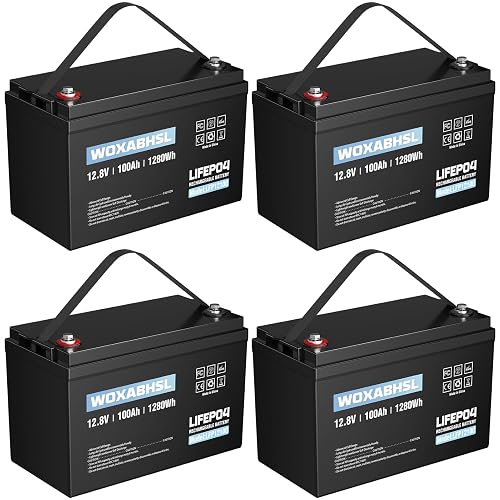 Best for multi-battery expansion4PCS 12V 100Ah LiFePO4 Lithium Battery, 15000+ Deep Cycles, Low-Temp Cutoff, 100A BMSView on Amazon
- 6
 Best for RV and camping banks2 packs 12V 314Ah LiFePO4 Lithium Battery 4019Wh 15000+ Deep Cycle Low Temp Cut-OffView on Amazon
- 7
 Best for direct lead-acid swapsLIYON Multiple Fitment LiFePO4 Battery 12v 4Ah 400A 280 CCAView on Amazon
Our Top Picks
Quick Comparison
| Product | Best for | Key feature |
|---|---|---|
| 12V 100Ah LiFePO4 Battery (Group 31) | General solar, RV and home backup | Built-in 100A BMS, rated 15000 deep cycles |
| 12V 300Ah LiFePO4 Lithium Battery | Large off-grid and marine banks | 200A built-in BMS, about 3840Wh |
| 12V 10Ah Lithium LiFePO4 Deep Cycle Battery | Small loads and light-duty projects | Lightweight, 10A BMS |
| ECO-WORTHY 12V 100AH LiFePO4 | Users who want battery monitoring | Bluetooth, low-temperature protection |
| 4PCS 12V 100Ah LiFePO4 Lithium Battery | Building a 12V or 24V bank in parallel/series | Plug-and-play, 100A BMS per pack |
| 2 packs 12V 314Ah LiFePO4 Lithium Battery | RV, camping and off-grid energy storage | About 4019Wh per set, low-temp cut-off |
| LIYON Multiple Fitment LiFePO4 12V 4Ah | Direct swap in small lead-acid applications | Multi-directional terminals, spacers included |
12V 100Ah LiFePO4 Battery,Lithium Iron Phosphate Battery Cells Group 31 Built-in 100A BMS 15000 Deep Cycles Rechargeable Battery for Solar System, Home Energy, RVs, Marine
12V 100Ah LiFePO4 Battery,Lithium Iron Phosphate Battery Cells Group 31 Built-in 100A BMS 15000 Deep Cycles Rechargeable Battery for Solar System, Home Energy, RVs, Marine
Best for: General solar, RV and home backup with a standard Group 31 footprint If you want more background, see Can You Replace a Solar Generator Battery?.
This is a sensible first choice for someone replacing a single 12V lead-acid battery in a solar or RV setup. The 100Ah rating and Group 31 format match a common lead-acid size, which simplifies the mechanical swap.
Key specs:
- Nominal voltage: 12V
- Capacity: 100Ah
- Built-in BMS rated 100A
- Rated cycle life: 15000 deep cycles (per listing)
Pros:
- Standard Group 31 format eases replacement
- Built-in BMS handles overcurrent and cell balancing
- Usable capacity is far higher than the nameplate Ah suggests on lead-acid, because LiFePO4 can be cycled much deeper
Cons:
- Charger profile must be set for LiFePO4 voltages, or the pack will be undercharged
- Owners often note that the BMS cutoff is the first thing to check during winter use
Bottom line: The best overall pick for someone who wants a direct, well-documented replacement for a single 12V lead-acid battery.
12V 300Ah LiFePO4 Lithium Battery (Lightweight, 200A Built-in BMS, 3840Wh Energy)
15000+ Deep Cycles, Lightweight Lithium Iron Phosphate Battery for RV, Marine, Trolling Motor, Solar, Off-Grid, Home Energy 12V 300Ah LiFePO4 Lithium Battery,200A Built-in BMS, 3840Wh Energy
Best for: Large off-grid and marine battery banks
Suited to builders who need several hundred amp-hours at 12V without stacking many smaller packs. The higher BMS rating is useful for high-current inverter loads.
Key specs:
- Nominal voltage: 12V
- Capacity: 300Ah
- Built-in BMS rated 200A
- Listed energy: 3840Wh
Pros:
- High capacity in a single unit reduces wiring
- 200A BMS suits high-draw inverter loads
- Lighter than an equivalent lead-acid bank
Cons:
- Size and weight may not fit lead-acid compartments without modification
- Requires heavy-gauge cable and a properly rated fuse at this capacity
Bottom line: A strong pick for builders replacing a large lead-acid bank who want fewer, bigger batteries.
12V 10Ah Lithium LiFePO4 Deep Cycle Battery (2000+ Cycles, Lightweight, 10A BMS)
2000+ Cycles Rechargeable Battery for Solar/Wind Power, Lighting, Power Wheels, Ride-on Toy, Fish Finder and More 12V 10Ah Lithium LiFePO4 Deep Cycle Battery with 10A BMS,Lightweight
Best for: Small loads and light-duty projects
A compact option for replacing small sealed lead-acid batteries in lighting, toys, fish finders or small solar trickle projects.
Key specs:
- Nominal voltage: 12V
- Capacity: 10Ah
- Built-in BMS rated 10A
- Rated cycle life: 2000+ cycles (per listing)
Pros:
- Very light compared with lead-acid of similar rating
- Good fit for small electronics and tools
- Low entry size for experimenting with LiFePO4
Cons:
- 10A BMS limits use with higher-current loads
- Not suitable for whole-home or large inverter duty
Bottom line: The budget pick for small, low-current replacements.
ECO-WORTHY 12V 100AH LiFePO4 Lithium Battery with Bluetooth
ECO-WORTHY 12V 100AH LiFePO4 Lithium Battery with Bluetooth, Max.1280Wh Energy, Low Temperature Protection, Group 24, Built-in 100A BMS, Perfect for Trolling Motor, RV, Boat, Solar Off-Grid
Best for: Users who want battery monitoring from a phone
Useful for anyone who wants to track state of charge and cell data without a separate shunt monitor, especially in a remote RV or boat.
Key specs:
- Nominal voltage: 12V
- Capacity: 100Ah (listed max energy about 1280Wh)
- Built-in BMS rated 100A
- Bluetooth monitoring and low-temperature protection
Pros:
- Bluetooth data helps spot imbalance early
- Low-temperature protection suits cold-climate installs
- Group 24 footprint works in many common battery trays
Cons:
- Bluetooth range is limited to nearby phones
- Owners sometimes report that app pairing requires a firmware check first
Bottom line: Best for builders who value monitoring over raw capacity.
4PCS 12V 100Ah LiFePO4 Lithium Battery, 15000+ Deep Cycles, Low-Temp Cutoff, 100A BMS
4PCS 12V 100Ah LiFePO4 Lithium Battery, 15000+ Deep Cycles, Low-Temp Cutoff, 100A BMS, Plug and Play for Automotive RV, Marine, Solar, Off-Grid Home Energy Storage
Best for: Building a larger bank in stages
Four identical 100Ah packs let you start with one and add more later, or wire them in parallel for higher capacity at 12V.
Key specs:
- Nominal voltage: 12V per pack
- Capacity: 100Ah per pack, four packs in set
- Built-in 100A BMS per pack
- Low-temperature cutoff
Pros:
- Modular expansion path
- Plug-and-play connections reduce wiring errors
- Low-temperature cutoff protects cold-weather charging
Cons:
- Parallel packs must be matched in age and state of charge before connecting
- Total weight is substantial for DIY handling
Bottom line: A good fit for builders who want to grow capacity step by step.
2 packs 12V 314Ah LiFePO4 Lithium Battery 4019Wh 15000+ Deep Cycle Low Temp Cut-Off
2 packs 12V 314Ah LiFePO4 Lithium Battery 4019Wh 15000+ Deep Cycle Low Temp Cut-Off Rechargeable RV Battery Perfect for Off Grid Applications Camping Solar System
Best for: RV, camping and off-grid energy storage
Two high-capacity packs give a large energy reserve for weekend or full-time RV use, with the low-temperature cutoff helping in cold camping conditions.
Key specs:
- Nominal voltage: 12V
- Capacity: 314Ah per pack (two packs)
- Listed energy: about 4019Wh
- Low-temperature cut-off
Pros:
- Large energy reserve in a compact set
- Low-temperature cutoff protects cells during cold charging
- Suited to extended off-grid stays
Cons:
- Requires significant charging capacity from solar or alternator
- Heavy to lift and mount without help
Bottom line: A strong choice for RV owners and off-grid users who need a large reserve.
LIYON Multiple Fitment LiFePO4 Battery 12v 4Ah 400A 280 CCA
One battery for multiple lead-acid models, 3 Spacers-ready, Multi-directional terminals, BMS LIYON Multiple Fitment LiFePO4 Battery 12v 4Ah 400A 280 CCA
Best for: Direct swaps in small lead-acid applications
Designed to fit several lead-acid case sizes using spacers and rotatable terminals, which helps when the original mounting is awkward.
Key specs:
- Nominal voltage: 12V
- Capacity: 4Ah
- Listed 400A and 280 CCA rating
- Multi-directional terminals with spacers included
Pros:
- Spacers help fit multiple lead-acid footprints
- Terminal orientation options ease cable routing
- Light weight for small applications
Cons:
- 4Ah capacity is small for solar or RV loads
- Confirm the listed CCA rating matches your starting needs before relying on it
Bottom line: Pick this when physical fit matters more than capacity.
Buying Guide
Voltage and Charger Compatibility
LiFePO4 cells operate at a different voltage window than lead-acid. Most 12V LiFePO4 packs are charged to about 14.2 to 14.6V, while lead-acid absorption often runs higher. Check that your charge controller or alternator regulator has a LiFePO4 setting. Our guide on How to Charge a LiFePO4 Battery: Voltages, Limits and Setup Steps covers the numbers in detail.
Good picks for this: 12V 100Ah LiFePO4 Battery (Built-in 100A BMS); ECO-WORTHY 12V 100AH LiFePO4 Lithium Battery with Bluetooth
Capacity and Usable Energy
Lead-acid batteries are typically discharged to about 50 percent to preserve life, while LiFePO4 is commonly cycled much deeper. That means a 100Ah LiFePO4 can deliver more usable energy than a 100Ah lead-acid. Compare usable Wh rather than nameplate Ah. The LiFePO4 Battery Voltage Chart: State of Charge Reference for Solar Builders is useful for mapping voltage to state of charge.
Good picks for this: 12V 300Ah LiFePO4 Lithium Battery; 2 packs 12V 314Ah LiFePO4 Lithium Battery
Physical Size and Fit
Measure the battery tray before ordering. Group 24 and Group 31 are common lead-acid sizes, but terminal position and height matter as much as length and width. Spacers and multi-directional terminals can solve awkward fits in small installs.
Good picks for this: LIYON Multiple Fitment LiFePO4 Battery 12V 4Ah; 12V 100Ah LiFePO4 Battery (Group 31)
Built-in BMS Rating
The BMS limits charge and discharge current and protects against overvoltage, undervoltage and imbalance. Match the BMS current rating to your inverter’s peak draw. A 10A BMS is fine for lights, but a high-power inverter needs a much higher rating. For wiring basics, see Lithium Iron Phosphate Lifepo4 Battery Guide: Sizing, Wiring and Setup (2026).
Good picks for this: 12V 300Ah LiFePO4 Lithium Battery (200A BMS); 4PCS 12V 100Ah LiFePO4 Lithium Battery
Low-Temperature Protection
LiFePO4 should not be charged below freezing without protection, because lithium can plate on the anode and damage cells. Look for a low-temperature cutoff or built-in heating. This matters most for RVs, boats and cold-climate sheds.
Good picks for this: 2 packs 12V 314Ah LiFePO4 Lithium Battery; ECO-WORTHY 12V 100AH LiFePO4 Lithium Battery with Bluetooth
Expansion and Parallel Wiring
If you plan to grow your bank, choose a pack you can add to later. Packs should be matched in capacity, age and state of charge before paralleling. Our article Litime 12v 100ah Lifepo4 Battery: Sizing, Wiring and Setup Guide walks through the same principles.
Good picks for this: 4PCS 12V 100Ah LiFePO4 Lithium Battery; 12V 100Ah LiFePO4 Battery (Group 31)
Use Case and Duty Cycle
Decide whether the battery is for daily cycling in a solar system, occasional backup, or high-current inverter loads. Daily cycling favors larger capacity and a robust BMS. Occasional backup may be served by a smaller pack.
Good picks for this: 12V 10Ah Lithium LiFePO4 Deep Cycle Battery; 12V 300Ah LiFePO4 Lithium Battery
FAQ
Can I replace a lead-acid battery with LiFePO4 without changing my charger?
Often not without adjustment. Lead-acid chargers use voltage setpoints that may overcharge or undercharge LiFePO4. Confirm your charger or controller has a lithium profile, or set the absorption and float voltages to match the manufacturer’s recommendations. If unsure, consult a qualified electrician or installer.
Will a LiFePO4 battery fit in my lead-acid tray?
Check the length, width, height and terminal position. Group 24 and Group 31 formats are common, but not every brand matches exactly. Measure before ordering.
How long do LiFePO4 batteries last compared with lead-acid?
Manufacturers commonly list LiFePO4 cycle life in the thousands of cycles at moderate depth of discharge, while lead-acid is usually rated far lower at similar depths. Actual life depends on temperature, charging practice and discharge depth.
Do LiFePO4 batteries need special charging in cold weather?
Yes. Charging below freezing can damage cells. Use a battery with low-temperature cutoff or add a heater or temperature-compensated charger.
Can I connect LiFePO4 batteries in parallel?
Yes, if the packs are the same model, similar age and at similar state of charge. Follow the manufacturer’s maximum number of parallel packs and use appropriately sized cable and fusing.
Is LiFePO4 safer than lead-acid?
LiFePO4 is generally more thermally stable than other lithium chemistries, but any battery can be hazardous if wired incorrectly. Use fusing, correct cable gauge and a proper BMS. For installation questions, consult a licensed electrician.
Conclusion
If you want a direct replacement for a single 12V lead-acid battery, the 12V 100Ah Group 31 pack is the most straightforward starting point. Builders with large off-grid banks should look at the 300Ah pack, while RV and camping users may prefer the two-pack 314Ah set. For small loads, the 10Ah budget pick is the practical choice, and the ECO-WORTHY model suits anyone who wants Bluetooth monitoring. The LIYON pack solves awkward fit problems, and the 4-pack set is the way to grow a bank in stages. Whichever you choose, verify charger settings and BMS current rating before connecting it to your system.
Sources
- Background on battery storage types, applications and safety considerations for home energy systems (energy.gov)
- Research on energy storage performance, cycle life and lithium-ion battery technologies (nrel.gov)
- Electrical and fire safety codes relevant to battery installation (nfpa.org)
Before you buy: helpful guides
About Claire Whitaker
Claire Whitaker is part of our editorial team and reviews and edits our DIY solar power systems guides, checking product details against manufacturer specifications and owner feedback.


