 By Claire Whitaker
Updated November 2026
Choosing a solar power inverter DC to AC converter comes down to matching output wattage, surge capacity, waveform and battery voltage to what you plan to run. This list compares seven widely sold 12V and 48V models by intended use, continuous and surge rating, outlet count and extra features. Selection is based on manufacturer specifications, brand reputation and common owner feedback patterns, not on bench testing.
Our top picks at a glance
- 1
 TOP CHOICEBest overall4000 Watt Power Inverter 12V DC to 120V/110V AC for Vehicles Car ConveView on Amazon
- 2
 TOP CHOICEBest for remote control useCantonape 3000W Power Inverter 12V to 110V/120V DC to AC with LCD DispView on Amazon
- 3
 TOP CHOICEBest for pure sine loadsVansdon 2000W Pure Sine Wave Inverter 12V DC to 120V ACView on Amazon
- 4
 Best for USB-C chargingPower Inverters with Remote Control 2000 Watt Pure Sine Wave 12V DC to 120V ACView on Amazon
- 5
 Best for small RV loadsHome off grid solar car converter, power inverter with 3 AC sockets, 3View on Amazon
- 6
 Best for high surge5000 watt Power Inverter DC 12V to AC 110V/120V Converter with LCD DisplayView on Amazon
- 7
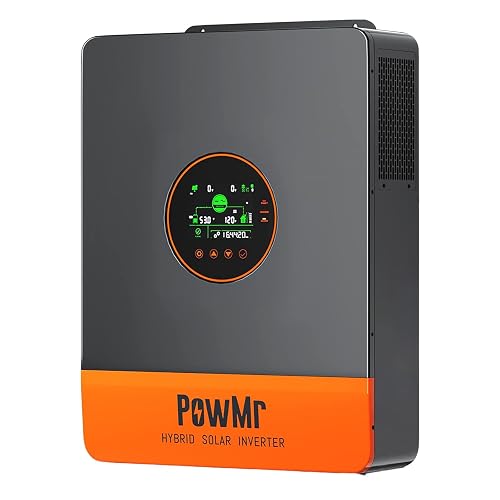 Best for battery bank systemsPowMr 5000W Hybrid Solar Inverter 48V DC to 110V/120V/208V/240V AC, SiView on Amazon
Our Top Picks
Quick Comparison
| Product | Best for | Key feature |
|---|---|---|
| RV, Truck, Solar, Home, Off-Grid Surge 8000W | Overall use | 8000W surge, 200ft remote |
| Remote Controller 3000W Power Inverter | Remote control use | 4 AC outlets, LCD display |
| Vansdon 2000W Pure Sine Wave Inverter | Pure sine loads | Pure sine, 4000W surge |
| Power Inverters with Remote Control 2000W | USB-C charging | 30W USB-C, hardwire port |
| Home off grid solar car converter 1500W | Small RV loads | 1500W pure sine output |
| 5000 watt Power Inverter DC 12V to AC | High surge loads | 10000W peak, wireless control |
| PowMr 5000W Hybrid Solar Inverter 48V | Battery bank systems | 48V input, built-in 100A MPPT |
RV, Truck, Solar, Home, Off-Grid Surge 8000W with 4 AC Outlet, 2 USB-A Port, 200ft Remote Control
4000 Watt Power Inverter 12V DC to 120V/110V AC for Vehicles Car Converter | RV, Truck, Solar, Home, Off-Grid Surge 8000W with 4 AC Outlet, 2 USB-A Port, 200ft Remote Control and 3 AC Terminal Blocks
Best for: Overall use across vehicles and small off-grid setups.
Suits users who want a high surge rating and a long-range remote for mounting the unit out of reach.
- Pros: 8000W surge rating; long-range remote control
- Pros: Four AC outlets and USB-A ports
- Cons: Surge figure is peak, not continuous output
Remote Controller 4 x AC Outlets and 4 x 3.1A USB Car Adapter 3000W Power Inverter 12V to 110V/120V
Cantonape 3000W Power Inverter 12V to 110V/120V DC to AC with LCD Display | Remote Controller 4 x AC Outlets and 4 x 3.1A USB Car Adapter for Car Truck Boat RV Solar System
Best for: Remote control use in trucks, boats and RVs.
Fits owners who want to switch loads on and off from a distance and monitor output on an LCD.
- Pros: Four AC outlets plus four USB ports
- Pros: LCD display shows status at a glance
- Cons: Continuous rating is lower than the headline 3000W figure suggests
Vansdon 2000W Pure Sine Wave Inverter 12V DC to 120V AC
Vansdon 2000W Pure Sine Wave Inverter 12V DC to 120V AC Inverters for RV,Truck, Solar, Home, Off-Grid, Car Power Inverter with LCD Display, 3 AC Outlet, 30W USB-C, USB, Remote Control, Surge 4000W
Best for: Pure sine loads such as laptops and sensitive electronics.
Works for people powering electronics that dislike modified sine waves.
- Pros: Pure sine wave output
- Pros: 30W USB-C plus USB and remote control
- Cons: Fan noise under heavy load is commonly mentioned
Power Inverters with Remote Control 2000 Watt Pure Sine Wave 12V DC to 120V AC
Power Inverters with Remote Control, 3 AC Outlets, 30W USB-C, 5V/3.1A USB, Hardwire Port, for Solar, RV, Truck, Car, Vehicles 2000 Watt Inverter, 12V DC to 120V AC Pure Sine Wave 4000W Surge
Best for: USB-C charging alongside AC loads.
A fit for users who charge phones and tablets directly from the inverter while running small appliances.
- Pros: 30W USB-C and 5V/3.1A USB ports
- Pros: Hardwire port for permanent installs
- Cons: Hardwire installs require correct fusing
Home off grid solar car converter, power inverter 1500 Watt Pure Sine Wave 12V DC to 110/120V AC
Home off grid solar car converter, power inverter with 3 AC sockets, 30W Type-C, 5V/3.1A USB, solar remote control, RV, truck 1500 Watt Inverter Pure Sine Wave 12V DC to 110/120V AC for RV
Best for: Small RV loads and lighter off-grid use.
Suits owners running lights, fans and small electronics rather than large motors.
- Pros: Pure sine output at a modest wattage
- Pros: Three AC sockets and solar remote
- Cons: 1500W limits how many loads run at once
5000 watt Power Inverter DC 12V to AC 110V/120V Converter with LCD Display
5000 watt Power Inverter DC 12V to AC 110V/120V Converter,10000w Peak.Comes with LCD Display,Wireless Controller, 4AC outlets,1USB.RV Inverter,Suitable for Camping,and Off-Grid Solar Inverter Systems
Best for: High surge loads such as tools and small motors.
Fits users whose starting loads spike well above running wattage.
- Pros: 10000W peak rating for motor starts
- Pros: Wireless controller and LCD display
- Cons: Peak rating does not reflect sustained output
Buying Guide
Continuous Wattage and Surge Rating
Start by adding up the wattage of everything you plan to run at the same time, then choose an inverter with a continuous rating comfortably above that total. Surge or peak ratings only cover the brief startup spike of motors and compressors, so do not rely on them for sustained loads.
Check how long the surge is held, since a higher peak figure does not always mean the unit can start demanding appliances reliably.
Battery Voltage Compatibility
Match the inverter’s DC input to your battery bank. Most vehicle and small off-grid setups use 12V, while larger solar systems often run at 48V, and feeding the wrong voltage can damage the unit or the batteries. Also confirm that the cable gauge and fuse rating suit the current the inverter will draw.
Waveform: Pure Sine Wave vs. Modified Sine Wave
A pure sine wave output produces clean power that suits sensitive electronics, laptops, medical devices and inductive loads such as refrigerators and power tools. Modified sine wave units cost less but can cause buzzing, overheating or malfunctions in some equipment, so pure sine wave is the safer default for most users.
Outlets, USB Ports and Control Options
Count how many AC outlets you need and whether you want built-in USB or USB-C charging for phones and tablets. Remote controls, LCD displays and hardwire terminal blocks add convenience, and hardwire connections are useful when the inverter is permanently mounted in a vehicle or solar installation rather than plugged into a single socket.
Mounting, Cooling and Protection Features
Inverters generate heat under load, so look for adequate ventilation, a cooling fan and enough clearance for installation. Protective features such as low-voltage shutdown, overload, overheating and short-circuit protection help prevent damage to the inverter and your battery bank.
FAQ
What size inverter do I need for my setup?
Add up the wattage of every device you expect to run at once and choose a model with a continuous rating above that total, with some headroom. Including a margin for surge loads from motors and compressors helps avoid overloads.
Is a pure sine wave inverter worth the extra cost?
For most people, yes, especially if you plan to power laptops, medical equipment, refrigerators or other sensitive or motor-driven devices. Pure sine wave output is cleaner and reduces the risk of heating and malfunctions.
Can I run an inverter directly from a car battery?
You can, but it drains the battery quickly and can leave you unable to start the engine if you run high loads for long periods. Use proper gauge cables and a fuse, and run the engine or a dedicated battery bank when using significant power.
Do I need a 48V inverter instead of a 12V model?
A 48V system is generally better for larger solar arrays and higher power demands because it reduces current and wiring losses. Smaller RVs, trucks and camping setups usually work well with 12V units.
What does the peak or surge rating really mean?
The peak rating is the maximum power the inverter can deliver for a very short time to start motors and compressors. It is not a sustained output, so the continuous rating is the number to plan around.
Should I hardwire my inverter or plug it in?
Hardwiring suits permanent installations in vehicles, boats or solar systems, where you want a secure connection and a fixed circuit. Plug-in models with cigarette-style or clamp connections work well for occasional, portable use.
Conclusion
For light, occasional use such as phones, laptops and small appliances in a vehicle, a 1500W or 2000W pure sine wave unit with USB charging and a remote is a practical choice. Users running larger loads like air conditioners or multiple appliances in an RV or truck will be better served by a 3000W to 5000W model with a higher surge rating and LCD monitoring.
Those building a full off-grid or home solar system should look at the 48V hybrid option, which handles larger arrays, battery types and split or three-phase output, while 12V units remain the simpler fit for mobile and small-scale setups.
Related reading
- Top 6 Solar Inverters for Power Outage Picks for Home Backup
- Top 6 3 Phase Solar Power Inverters Compared for Commercial and Off-Grid Use
- Solar Power Inverter Size: How to Calculate the Right Rating (2026)
- Solar Power Inverter Manufacturer: How to Evaluate One Before You Buy
- Solar Power Inverter Installation: A Step-by-Step Guide for DIY Builders
- Solar Power Inverter Cost: What to Expect and How to Budget (Step-by-Step)
About Claire Whitaker
Claire Whitaker is part of our editorial team and reviews and edits our DIY solar power systems guides, checking product details against manufacturer specifications and owner feedback.




