 By Ethan Brooks
Updated November 2026
Shoppers looking at a 100kw off grid solar system usually want to know which complete kits can really run a house without the grid, and which ones only cover part of the load. This list compares seven complete kits by inverter output, battery bank size, panel array, and how well each suits whole-home use. Selection is based on product listings, manufacturer specifications, brand reputation and common owner feedback patterns.
Our Top Picks
Our top picks at a glance
- 1
 TOP CHOICEBest overallECO-WORTHY 10KW Output Off Grid Solar System Complete KitView on Amazon
- 2
 TOP CHOICEBest for whole-home split-phase powerWhole House System 10KW Split Phase Solar Inverter KitView on Amazon
- 3
 TOP CHOICEBest for a smaller home or cabinSUNGOLDPOWER 3000W 24V Off Grid System Solar KitView on Amazon
- 4
 Best for mid-size homes on 48VSUNGOLDPOWER 5000W 48V Off Grid System Complete Solar KitView on Amazon
- 5
 Best for large loads and heavy panel arraysSUNGOLDPOWER 10000W Off Grid Solar System Complete KitView on Amazon
- 6
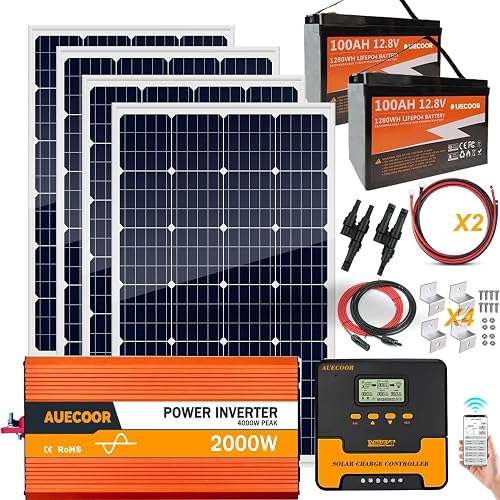 Best for RV or mobile use1.92KWH Complete Solar Panel Kit for RV Off Grid Solar System |2x100AhView on Amazon
- 7
 Best for a 6.5kW split-phase middle tierSUNGOLDPOWER 6500W Off Grid System Complete Solar Kit, 1 * 6500W 120/2View on Amazon
Our Top Picks
| Product | Best for | Key feature |
|---|---|---|
| ECO-WORTHY 10KW Complete Kit | Overall whole-home coverage | 10kW split-phase, 20.48kWh storage |
| ECO-WORTHY Whole House System | Split-phase whole house | 10kW inverter, 16kWh storage |
| SUNGOLDPOWER 3000W 24V Kit | Small homes and cabins | 3000W inverter, 24V battery pair |
| SUNGOLDPOWER 5000W 48V Kit | Mid-size homes | 5000W inverter, 48V LiFePO4 |
| SUNGOLDPOWER 10000W Kit | Large loads | 10kW inverter, 6.6kW array |
| RV Off Grid Solar Panel Kit | RV and mobile use | 1.92kWh storage, 2000W inverter |
| SUNGOLDPOWER 6500W Kit | Mid-to-large homes | 6500W split-phase, 370W panels |
ECO-WORTHY 10KW Output Off Grid Solar System Complete Kit
ECO-WORTHY 10KW Output Off Grid Solar System Complete Kit:10KW 120V/240V Output Split Phase Inverter| 4Pcs 48V 100Ah 20.48kWh High Capacity Energy Storage| 5310 Watts Solar Panel PV
Best for: Overall whole-home coverage
A good fit for households that want a full split-phase 120V/240V setup with a large battery bank from a single kit.
Pros
- Split-phase 10kW output suits typical household appliances
- Four 48V batteries give about 20kWh of storage
Cons
- Heavy battery packs need a dedicated mounting location
Whole House System 10KW Split Phase Solar Inverter Kit
Whole House System:10KW 120V/240V Split Phase Solar Inverter| 48V 314Ah 16kWh High Capacity Energy Storage| 2950W Solar Panel ECO WORTHY 10000W Output Complete Off-Grid Solar Panel Kit for Home
Best for: Split-phase whole house
Suited to owners who want a 10kW split-phase inverter paired with a 16kWh LiFePO4 bank for whole-house backup.
Pros
- 10kW split-phase output across 120V and 240V
- 314Ah 48V battery gives 16kWh capacity
Cons
- Panel array is smaller than the battery bank can fully use in winter
SUNGOLDPOWER 3000W 24V Off Grid System Solar Kit
SUNGOLDPOWER 3000W 24V Off Grid System Solar Kit Complete,1 * 3000W 120Vac Solar Inverter+4 * 200W Solar Panels+2pcs 24V 100Ah LifePO4 Battery,for RV,House Storage, Farm,Off Grid System
Best for: Small homes and cabins
Aimed at smaller homes, cabins and farm buildings where daily loads stay moderate.
Pros
- 3000W 120V inverter matches modest household loads
- Two 24V LiFePO4 batteries are easier to handle
Cons
- Limited headroom for electric heating or large appliances
SUNGOLDPOWER 5000W 48V Off Grid System Complete Solar Kit
SUNGOLDPOWER 5000W 48V Off Grid System Complete Solar Kit,1 * 5000W 120Vac Solar Inverter UL1741+6 * 200W Mono Solar Panels +1 * 100Ah 51.2V Lifepo4 Battery UL1973, for House Storage (SGM-5K5E)
Best for: Mid-size homes on 48V
A balanced option for mid-size homes that want a 48V LiFePO4 battery and a 5000W inverter.
Pros
- 5000W inverter handles common household loads
- Six 200W panels provide reasonable daily energy
Cons
- Single 100Ah battery limits overnight runtime
SUNGOLDPOWER 10000W Off Grid Solar System Complete Kit
SUNGOLDPOWER 10000W Off Grid Solar system Complete Kit, 1*10KW 120V/240Vac Solar inverter (UL1741) + 12*550W solar panel ( 6.6KW) +5 *100Ah 51.2V Lifepo4 Battery (UL1973),For House storage(SGR-10K25S)
Best for: Large loads and heavy panel arrays
Intended for larger homes or workshops with high daily consumption and space for a bigger roof or ground array.
Pros
- 10kW inverter with split-phase 120V/240V output
- Twelve 550W panels deliver about 6.6kW of array capacity
Cons
- Installation effort and mounting space are substantial
Buying Guide
Inverter Output and Surge Capacity
The inverter sets the maximum power your home can draw at one time, so match it to your largest simultaneous loads such as central air, a well pump, or an electric range. Check whether the inverter supports split-phase 120V/240V output if you plan to run major appliances, since many homes rely on it. Also look at surge rating, because motors often need several times their running wattage to start.
Battery Bank Capacity and Chemistry
Battery capacity determines how long your home can run overnight or during cloudy stretches without sunlight. Lithium iron phosphate (LiFePO4) batteries are generally preferred for off-grid use because they tolerate deep discharge and offer a longer service life than many older chemistries. Estimate your daily kilowatt-hour use, then size the battery bank to cover at least one or two days of autonomy.
Solar Array Size and Daily Energy Production
The panel array needs enough total wattage to recharge the batteries each day after your household uses energy. Your location, roof orientation, shading, and seasonal sun hours all affect how much the panels actually produce. Plan for extra panel capacity in winter months, when production drops and demand for heating may rise.
Whole-Home Compatibility and Expandability
Some kits are designed for partial loads such as a cabin, workshop, or RV, while others are built to power an entire house. Confirm the system can handle your main appliances and whether you can add more batteries or panels later as your needs grow. Compatibility with your electrical panel and local permitting requirements should also be checked before purchase.
Certifications and Installation Requirements
Look for listings such as UL1741 for the inverter and UL1973 for the battery, since these indicate testing for grid-interactive and energy storage safety. Consider whether you have the skills to install the system yourself or will need a licensed electrician to meet code. Factor in mounting hardware, wiring, and a suitable location for the battery and inverter when budgeting.
FAQ
Can a 100kW off grid solar system power a whole house?
Most residential kits on this list are rated far below 100kW, so the phrase usually describes total system scale rather than a single inverter. Whole-home coverage depends on your inverter output, battery capacity, and panel array working together. Check your actual daily energy use before deciding which kit fits.
How many batteries do I need for off-grid living?
The right number depends on your daily kilowatt-hour consumption and how many days of backup power you want during poor weather. Many households aim for one to two days of storage to cover cloudy periods. A professional load calculation can help you size the bank accurately.
Is LiFePO4 better than other battery types for off-grid systems?
LiFePO4 batteries are widely used in off-grid setups because they handle frequent deep cycling and generally last longer than many traditional options. They also tend to be lighter and require less maintenance. Always confirm compatibility with your chosen inverter before buying.
Do I need a permit to install an off-grid solar system?
Requirements vary by location, but many jurisdictions require permits for solar installations, especially those connected to home wiring. Even fully off-grid systems may need inspection depending on local code. Contact your county or city building department before starting work.
Can I expand my system later?
Many kits allow you to add batteries or panels, though the inverter’s maximum input and output limits set the ceiling. Choose a system with some headroom if you expect your energy needs to grow. Confirm expansion options with the manufacturer before purchasing.
Conclusion
Homeowners who need to power an entire house with major appliances should focus on the larger 10kW-class kits with split-phase output and sizeable battery banks. Smaller households, cabins, or workshops may be well served by the 3kW to 6.5kW options, which cost less to install and are easier to manage.
Before choosing, calculate your daily energy use, confirm inverter and battery compatibility with your electrical setup, and check local permit rules. Matching the system to your actual load will give you the most reliable off-grid performance.
Related reading
- Off-Grid, Backup and Hybrid Solar Systems: How They Differ
- Wiring Diagram for Off-Grid Solar System: A Step-by-Step Guide
- Wind Solar Hybrid Off Grid System: How to Size and Wire One
- Whole House Off-Grid Solar System: Sizing Steps and Parts for Your Home
- What Is Needed for Off-Grid Solar System: A Step-by-Step Parts Checklist
- What Is Meant by Off Grid Solar System? A Plain-English Answer
- What Do I Need for Off-Grid Solar System: A Step-by-Step Parts Guide
About Ethan Brooks
Ethan Brooks is part of our editorial team and reviews and edits our DIY solar power systems guides, checking product details against manufacturer specifications and owner feedback.


