 By Ethan Brooks
Updated November 2026
Estimating the average cost of off grid solar system setups is easier once you see what the major components actually do. This comparison looks at seven complete and component-level kits sold on Amazon US, judged on battery capacity, inverter output, panel wattage, included hardware and how well each suits a home, cabin or RV. Nothing here was tested in a lab; the picks reflect manufacturer specifications and recurring owner feedback patterns.
Our top picks at a glance
- 1
 TOP CHOICEBest overallWhole House System 10KW 120V/240V Split Phase Solar KitView on Amazon
- 2
 TOP CHOICEBest for a complete mid-size home kitSolar Panel Kit 12PCS 195W Solar Panels with 10KW InverterView on Amazon
- 3
 TOP CHOICEBest for expanding an existing array450W Bifacial Solar Panel 2-PackView on Amazon
- 4
 Best for learning the fundamentalsThe DIY Off Grid Solar Power BibleView on Amazon
- 5
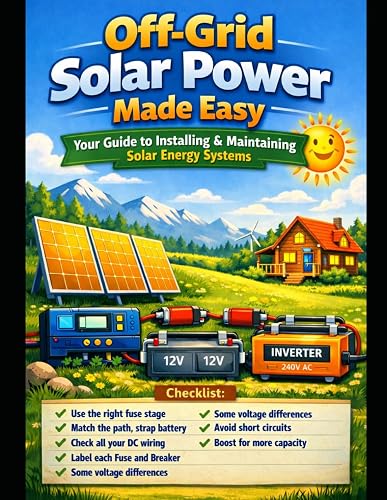 Best for a step-by-step build guideOff Grid Solar Power Made Easy: Build Your Own Off-Grid Solar SystemView on Amazon
- 6
 Best for high-output whole-home backupSUNGOLDPOWER 10000W Off Grid Solar system Complete Kit, 1*10KW 120V/24View on Amazon
- 7
 Best for RVs and small cabins3000W 24V Solar Power System Complete Kit with 960W (8×120W) Solar PanView on Amazon
Our Top Picks
Quick Comparison
| Product | Best for | Key feature |
|---|---|---|
| Whole House System 10KW 120V/240V Split Phase | Whole-home off-grid use | 16kWh LiFePO4 storage |
| ECO-WORTHY 10KW Off Grid Solar System Complete Kit | Mid-size home kit | 9.36kWh battery, 2340W array |
| 450W Bifacial Solar Panel 2-Pack | Expanding an array | Bifacial double-glass modules |
| The DIY Off Grid Solar Power Bible | Learning fundamentals | Covers design through maintenance |
| Off Grid Solar Power Made Easy | Step-by-step building | Build-your-own walkthrough |
| SUNGOLDPOWER 10000W Off Grid Solar System Complete Kit | High-output backup | 10kW inverter, LiFePO4 batteries |
| 3000W 24V Solar Power System Complete Kit | RVs and small cabins | MPPT 60A controller included |
Whole House System 10KW 120V/240V Split Phase Solar Kit
Whole House System:10KW 120V/240V Split Phase Solar Inverter| 48V 314Ah 16kWh High Capacity Energy Storage| 2950W Solar Panel ECO WORTHY 10000W Output Complete Off-Grid Solar Panel Kit for Home
Best for: Whole-home off-grid use
This kit suits homeowners who want split-phase 120V/240V output and a large battery bank in one package. The 48V 314Ah lithium storage is rated at 16kWh by the manufacturer.
Pros
- Split-phase 240V output for major appliances
- Large 16kWh battery capacity
Cons
- Requires an electrician for panel integration
Solar Panel Kit 12PCS 195W Solar Panels with 10KW Inverter
Solar Panel Kit:12PCS 195W Solar Panels(2340W)+2PCS 48V 100AH Cubix Lithium Battery(10.24kWh)+10KW Solar Inverter 120V/240V ECO-WORTHY 10KW Output 9.36KWH Off Grid Solar System Complete Kit for Home
Best for: Complete mid-size home kit
A good fit for a moderately sized home with moderate daily loads. The 2340W array pairs with two 48V lithium batteries rated at about 10.24kWh.
Pros
- Everything included in one shipment
- Balanced panel and battery sizing
Cons
- Limited room to expand the battery bank
450W Bifacial Solar Panel 2-Pack
450W Bifacial Solar Panel 2-Pack (900W Total), N-Type 16BB Monocrystalline, Double-Glass, Dual-Module Parallel Anti-Shade Design, 25.6% Efficiency, for Home Rooftops, RVs, Off-Grid Systems
Best for: Expanding an existing array
Best suited to someone who already has an inverter and batteries and needs more generation. The 900W total is spread across two modules.
Pros
- Double-glass construction for durability
- Bifacial design can capture reflected light
Cons
- Sold as panels only, with no controller or mounting hardware
The DIY Off Grid Solar Power Bible
The DIY Off Grid Solar Power Bible: [10 in 1] The Most Complete and Updated Guide to Design, Install, and Maintain Solar Energy Systems for Tiny Homes, Cabins, Rvs, and Boats
Best for: Learning the fundamentals
This is a reference book rather than hardware, aimed at people who want to understand sizing and installation before buying parts. It covers tiny homes, cabins, RVs and boats.
Pros
- Broad coverage from design to maintenance
- Useful for comparing system options
Cons
- No hardware included
Off Grid Solar Power Made Easy: Build Your Own Off-Grid Solar System
off grid solar power made easy: Build Your Own Off-Grid Solar System (Step-by-Step for Homes & Cabins)
Best for: Step-by-step building
Suits a first-time builder who wants a sequential walkthrough for homes and cabins. It pairs well with a kit once you have sized your loads.
Pros
- Sequential build order that is easy to follow
- Focused on practical installation
Cons
- Specific product details will vary from what you buy
Buying Guide
Battery Capacity and Chemistry
Battery capacity determines how much energy you can store for nighttime use and cloudy days. Lithium iron phosphate (LiFePO4) batteries are the most common choice in these kits because they tolerate many more charge cycles than older lead-acid designs and need less maintenance. Match the kWh rating to your daily energy use so you are not left short after sunset.
Inverter Output and Voltage
The inverter converts stored DC power into the AC power your appliances use. Check that its continuous wattage can handle your largest loads, such as a well pump, air conditioner or electric range, and that its voltage matches your home wiring, whether 120V, 240V split phase, or 24V or 48V for smaller RV and cabin setups. Surge rating matters for motor-driven appliances that draw extra power when starting.
Panel Wattage and Roof or Ground Space
Total panel wattage sets how quickly the battery recharges and how much usable energy you can generate on a typical day. Make sure you have enough unshaded roof or ground space for the panel count in the kit, and consider higher-efficiency modules such as bifacial N-type panels if space is limited. Mounting hardware and wire lengths also affect the final installation cost. For a deeper look, 7 Best Off Grid Solar Systems for Motorhome Setups Compared (2026) covers this in detail.
Included Components and Expansion Options
Some kits ship with everything needed, including combiner boxes, controllers and cabling, while others only supply the core panels and batteries. Review what is in the box so you can estimate the true cost of the system. Also check whether the battery and panel lineup can be expanded later as your energy needs grow.
Application and Learning Resources
A whole-house kit suits a permanent home, while smaller packages fit cabins, RVs and boats. If you prefer to design or install the system yourself, a guide-style book can help you size components and follow safe wiring practices. Whichever route you take, consider local permit and electrical code requirements before installation.
FAQ
What is the average cost of an off grid solar system?
The cost of an off grid solar system varies widely based on battery capacity, inverter size and panel count. Small RV or cabin kits are far less expensive than whole-house systems that power an entire home. Comparing component specifications and what each kit includes gives you the most accurate picture.
How much battery storage do I need?
Start by adding up the daily kilowatt-hours your appliances use, then add a margin for cloudy days. Batteries rated in kWh, such as the larger lithium packs in these kits, can cover that load for a set number of hours. A licensed installer or energy calculator can help refine the estimate.
Can an off grid kit power a whole house?
Some of the larger kits are designed to run a full home with a 120V/240V split-phase inverter and substantial battery storage. Smaller kits are better suited to a cabin, RV or partial-load setup. Always confirm the inverter’s continuous and surge ratings against your heaviest appliances.
Do I need a professional to install an off grid system?
Installation is safest when handled by a qualified electrician or solar installer, especially for high-voltage split-phase systems. Many local codes also require permits and inspections for permanent installations. DIY guides can help you understand the process, but always follow electrical safety standards.
How long do the batteries typically last?
Lithium iron phosphate batteries generally offer many years of service and thousands of charge cycles when operated within their recommended limits. Lifespan depends on depth of discharge, temperature and charging practices. Check the manufacturer’s warranty and cycle rating before buying.
Conclusion
Homeowners who want to run an entire house off the grid should look at the larger whole-house and 10KW kits, which provide split-phase output and substantial battery storage. Those with a cabin, RV or smaller energy budget will find the lower-capacity kits and single-panel options more practical and affordable. Compare battery kWh, inverter output and included hardware against your actual daily usage before deciding.
Related reading
- Top 7 Off-Grid Solar System Cost Calculator Tools for DIYers
- Top 5 Cost to Install Off Grid Solar System Options Compared for Homes
- Top 5 Cost of 5kW Off Grid Solar System Options Compared for Homes (2026)
- Tesla Off Grid Solar System Cost: A Step-by-Step Budget Guide
- Off-grid Solar System Cost Australia: A Step-by-Step Budget Guide
- Off Grid Solar System UK Cost: A Step-by-Step Budget Guide
- Off Grid Solar System Installation Cost: A Step-by-Step Budget Guide (2026)
About Ethan Brooks
Ethan Brooks is part of our editorial team and reviews and edits our DIY solar power systems guides, checking product details against manufacturer specifications and owner feedback.


