 By Claire Whitaker
Updated November 2026
Choosing a 10kW off grid solar inverter is less about finding the single best model and more about matching output voltage, battery bank voltage, and solar array size to how your home actually uses power. This list compares seven 10kW-class units and kits that buyers commonly consider for whole-house off-grid systems. Selection criteria: continuous output rating and split-phase 120V/240V support, battery voltage compatibility, built-in MPPT charge controller capacity, surge handling for well pumps and HVAC, monitoring features, and how well each model’s manufacturer documentation matches its listing. We did not bench-test these units; the notes below rely on manufacturer specifications and patterns owners often report.
Our top picks at a glance
- 1
 TOP CHOICEBest overallECO-WORTHY 10KW Output Off Grid Solar System Complete KitView on Amazon
- 2
 TOP CHOICEBest for battery-free setupsPOWLAND 6300W Solar Hybrid Inverter 48VView on Amazon
- 3
 TOP CHOICEBest for a bundled panel and battery kitSolar Panel Kit 12PCS 195W with 10KW InverterView on Amazon
- 4
 Best for large battery storageECO-WORTHY Whole House System 10KWView on Amazon
- 5
 Best for hybrid grid-tie flexibilityZLPOWE 48V Hybrid Solar Inverter 10KWView on Amazon
- 6
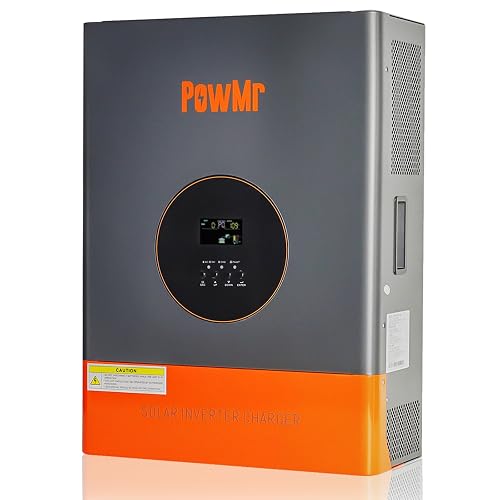 Best budget pickPowMr Solar Inverter 10000W 48VView on Amazon
- 7
 Best for smaller loads on a 10kW budgetECO-WORTHY 6KW Solar Off-Grid Split-Phase AIO InverterView on Amazon
Our Top Picks
| Product | Best for | Key feature |
|---|---|---|
| ECO-WORTHY 10KW Output Off Grid Solar System Complete Kit | Whole-house kits with everything included | 10KW 120V/240V split-phase output with 20.48kWh battery storage |
| POWLAND 6300W Solar Hybrid Inverter 48V | Battery-free or battery-later designs | Dual MPPT with 10KW PV input range |
| Solar Panel Kit 12PCS 195W with 10KW Inverter | Buyers who want panels, battery, and inverter matched | 2340W panel array with 10.24kWh lithium storage |
| ECO-WORTHY Whole House System 10KW | Homes with high nighttime loads | 16kWh battery bank on a 48V platform |
| ZLPOWE 48V Hybrid Solar Inverter 10KW | Hybrid systems that may later tie to the grid | Dual MPPT, 200A charger, parallel-ready design |
| PowMr Solar Inverter 10000W 48V | Budget-conscious builders comfortable with DIY wiring | 30000W surge rating with built-in 100A MPPT |
| ECO-WORTHY 6KW Solar Off-Grid Split-Phase AIO Inverter | Smaller off-grid homes or partial-load backup | All-in-one 6KW split-phase unit with 9kW PV input |
ECO-WORTHY 10KW Output Off Grid Solar System Complete Kit
ECO-WORTHY 10KW Output Off Grid Solar System Complete Kit:10KW 120V/240V Output Split Phase Inverter| 4Pcs 48V 100Ah 20.48kWh High Capacity Energy Storage| 5310 Watts Solar Panel PV
Best for: Whole-house off-grid kits where the buyer wants inverter, battery, and panels from one source.
This kit suits homeowners building a full off-grid system from scratch who prefer not to match components individually. Because the listing bundles a 10KW split-phase inverter with four 48V 100Ah batteries and about 5.3kW of panels, it reduces the number of compatibility questions to answer, though you still need to verify wiring and site requirements.
Key specs
- 10KW output, 120V/240V split-phase
- Four 48V 100Ah batteries, about 20.48kWh total
- About 5310W solar panel array
Pros
- Components are matched to one another at the kit level
- Large storage capacity for overnight loads
- Split-phase output suits typical North American homes
Cons
- Bundled kits can be harder to reconfigure later
- Panel and battery layout still requires careful site planning
Bottom line: A strong pick for buyers who want a complete whole-house starting point and are comfortable with a full installation.
POWLAND 6300W Solar Hybrid Inverter 48V
POWLAND 6300W Solar Hybrid Inverter 48V, Dual MPPT 10KW PV Input, 80-450VDC, 120A Charger, 120V Pure Sine Wave, Grid-Tie & Off-Grid, WiFi Monitoring| Battery-Free Design
Best for: Battery-free or battery-later designs that need a hybrid inverter with strong PV input.
This unit is aimed at builders who want to expand a 10kW-class array before committing to a large battery bank. Its dual MPPT input and wide PV voltage range give designers flexibility with panel strings.
Key specs
- Dual MPPT with 10KW PV input
- 48V system voltage
- 120V pure sine wave output
Pros
- Wide PV input voltage window eases string design
- Monitoring support noted in the listing
- Grid-tie and off-grid operation in one unit
Cons
- Listing emphasis on 120V output means split-phase needs verification
- Battery-free operation has limits during outages
Bottom line: Best for buyers planning a staged build who want a hybrid inverter without buying batteries on day one.
Solar Panel Kit 12PCS 195W with 10KW Inverter
Solar Panel Kit:12PCS 195W Solar Panels(2340W)+2PCS 48V 100AH Cubix Lithium Battery(10.24kWh)+10KW Solar Inverter 120V/240V ECO-WORTHY 10KW Output 9.36KWH Off Grid Solar System Complete Kit for Home
Best for: Buyers who want panels, lithium storage, and a 10KW inverter sized together in one package.
This kit pairs a 2340W array with two 48V 100Ah lithium batteries. It fits a modest home that needs daily solar generation in the low-kWh range rather than a large power-hungry household.
Key specs
- 12 panels at 195W (2340W total)
- Two 48V 100Ah lithium batteries, about 10.24kWh
- 10KW inverter, 120V/240V output
Pros
- Panel-to-battery ratio is easy to understand
- Lithium storage typically supports deeper cycling than lead-acid
- Single-source kit simplifies ordering
Cons
- 2340W array may be undersized for high-consumption homes
- Battery capacity limits nighttime runtime for larger loads
Bottom line: A good match for smaller off-grid homes or cabins where the inverter rating is larger than the daily load requires.
ECO-WORTHY Whole House System 10KW
Whole House System:10KW 120V/240V Split Phase Solar Inverter| 48V 314Ah 16kWh High Capacity Energy Storage| 2950W Solar Panel ECO WORTHY 10000W Output Complete Off-Grid Solar Panel Kit for Home
Best for: Homes with high nighttime loads that need a large battery bank.
The 16kWh battery bank in this system is the main differentiator. Households running electric heat, well pumps, or induction cooking overnight often find larger storage more useful than extra inverter headroom.
Key specs
- 10KW split-phase inverter, 120V/240V
- 48V 314Ah battery, about 16kWh
- About 2950W solar array
Pros
- Large battery capacity for overnight loads
- Split-phase output for whole-house wiring
- Complete kit reduces matching work
Cons
- A 2950W array may recharge slowly in winter
- Heavy battery requires planning for placement and mounting
Bottom line: Suited to buyers who prioritize nighttime runtime over panel count.
ZLPOWE 48V Hybrid Solar Inverter 10KW
ZLPOWE 48V Hybrid Solar Inverter 10KW with Dual MPPT Controller AC Input/Output 120V/240V Single Phase/Phase Split Pure Sine Wave Max 200A Charger Off Grid/Hybrid Parallel Ready WiFi Optional UL1741
Best for: Hybrid systems that may later connect to the grid or run in parallel with additional units.
This inverter lists dual MPPT, a 200A charger, and parallel-ready operation. Builders who expect to expand a system over time often value that flexibility, provided they confirm the parallel setup procedure in the manufacturer manual.
Key specs
- 10KW, 48V platform
- Dual MPPT controller
- Max 200A charger, pure sine wave output
Pros
- Parallel-ready design supports expansion
- Large charger current for fast battery recharge
- Listing notes UL1741 for grid-interactive use
Cons
- Parallel and grid-tie setups add programming complexity
- Owners often recommend reviewing wiring diagrams carefully before connecting
Bottom line: A fit for buyers planning a hybrid or expandable system rather than a fixed off-grid build.
PowMr Solar Inverter 10000W 48V
PowMr Solar Inverter 10000W 48V to 120V/240V Split Phase, 30000W Surge, Low-Frequency Power Inverter Built-in 100A MPPT Controller, Support Solar & AC Input, Off-Grid Home Backup Power
Best for: Budget-conscious builders comfortable with DIY wiring and system configuration.
This unit combines a 10000W inverter with a built-in 100A MPPT controller and a 30000W surge rating. Surge capacity is useful for motor starts such as well pumps and air conditioners.
Key specs
- 10000W continuous, 48V to 120V/240V split-phase
- 30000W surge rating
- Built-in 100A MPPT controller
Pros
- Integrated MPPT reduces component count
- High surge rating for motor loads
- Supports solar and AC input
Cons
- Owners often report the manual needs careful reading for settings
- Built-in 100A controller may limit large array strings
Bottom line: A practical pick for DIYers who want surge capacity and integrated charging on a tighter budget.
ECO-WORTHY 6KW Solar Off-Grid Split-Phase AIO Inverter
ECO-WORTHY 6KW Solar Off-Grid Split-Phase AIO Inverter, 48Vdc to 120Vac/240Vac, 9kW@500V PV Input
Best for: Smaller off-grid homes or partial-load backup where a full 10kW output is more than needed.
This all-in-one unit is rated at 6KW, below the 10kW class, but it uses the same split-phase architecture. It suits buyers whose peak loads sit under 6kW and who want fewer components.
Key specs
- 6KW split-phase output, 120V/240V
- 48Vdc battery input
- 9kW PV input rating at 500V
Pros
- All-in-one design simplifies wiring
- Split-phase output for typical home panels
- Lower output may suit smaller battery banks
Cons
- Output is below 10kW, so it will not carry full whole-house loads
- Limited headroom if loads grow
Bottom line: Choose this over a true 10kW unit only if your measured peak load stays comfortably under 6kW.
Buying Guide
Output rating and surge capacity
Size the continuous output to your measured peak load, not your average. Add the running wattage of simultaneous loads such as a well pump, range, and HVAC. Then check surge rating separately, since motor starts can briefly exceed continuous output by several times.
Good picks for this: PowMr Solar Inverter 10000W 48V, ECO-WORTHY 10KW Output Off Grid Solar System Complete Kit
Split-phase versus single-phase output
Most North American homes use 120V/240V split-phase service. Confirm that the inverter’s output matches your main panel configuration before purchase, and check whether a transfer switch or sub-panel is required.
Good picks for this: ECO-WORTHY Whole House System 10KW, Solar Panel Kit 12PCS 195W with 10KW Inverter
Battery voltage and compatibility
Many 10kW-class inverters run on a 48V battery bank. Match battery chemistry and voltage to the inverter’s specified range, and confirm whether the battery management system communicates with the inverter.
Good picks for this: ZLPOWE 48V Hybrid Solar Inverter 10KW, POWLAND 6300W Solar Hybrid Inverter 48V
Solar array size and PV input range
Check the inverter’s maximum PV input voltage and power. Strings that exceed the maximum open-circuit voltage can damage the controller, so calculate string voltage at the coldest expected temperature using the panel manufacturer’s temperature coefficient.
Good picks for this: POWLAND 6300W Solar Hybrid Inverter 48V, ECO-WORTHY 6KW Solar Off-Grid Split-Phase AIO Inverter
Battery bank size and runtime
Estimate daily energy use in kWh, then size the battery bank to cover one or two days of autonomy without draining below the recommended depth of discharge. A 16kWh bank will not run a home for long at 10kW draw, so use runtime math rather than inverter rating alone.
Good picks for this: ECO-WORTHY Whole House System 10KW, ECO-WORTHY 10KW Output Off Grid Solar System Complete Kit
Monitoring, protection, and certifications
Look for built-in protections such as overload, over-temperature, and short-circuit protection. Check whether the unit lists UL1741 or other relevant standards, and whether it offers remote monitoring through a WiFi or app interface.
Good picks for this: ZLPOWE 48V Hybrid Solar Inverter 10KW, POWLAND 6300W Solar Hybrid Inverter 48V
Installation scope and permits
A 10kW off-grid system involves high-current DC wiring, grounding, and often a licensed electrician for the main panel connection. Check local code requirements before ordering, and plan for inspection. Consult a licensed electrician for final wiring, especially where the system interacts with household service.
Good picks for this: Solar Panel Kit 12PCS 195W with 10KW Inverter, PowMr Solar Inverter 10000W 48V
FAQ
Can a 10kW off-grid inverter run a whole house?
It can, provided your measured peak simultaneous load stays within the continuous rating and surge demands are covered. Large electric heat, EV charging, or multiple motor starts may still exceed the system, so load management or staged circuits are often needed.
What battery voltage do most 10kW off-grid inverters use?
Many units in this class are designed for 48V battery banks. Always confirm the inverter’s listed battery voltage window before connecting batteries, since mismatch can damage equipment.
Do I need split-phase output for a home?
Most North American homes use 120V/240V split-phase service, so split-phase output is typically required to power standard panels and 240V appliances. Verify your home’s service configuration before purchase.
Can I add more batteries or panels later?
Some hybrid and parallel-ready inverters allow expansion, but battery voltage, PV string design, and charge controller limits all constrain growth. Review the manufacturer documentation before planning an expansion.
Is a battery-free 10kW inverter practical?
Battery-free operation depends on grid availability or a generator, since the inverter cannot store energy for outages on its own. It suits staged builds or grid-assisted systems rather than fully off-grid homes.
Do these inverters need a separate charge controller?
Some models include a built-in MPPT controller, while others require an external one. Check the listing and manual to confirm whether a separate controller is needed.
How long should a 10kW off-grid system last?
Lifespan depends on component quality, temperature, and maintenance. Manufacturers typically specify warranty periods rather than guaranteed service life, so review warranty terms carefully.
Conclusion
For a complete whole-house starting point, the ECO-WORTHY 10KW kit and the ECO-WORTHY Whole House System offer the most matched components. Buyers planning a staged or hybrid build may prefer the POWLAND or ZLPOWE hybrid units, while budget-minded DIYers with careful wiring skills may consider the PowMr 10000W unit. Smaller homes with loads under 6kW can look at the ECO-WORTHY 6KW AIO. Match your choice to measured load, battery runtime needs, and local code, and have a licensed electrician review the design before installation.
Sources
- Guidance on solar energy systems, battery storage, and inverter basics for homeowners (energy.gov)
- Research on photovoltaic system performance, sizing, and grid-interactive inverter operation (nrel.gov)
- Safety certification standards, including UL1741, for inverters and grid-interactive equipment (ul.com)
Before you buy: helpful guides
Related reading
- Top 6 Split Phase Solar Inverter Options for Homes and Off-Grid Use (2026)
- Top 6 Solar Inverter Off Grid Options Compared for Homes
- Top 6 3 Phase Solar Power Inverters Compared for Commercial and Off-Grid Use
About Claire Whitaker
Claire Whitaker is part of our editorial team and reviews and edits our DIY solar power systems guides, checking product details against manufacturer specifications and owner feedback.


