 By Graham Fisher
Updated November 2026
Choosing a go power solar charge controller comes down to three things: whether the unit uses PWM or MPPT regulation, whether its voltage and amperage ratings match your array and battery bank, and whether it supports your battery chemistry. The list below compares seven controllers from Victron Energy, Renogy and Go Power using those criteria, with the most important specs noted for each.
Our top picks at a glance
- 1
 TOP CHOICEBest overallBluetooth Charge Controllers for Solar Panels, Certified to UL1741 VicView on Amazon
- 2
 TOP CHOICEBest for small kitsGo Power GP-PSK-90 90W Portable Folding Solar Panel KitView on Amazon
- 3
 TOP CHOICEBest for budget PWM setupsRenogy 30A 12V/24V PWM Solar Charge Controller with LCD Display FlushView on Amazon
- 4
 Best for 48V systemsVictron EnergyBluetooth Solar Charge Controllers for Solar Panels, CerView on Amazon
- 5
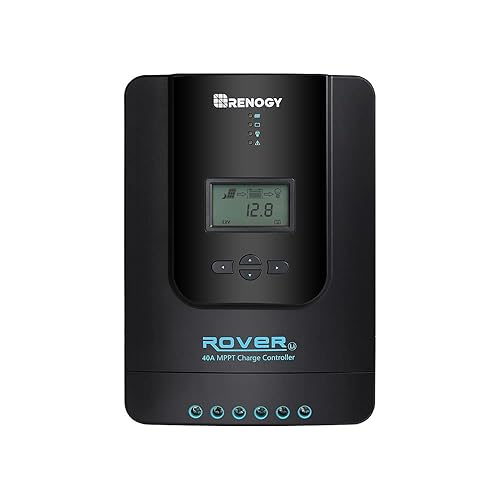 Best for mid-size arraysRenogy Solar Charge Controller Rover 40A 12V24V Auto Parameter DC InpuView on Amazon
- 6
 Best for larger battery banksRenogy 60A MPPT Solar Charge Controller 12V/24V/36V/48V Auto, 150V MaxView on Amazon
- 7
 Best for 30A MPPT upgradesRenogy Rover 30A 12V/24V Auto DC Input MPPT Solar Charge Controller PaView on Amazon
Our Top Picks
| Product | Best for | Key feature |
|---|---|---|
| Victron SmartSolar MPPT 100V 50A | Overall performance | Bluetooth monitoring, 100V input |
| Go Power 10 Amp Solar Controller | Small portable kits | Bundled with folding panel kit |
| Renogy 30A PWM Controller | Budget PWM setups | LCD display, flush mount |
| Victron SmartSolar MPPT 150V 45A | 48V battery systems | 12/24/36/48V auto detection |
| Renogy Rover 40A MPPT | Mid-size arrays | Adjustable LCD, multi-chemistry |
| Renogy Rover Lite 60A MPPT | Larger battery banks | 150V maximum solar input |
| Renogy Rover 30A MPPT | 30A MPPT upgrades | Parameter adjustable LCD |
Victron EnergyBluetooth Charge Controllers for Solar Panels, Certified to UL1741 SmartSolar MPPT Solar Charge Controller 100V, 50A, 12/24V
Bluetooth Charge Controllers for Solar Panels, Certified to UL1741 Victron Energy SmartSolar MPPT Solar Charge Controller 100V, 50A, 12/24V
Best for: Overall performance with remote monitoring
This suits DIYers who want to watch array output and battery state from a phone and who plan to expand the array later.
Pros:
- Bluetooth monitoring and configuration
- 100V maximum input allows longer string lengths
Cons:
- Higher cost tier than basic PWM units
Go Power10 Amp Solar Controller, Adjustable Folding Legs, SAE & XLR Plug Adapters, Includes Heavy Duty Carrying Case GP-PSK-90 90W Portable Folding Solar Panel Kit
Go Power GP-PSK-90 90W Portable Folding Solar Panel Kit
Best for: Small portable kits
Owners building a compact camping or van setup with a single 90W panel will find this matched to their needs.
Pros:
- Bundled with folding panel and carrying case
- Standard SAE and XLR connectors
Cons:
- 10A rating limits expansion
Renogy 30A 12V/24V PWM Solar Charge Controller with LCD Display Flush Mount Design Negative Ground, Compatible with Sealed, Gel, Flooded and Lithium Batteries, Adventurer 30A,black
Renogy 30A 12V/24V PWM Solar Charge Controller with LCD Display Flush Mount Design Negative Ground, Compatible with Sealed, Gel, Flooded and Lithium Batteries, Adventurer 30A,black
Best for: Budget PWM setups
This fits builders with a modest 12V or 24V array who want a straightforward regulator with an onboard display.
Pros:
- LCD display shows charge state
- Flush mount design saves panel space
Cons:
- PWM regulation wastes more array output than MPPT
Victron EnergyBluetooth Solar Charge Controllers for Solar Panels, Certified to UL1741 SmartSolar MPPT Charge Controller 150V, 45A, 12/24/36/48V
Victron EnergyBluetooth Solar Charge Controllers for Solar Panels, Certified to UL1741 SmartSolar MPPT Charge Controller 150V, 45A, 12/24/36/48V
Best for: 48V battery systems
Builders running a 48V bank with a higher-voltage array will appreciate the auto-detection and 150V input rating.
Pros:
- Auto-detects 12V through 48V systems
- Bluetooth monitoring
Cons:
- Requires careful string voltage calculation
Renogy Solar Charge Controller Rover 40A 12V24V Auto Parameter DC Input MPPT Charge Controllers for Solar Panels Adjustable LCD for Gel Sealed Flooded Lithium Battery
Renogy Solar Charge Controller Rover 40A 12V24V Auto Parameter DC Input MPPT Charge Controllers for Solar Panels Adjustable LCD for Gel Sealed Flooded Lithium Battery
Best for: Mid-size arrays
This suits DIYers stepping up from a small kit to a 400 to 500W array with mixed battery chemistry.
Pros:
- Adjustable LCD for battery profile settings
- Supports gel, sealed, flooded and lithium
Cons:
- Display is less detailed than Victron app monitoring
Buying Guide
PWM vs. MPPT Regulation
PWM controllers are simpler and cost less, but they work best when the panel voltage closely matches the battery voltage. MPPT controllers track the panel’s maximum power point and convert excess voltage into charging current, which usually makes them the better choice for larger arrays or when panel voltage is well above battery voltage.
Voltage and Amperage Ratings
Check the controller’s maximum solar input voltage against your panel’s open-circuit voltage, especially in cold weather when voltage rises. Also confirm the amperage rating can handle your array’s maximum current, and leave some headroom for future expansion.
Battery Chemistry Compatibility
Make sure the controller supports your battery type, whether sealed, gel, flooded or lithium. Charging profiles differ between chemistries, and a mismatched setting can shorten battery life or leave the battery undercharged.
Monitoring and Display Options
An LCD display or Bluetooth connection lets you check charge status, battery voltage and daily yield without climbing up to the install site. Adjustable parameters are useful if you run a non-standard battery bank or want to fine-tune charging.
Installation and Mounting Style
Consider whether you need a surface-mount, flush-mount or portable setup. Wiring requirements, ground polarity and the space available in your enclosure should all factor into the decision.
FAQ
What does a solar charge controller do?
A solar charge controller regulates the voltage and current flowing from your solar panels into your battery bank. It prevents overcharging and helps protect batteries from damage and early wear.
Is MPPT always better than PWM?
MPPT is generally more efficient, especially when panel voltage is much higher than battery voltage. PWM can still be a sensible, lower-cost option for small systems where the panel and battery voltages are closely matched.
How do I size a controller for my system?
Start by adding up the total wattage of your solar panels and dividing by your battery system voltage to estimate the current. Choose a controller rated above that figure, and check that the solar input voltage limit exceeds your panel’s open-circuit voltage.
Can I use a controller with lithium batteries?
Many controllers support lithium batteries, but you should confirm that the specific model includes a lithium charging profile or allows you to adjust the charging settings. Using the wrong profile can affect battery performance and longevity.
Do I need Bluetooth or an LCD display?
These features are optional but helpful for monitoring system performance and troubleshooting. A basic setup can run fine without them, though a display or app connection makes it easier to track charging over time.
Conclusion
For most DIY builds with larger arrays or higher voltages, an MPPT controller such as the Victron SmartSolar or a Renogy Rover model is the better fit, with the Victron options suited to users who want Bluetooth monitoring. For small portable kits, the Go Power 10 Amp controller is a practical match, while budget-minded PWM setups with matched voltages can make good use of the Renogy 30A PWM unit.
Related reading
- 7 Best Solar Power Charge Controller Models for DIY Systems (2026)
- 7 Best Solar Power Battery Charge Controllers for DIY Systems (2026)
- 4 Best Solar Power Charge Controller Inverter Combos for Off-Grid Use (2026)
- Top 6 Wanderer Solar Charge Controllers Compared for DIY Systems
- Top 6 Solar 12V Charge Controller Options Compared for DIY Systems
- Top 6 MPPT Solar Charge Controllers for Lithium Batteries Compared
- Top 5 Solar Charge Controller Lithium Ion Battery Picks Compared (2026)
About Graham Fisher
Graham Fisher is part of our editorial team and reviews and edits our DIY solar power systems guides, checking product details against manufacturer specifications and owner feedback.




