 By Ethan Brooks
Updated November 2026
A subsidy on off grid solar system can change the math on a home build, but the kit you choose still decides whether the power you get matches your daily loads. This list compares six complete home kits by inverter capacity, battery storage, panel output and how each one fits a specific need. Selection was research-based, drawing on manufacturer specifications, brand reputation and patterns in owner feedback. We have not tested these kits ourselves.
Our top picks at a glance
- 1
 TOP CHOICEBest overallWhole House System:10KW 120V/240V Split Phase Solar Inverter| 48V 314AView on Amazon
- 2
 TOP CHOICEBest for mid-size homesSolar Panel Kit:12PCS 195W Solar Panels(2340W)+2PCS 48V 100AH Cubix LiView on Amazon
- 3
 TOP CHOICEBest for RVs and small cabins4PCS N-Type Bifacial 195W Solar Panel+12.8V 314Ah Lithium Battery+60AView on Amazon
- 4
 Best for mixed solar and wind640W Hybrid System Solar Wind Power Kit 12V, 2x120W Rigid Solar Panel+View on Amazon
- 5
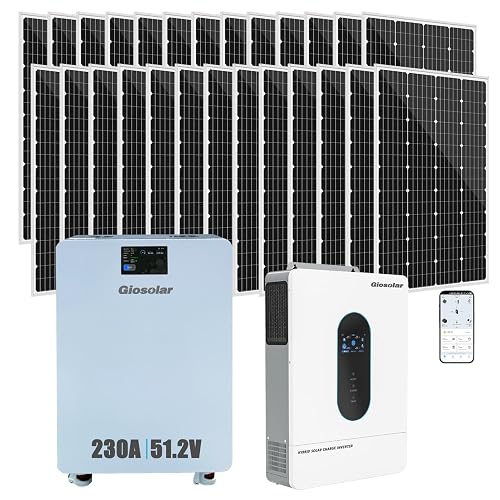 Best for high-load backup12000W Solar Power System Kit: 12KW 48V Split Phase Hybrid Solar InverView on Amazon
- 6
 Best for a 5kW starter homeOff Grid Solar Panle Kit with Battery & Inverter:12x195W Panels, 48V 5View on Amazon
Our Top Picks
| Product | Best for | Key feature |
|---|---|---|
| Whole House System 10KW | Full-home off-grid use | 16kWh storage, split phase |
| Solar Panel Kit 10KW | Mid-size homes | 2340W panels, 10.24kWh battery |
| 800W Off Grid Kit | RVs and small cabins | 60A MPPT controller |
| 640W Hybrid Wind Kit | Sites with wind and sun | Solar plus wind input |
| 12000W Power Kit | High-load backup power | Dual 200A MPPT, WiFi |
| 5KW Off Grid Panel Kit | Smaller starter homes | 5000W inverter, LiFePO4 |
Whole House System:10KW 120V/240V Split Phase Solar Inverter| 48V 314Ah 16kWh High Capacity Energy Storage| 2950W Solar Panel ECO WORTHY 10000W Output Complete Off-Grid Solar Panel Kit for Home
Whole House System:10KW 120V/240V Split Phase Solar Inverter| 48V 314Ah 16kWh High Capacity Energy Storage| 2950W Solar Panel ECO WORTHY 10000W Output Complete Off-Grid Solar Panel Kit for Home
Best for: Full-home off-grid use with high storage
Suited to households that want to run most of the house from stored power without a generator in the loop.
Pros:
- Large 16kWh battery capacity for multi-day autonomy
- Split-phase 120V/240V output for standard home appliances
Cons:
- Requires a licensed electrician for interconnection and load review
Solar Panel Kit:12PCS 195W Solar Panels(2340W)+2PCS 48V 100AH Cubix Lithium Battery(10.24kWh)+10KW Solar Inverter 120V/240V ECO-WORTHY 10KW Output 9.36KWH Off Grid Solar System Complete Kit for Home
Solar Panel Kit:12PCS 195W Solar Panels(2340W)+2PCS 48V 100AH Cubix Lithium Battery(10.24kWh)+10KW Solar Inverter 120V/240V ECO-WORTHY 10KW Output 9.36KWH Off Grid Solar System Complete Kit for Home
Best for: Mid-size homes with moderate daily loads
A balanced option for homeowners who want a 10kW inverter without the largest battery bank.
Pros:
- Two 48V lithium batteries give modular expansion room
- 2340W array suits roughly 9 kWh of daily production in good sun
Cons:
- Panel array may be tight for homes with large electric heat loads
4PCS N-Type Bifacial 195W Solar Panel+12.8V 314Ah Lithium Battery+60A MPPT Charge Controller+2000W Pure Sine Wave Inverter ECO-WORTHY 800W Off Grid Solar System Complete Kit for RV Off Grid
4PCS N-Type Bifacial 195W Solar Panel+12.8V 314Ah Lithium Battery+60A MPPT Charge Controller+2000W Pure Sine Wave Inverter ECO-WORTHY 800W Off Grid Solar System Complete Kit for RV Off Grid
Best for: RVs and small off-grid cabins
Fits compact installs where weight, roof space and a modest inverter are the main limits.
Pros:
- Pure sine wave inverter protects sensitive electronics
- Compact array fits most RV roofs
Cons:
- Limited capacity for air conditioning or electric cooking
640W Hybrid System Solar Wind Power Kit 12V, 2x120W Rigid Solar Panel+400W Wind Turbine with Controller+12.8V 100Ah Battery+1000W Pure Power Inverter+Smart Solar Controller for Home Off-Grid System
640W Hybrid System Solar Wind Power Kit 12V, 2x120W Rigid Solar Panel+400W Wind Turbine with Controller+12.8V 100Ah Battery+1000W Pure Power Inverter+Smart Solar Controller for Home Off-Grid System
Best for: Sites with both sun and steady wind
Useful where solar alone leaves winter or overcast gaps that a turbine can cover.
Pros:
- Wind turbine adds generation on cloudy or nighttime days
- Includes a dedicated controller for each source
Cons:
- Small turbine needs a clear, tall mounting location to perform
12000W Solar Power System Kit: 12KW 48V Split Phase Hybrid Solar Inverter with Dual 200A MPPT & WiFi, 12KWh 51.2V 230Ah Battery, 26pcs 120W Rigid Solar Panels for Home Off-Grid/Backup Power
12000W Solar Power System Kit: 12KW 48V Split Phase Hybrid Solar Inverter with Dual 200A MPPT & WiFi, 12KWh 51.2V 230Ah Battery, 26pcs 120W Rigid Solar Panels for Home Off-Grid/Backup Power
Best for: High-load backup and larger homes
Aimed at households with big motor loads, well pumps or all-electric kitchens.
Pros:
- Dual MPPT inputs handle a large panel array
- WiFi monitoring helps track battery state remotely
Cons:
- Heavier equipment needs a professional install for safe wiring
Buying Guide
Match the Inverter Size to Your Peak Load
Add up the wattage of the appliances you expect to run at the same time, such as a well pump, air conditioner, and kitchen equipment. The inverter must handle that peak load, so choose a unit with headroom above it. A 10KW split-phase inverter suits a full home, while a smaller 2000W or 5000W unit fits a cabin or RV.
Consider Daily Energy Use and Battery Capacity
Battery storage determines how long your home runs overnight or during cloudy days. Estimate your average daily kilowatt-hour use from your utility bills, then pick a battery bank that covers that total with some reserve. Lithium iron phosphate batteries generally offer longer cycle life than older lead-acid designs.
Check Panel Output Against Your Sun Exposure
Panel wattage should be enough to recharge the batteries on a typical sunny day after accounting for losses. Roof size, orientation, and shading all affect how much sun your array will actually catch. If your site is limited, a kit with more panels or a wind add-on may fill the gap.
Think About Voltage Compatibility and Expansion
Confirm whether the system uses 12V, 48V, or a 120V/240V split-phase output, since this affects wiring, safety, and what appliances you can run. Systems with a 48V architecture and room to add batteries or panels later make upgrades easier. Make sure the inverter and charge controller are designed to work together.
Review Subsidy Eligibility Before You Buy
Subsidy programs often specify equipment standards, certifications, or installer requirements that some kits may not meet. Check program rules for approved components and documentation before purchasing. Keeping receipts and product specification sheets will help with any rebate or incentive claim.
FAQ
Does a subsidy on an off grid solar system cover the whole kit?
Coverage varies by program, location, and year, and some incentives apply only to certain components or installed systems. Review the program guidelines to see which items qualify. Confirm eligibility with the administering agency before you commit to a purchase.
How much battery storage does a typical home need?
The answer depends on your daily energy use and how many days of backup you want during poor weather. Start by reviewing your utility bills to estimate average daily kilowatt-hours. Then size the battery bank to cover that amount with some margin.
Can I add more panels or batteries later?
Many complete kits are designed to expand, but the inverter and charge controller limits set the maximum capacity you can add. Check the rated input and battery bank limits before planning an upgrade. Choosing a higher-capacity inverter from the start can make future growth simpler.
Is a wind turbine worth adding to a solar kit?
A wind add-on can help in regions with steady wind, especially during winter months or cloudy periods. Wind output depends heavily on local conditions and tower height, so it works best as a supplement. Evaluate your site’s wind resource before counting on it.
Do I need a professional to install an off-grid system?
Many homeowners handle parts of the installation, but wiring a home-scale system involves electrical codes and safety requirements. A licensed electrician can ensure the work meets local rules and may be required for certain subsidy programs. Professional review is a smart step for whole-home systems.
Conclusion
For a full home with high daily demand, the larger 10KW and 12KW whole-house kits are the best fit, provided your roof and budget support them. Smaller homes, cabins, or backup-focused setups will do well with the 5KW or 10KW Eco-Worthy kits, while RV or light-use buyers should look at the 800W or hybrid wind-and-solar options.
Related reading
- Off Grid Solar System Government Subsidy: How to Check Eligibility and Apply
- Wiring Diagram for Off-Grid Solar System: A Step-by-Step Guide
- Wind Solar Hybrid Off Grid System: How to Size and Wire One
About Ethan Brooks
Ethan Brooks is part of our editorial team and reviews and edits our DIY solar power systems guides, checking product details against manufacturer specifications and owner feedback.


