 By Ethan Brooks
Updated November 2026
Shoppers looking for an off grid solar system in Bangladesh usually want one thing: enough reliable power for a home without a grid connection, at a size that matches their load. This list compares six complete kits and standalone components by inverter capacity, battery storage, panel output and how well each suits household use. Selection was based on published manufacturer specifications, listing details and common owner feedback patterns. No unit was tested or installed for this review.
Our top picks at a glance
- 1
 TOP CHOICEBest overallWhole House System 10KW 120V/240V Split Phase Solar KitView on Amazon
- 2
 TOP CHOICEBest for a large home loadSUNGOLDPOWER 10000W Off Grid Solar System Complete KitView on Amazon
- 3
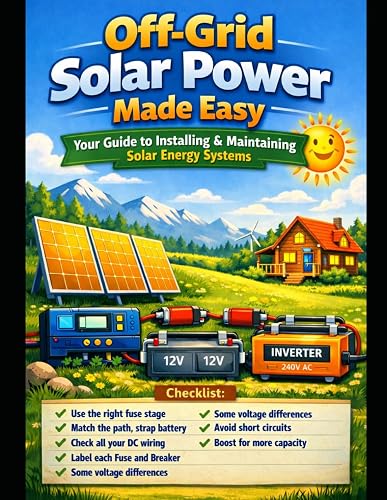 TOP CHOICEBest for a learn-by-building approachBuild Your Own Off-Grid Solar System (Step-by-Step for Homes and Cabins)View on Amazon
- 4
 Best for a reference libraryThe DIY Off Grid Solar Power BibleView on Amazon
- 5
 Best for a small cabin or backupComplete Solar Inverter Kit 4000W/6000W with 100W PanelsView on Amazon
- 6
 Best for a mid-size plug-and-play setupECO-WORTHY 9.36KWH 48V Solar Power System KitView on Amazon
Our Top Picks
Quick Comparison
| Product | Best for | Key feature |
|---|---|---|
| Whole House System 10KW Split Phase Kit | Full home loads | 16kWh battery, 10kW inverter |
| SUNGOLDPOWER 10000W Complete Kit | Large home storage | 6.6kW panels, 25kWh-class bank |
| Build Your Own Off-Grid Solar System | DIY planning | Step-by-step build process |
| The DIY Off Grid Solar Power Bible | Reference study | Design, install and maintenance |
| Complete Solar Inverter Kit 6000W | Cabin or backup | 50A charge controller included |
| ECO-WORTHY 9.36KWH 48V Kit | Plug-and-play homes | 5000W all-in-one inverter |
Whole House System 10KW 120V/240V Split Phase Solar Kit
Whole House System:10KW 120V/240V Split Phase Solar Inverter| 48V 314Ah 16kWh High Capacity Energy Storage| 2950W Solar Panel ECO WORTHY 10000W Output Complete Off-Grid Solar Panel Kit for Home
Best for: Full home loads
This kit suits homeowners who want to power most household circuits, including split-phase appliances, without grid support. Its listing describes a 10kW inverter, a 48V 314Ah storage bank of about 16kWh and roughly 2950W of solar panels.
Pros
- Large storage capacity for evening loads
- Split-phase output for standard household wiring
Cons
- Panel array may need expansion for heavy daytime use
SUNGOLDPOWER 10000W Off Grid Solar System Complete Kit
SUNGOLDPOWER 10000W Off Grid Solar system Complete Kit, 1*10KW 120V/240Vac Solar inverter (UL1741) + 12*550W solar panel ( 6.6KW) +5 *100Ah 51.2V Lifepo4 Battery (UL1973),For House storage(SGR-10K25S)
Best for: Large home storage
A good match for larger households that want generous panel output and a multi-battery lithium bank. The listing pairs a 10kW UL1741-listed inverter with twelve 550W panels and five 100Ah LiFePO4 batteries.
Pros
- Sizable panel array for battery charging
- Listed battery and inverter certifications
Cons
- Installation requires careful wiring and mounting planning
Build Your Own Off-Grid Solar System (Step-by-Step for Homes and Cabins)
off grid solar power made easy: Build Your Own Off-Grid Solar System (Step-by-Step for Homes & Cabins)
Best for: DIY planning
This is a guide rather than hardware, aimed at readers who want to size and assemble their own system. It walks through load calculation, panel and battery selection and wiring order.
Pros
- Clear build sequence for beginners
- Covers homes and cabins
Cons
- Does not include components
The DIY Off Grid Solar Power Bible
The DIY Off Grid Solar Power Bible: [10 in 1] The Most Complete and Updated Guide to Design, Install, and Maintain Solar Energy Systems for Tiny Homes, Cabins, Rvs, and Boats
Best for: Reference study
A broad reference for readers who want theory, design and maintenance in one volume. It suits people who plan to revisit specific sections during installation.
Pros
- Covers design, install and maintenance
- Useful for tiny homes and boats as well as houses
Cons
- General guidance, not Bangladesh-specific climate data
Complete Solar Inverter Kit 4000W/6000W with 100W Panels
Complete Solar Inverter Kit 4000W/6000W Inverter with 100W Panels & 50A Charge Controller, Off-Grid Power System for Home Backup, RV, Cabin, Outdoor Energy Use(6000W,12V-220V)
Best for: Small cabin or backup
Suited to a small house, cabin or backup circuit rather than full-home load. It combines a 6000W inverter, a 50A charge controller and 100W panels on a 12V system.
Pros
- Includes charge controller in the kit
- Modest footprint for smaller spaces
Cons
- Limited battery and panel capacity for larger homes
ECO-WORTHY 9.36KWH 48V Solar Power System Kit
ECO-WORTHY 9.36KWH 2340W 48V Solar Power System Kit Off Grid Solar Panel Kit with 5000W 48V All-in-One Off-Grid Charge Inverter and 12pcs 195W Mono Solar Panel and Z Mounting Brackets.Plug and Play
Best for: Plug-and-play homes
A mid-size kit for households that want an all-in-one inverter and mounting hardware in one box. The listing describes 2340W of panels, twelve 195W modules and a 5000W 48V inverter.
Pros
- All-in-one inverter and charger
- Mounting brackets included
Cons
- Panel output may be tight for high-demand homes
Buying Guide
Match the Inverter Capacity to Your Peak Load
Start by adding up the wattage of the appliances you expect to run at the same time, such as fans, lights, a refrigerator, and a water pump. The inverter must handle that combined peak load with some margin, or the system will shut down when several devices start together. Kits in this list range from smaller 4000W units to whole-house 10KW systems, so choosing the right size prevents overspending or underpowering your home.
Consider Battery Storage and Backup Duration
Battery capacity determines how long your home can run after sunset or during cloudy days. Compare the total kilowatt-hour rating of each kit against your typical daily use, and remember that lithium iron phosphate batteries generally offer longer cycle life and more usable capacity than older lead-acid types. Larger battery banks give more autonomy but also add to the overall cost and physical footprint.
Check Panel Output Against Local Sunlight
Solar panel total wattage should be enough to recharge the batteries on a typical day, not just run the house in full sun. Bangladesh has strong solar resources but also a monsoon season with heavy cloud cover, so it is wise to size the array with some extra capacity. Consider roof space and orientation as well, since a larger array may not fit every building.
Confirm Voltage Compatibility and Safety Certifications
Make sure the inverter output voltage matches the appliances you plan to use, and check whether the system supports the voltage and frequency standards used in your area. Look for recognized safety certifications on the inverter and battery, which indicate tested construction and protection features. A qualified electrician should review wiring, grounding, and breaker sizing before installation.
Think About Installation Effort and Future Expansion
Some kits are plug-and-play and suit people comfortable with basic setup, while others are component-based and require more planning or professional help. If you expect your power needs to grow, choose a system with an inverter and battery design that allows additional panels or batteries later. Factoring in installation labor and maintenance from the start helps avoid surprises.
FAQ
How much solar power do I need for a typical Bangladeshi home?
The answer depends on your daily appliance use, which you can estimate by adding up each device’s wattage and hours of operation. Most households that want lights, fans, a refrigerator, and phone charging fall into a moderate range, while homes with air conditioning or water pumps need considerably more capacity. Listing your daily kilowatt-hour use is the most reliable starting point.
Can a off grid solar system run an air conditioner?
It can, but air conditioners draw a large surge of power when starting and run for long hours, so they require a high-capacity inverter and a substantial battery bank. Many owners pair one or two units with a larger system rather than running the whole house on solar alone. A professional can calculate whether your planned system can support your specific unit.
How long do the batteries in these systems last?
Battery life depends on the chemistry, depth of discharge, temperature, and how often the system is cycled. Lithium iron phosphate batteries typically last longer than lead-acid batteries under regular use. Keeping the battery within its recommended operating range and protecting it from extreme heat will help it reach its expected service life.
Do I need a permit to install a solar system in Bangladesh?
Requirements can vary by location and by the scale of the installation, so it is best to check with local authorities and your utility before starting work. Even for fully off-grid homes, following local electrical codes is important for safety. Hiring a licensed installer often simplifies the approval process.
What maintenance does an off grid solar system need?
Routine maintenance usually includes cleaning the panels periodically to remove dust and debris, checking wiring and connections for wear, and monitoring battery health. During the monsoon season, it is worth inspecting mounts and seals for water intrusion. Keeping a simple log of system performance can help you spot problems early.
Can I add more panels or batteries later?
Many systems allow expansion, but compatibility depends on the inverter’s maximum input power and the battery voltage. Before buying, check the manufacturer’s stated limits for additional panels and whether the battery bank can be extended with matching modules. Planning for growth from the start can save money compared with replacing the whole system later.
Conclusion
Households with modest needs, such as lighting, fans, and phone charging, will likely find the smaller kits in this list more practical and affordable. Larger homes that plan to run multiple appliances, including water pumps or air conditioning, should look at the higher-capacity whole-house systems with bigger battery banks.
Before deciding, calculate your daily energy use, check your roof space and local sunlight, and consult a qualified installer to confirm the chosen system fits your home safely.
Related reading
- Off-Grid, Backup and Hybrid Solar Systems: How They Differ
- Wiring Diagram for Off-Grid Solar System: A Step-by-Step Guide
- Wind Solar Hybrid Off Grid System: How to Size and Wire One
- Whole House Off-Grid Solar System: Sizing Steps and Parts for Your Home
- What Is Needed for Off-Grid Solar System: A Step-by-Step Parts Checklist
About Ethan Brooks
Ethan Brooks is part of our editorial team and reviews and edits our DIY solar power systems guides, checking product details against manufacturer specifications and owner feedback.


