 By Ethan Brooks
Updated November 2026
An off-grid connected solar system lets a home run on its own stored power while still tying into a backup source or a second energy stream when needed. Choosing one comes down to inverter output, battery capacity, panel wattage and whether the kit covers a full house or just essential loads. The seven kits below were selected by reviewing manufacturer specifications, brand reputation and common owner feedback patterns. This is research-based, not hands-on testing.
Our top picks at a glance
- 1
 TOP CHOICEBest overallECO-WORTHY 10KW Output Off Grid Solar System Complete KitView on Amazon
- 2
 TOP CHOICEBest for whole-house backupWhole House System 10KW Split Phase Solar Inverter KitView on Amazon
- 3
 TOP CHOICEBest for a mid-size home on a budgetSUNGOLDPOWER 5000W Off Grid System Complete Solar KitView on Amazon
- 4
 Best for high battery storageSolar Panel Kit 10KW with 48V BatteriesView on Amazon
- 5
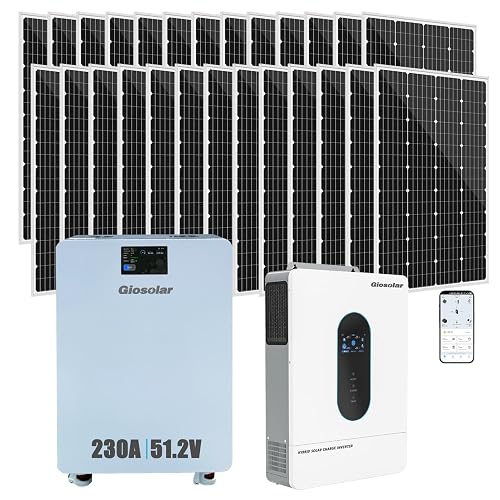 Best for large panel arrays12000W Solar Power System KitView on Amazon
- 6
 Best for high-output homesSUNGOLDPOWER 6500W Off Grid System Complete Solar Kit, 1 * 6500W 120/2View on Amazon
- 7
 Best for monitored backup powerSolar Complete 9.36KWH Off-Grid System:12KW 120V/240V Split Phase SolaView on Amazon
Our Top Picks
Quick Comparison
| Product | Best for | Key feature |
|---|---|---|
| ECO-WORTHY 10KW Output Off Grid Solar System | Overall balance | 10kW split-phase, 20.48kWh storage |
| Whole House System 10KW Split Phase | Whole-house backup | 16kWh battery, 2950W panels |
| SUNGOLDPOWER 5000W Off Grid Kit | Mid-size homes | 5kW inverter, 100Ah LiFePO4 |
| Solar Panel Kit 10KW with 48V Batteries | High battery storage | 9.36kWh, 2340W array |
| 12000W Solar Power System Kit | Large panel arrays | 12kW hybrid inverter, dual MPPT |
| SUNGOLDPOWER 6500W Off Grid Kit | High-output homes | 6.5kW inverter, 370W panels |
| Solar Complete 9.36KWH Off-Grid System | Monitored backup power | WiFi monitoring, combiner box |
ECO-WORTHY 10KW Output Off Grid Solar System Complete Kit
ECO-WORTHY 10KW Output Off Grid Solar System Complete Kit:10KW 120V/240V Output Split Phase Inverter| 4Pcs 48V 100Ah 20.48kWh High Capacity Energy Storage| 5310 Watts Solar Panel PV
For a deeper look, 3 Best Solar Well Water Pump System Options for Off-Grid Use (2026) covers this in detail.
Best for: Overall balance of inverter output and storage
This kit suits homeowners who want 120V and 240V split-phase output with roughly 20kWh of stored energy. Four 48V 100Ah batteries and a 5310-watt panel array fit a fairly complete household load profile.
Pros
- Split-phase 120V/240V output covers most household circuits
- Large 20.48kWh storage bank for overnight use
Cons
- Installation requires familiarity with battery and inverter wiring
Whole House System 10KW Split Phase Solar Inverter Kit
Whole House System:10KW 120V/240V Split Phase Solar Inverter| 48V 314Ah 16kWh High Capacity Energy Storage| 2950W Solar Panel ECO WORTHY 10000W Output Complete Off-Grid Solar Panel Kit for Home
Best for: Whole-house backup power
Designed for homes that need broad coverage during outages. The 16kWh battery pairs with 2950 watts of panels for steady daytime recharging.
Pros
- 16kWh of storage supports extended outages
- Split-phase output suits standard North American service
Cons
- Panel array is modest for heavy daily consumption
SUNGOLDPOWER 5000W Off Grid System Complete Solar Kit
SUNGOLDPOWER 5000W 48V Off Grid System Complete Solar Kit,1 * 5000W 120Vac Solar Inverter UL1741+6 * 200W Mono Solar Panels +1 * 100Ah 51.2V Lifepo4 Battery UL1973, for House Storage (SGM-5K5E)
Best for: Mid-size homes with moderate loads
A practical choice for smaller households or cabins. Six 200-watt panels and a 100Ah LiFePO4 battery keep the system manageable for DIY installation.
Pros
- Lower total wattage makes sizing straightforward
- LiFePO4 chemistry is generally long-lived
Cons
- Single battery limits total storage capacity
Solar Panel Kit 10KW with 48V Batteries
Solar Panel Kit:12PCS 195W Solar Panels(2340W)+2PCS 48V 100AH Cubix Lithium Battery(10.24kWh)+10KW Solar Inverter 120V/240V ECO-WORTHY 10KW Output 9.36KWH Off Grid Solar System Complete Kit for Home
Best for: High battery storage at a moderate scale
This kit combines twelve 195-watt panels with two 48V 100Ah lithium batteries. It suits households that prioritize stored energy over peak panel output.
Pros
- Roughly 10kWh of lithium storage
- Clear 120V/240V inverter output
Cons
- Panel array may need expansion for larger summer loads
12000W Solar Power System Kit
12000W Solar Power System Kit: 12KW 48V Split Phase Hybrid Solar Inverter with Dual 200A MPPT & WiFi, 12KWh 51.2V 230Ah Battery, 26pcs 120W Rigid Solar Panels for Home Off-Grid/Backup Power
Best for: Large panel arrays and high daytime generation
Twenty-six 120-watt rigid panels and a 12kW hybrid inverter target homes with heavier loads or electric heating. Dual 200A MPPT controllers add flexibility.
Pros
- Large array supports high daytime consumption
- Dual MPPT inputs for layout flexibility
Cons
- Larger footprint and wiring effort than smaller kits
Buying Guide
Inverter Output and Voltage Compatibility
The inverter sets the maximum power your home can draw at one time and determines whether it supports 120V only or split-phase 120V/240V service. Match the inverter rating to the largest loads you expect to run together, such as an air conditioner, electric range or well pump, rather than only to average daily usage.
Also check whether the inverter is listed to UL1741, since that certification is commonly required for grid-interactive operation and utility interconnection.
Battery Capacity and Chemistry
Battery capacity, measured in kilowatt-hours, determines how long your home can run overnight or during cloudy stretches. Lithium iron phosphate (LiFePO4) batteries are widely used in these kits because they tolerate many charge cycles and generally require less maintenance than older lead-acid designs.
Consider whether you want a modular setup that you can expand later, or a single larger unit with a simpler installation.
Solar Panel Wattage and Total Array Size
The total panel wattage affects how quickly the batteries recharge and how much energy is available on a typical day. Compare the array size against your roof space, sun exposure and local climate, since a kit with more panels will need more mounting area and wiring.
Rigid panels and lower-wattage modules can be easier to fit on irregular roofs, while higher-wattage modules usually mean fewer panels for the same output.
Whole-House Versus Essential-Load Coverage
Some kits are sized to power an entire house, while others are better suited to backup for critical circuits like refrigeration, lighting and internet equipment. Make a list of the appliances you want to keep running during an outage and total their running and starting power before choosing.
Smaller systems cost less up front but may require you to manage usage during extended outages.
Monitoring, Expansion and Installation Support
Built-in monitoring, such as WiFi tracking of production and battery state, helps you understand how the system performs and catch problems early. Confirm whether the kit includes a combiner box, mounting hardware and the cabling you need, and whether you can add batteries or panels later.
Because local permitting and electrical codes vary, plan for a licensed electrician or solar installer to review the design before installation.
FAQ
What does off-grid connected mean in a solar system?
An off-grid connected solar system can run a home on its stored battery power and solar production, while still having a path to a backup generator or another energy source. It is designed so the home is not dependent on the utility grid for everyday operation. The exact configuration depends on the inverter and wiring used.
How many batteries do I need for a typical home?
The right battery count depends on your daily energy use and how many hours of backup you want during an outage. Calculate your average daily kilowatt-hour consumption, then decide how many days of autonomy you need. Essential-load setups usually need far less storage than whole-house coverage.
Can these kits power central air conditioning?
Some of the higher-output inverters can support central air conditioning, but it depends on the unit’s starting current and the total load running at the same time. Check the compressor’s listed running and startup power against the inverter rating before buying. A professional load calculation is recommended.
Do I need a permit to install a solar system?
In most areas, a permit and inspection are required for solar installations, especially when connecting to the home’s electrical panel. Requirements vary by city, county and utility, so check with your local building department. Working with a licensed installer typically simplifies this process.
How long do the batteries in these kits last?
Lifespan depends on the battery chemistry, depth of discharge, temperature and how often the system cycles. Lithium iron phosphate batteries are generally rated for thousands of cycles, but manufacturer warranty terms are the best guide. Review the warranty and expected cycle life before purchase.
Conclusion
Homeowners who want to power an entire house with a larger battery bank and high inverter output should look at the whole-house and 10KW-class kits, while those planning around a smaller budget or essential loads may find the 5000W option more practical. The 12KW-class kits suit buyers who want headroom for heavy appliances and future expansion.
Before committing, total your household’s running and starting loads, measure your roof space and confirm local permitting requirements. That combination will point you to the kit that fits your home best.
Related reading
- Grid Connected and Off-Grid Solar Photovoltaic System: Which Should You Choose?
- Wiring Diagram for Off-Grid Solar System: A Step-by-Step Guide
- Wind Solar Hybrid Off Grid System: How to Size and Wire One
- Whole House Off-Grid Solar System: Sizing Steps and Parts for Your Home
About Ethan Brooks
Ethan Brooks is part of our editorial team and reviews and edits our DIY solar power systems guides, checking product details against manufacturer specifications and owner feedback.

