 By Ethan Brooks
Updated November 2026
A mobile off grid solar system is a self-contained kit of panels, batteries, an inverter and controls that powers a home or building without a utility connection. Buyers usually compare kits on inverter output, battery storage in kilowatt-hours, panel wattage and whether the system supports split-phase 120V/240V loads. The picks below are based on product listings, brand reputation and common owner feedback patterns, not on our own testing.
Our top picks at a glance
- 1
 TOP CHOICEBest overallECO-WORTHY 10KW Output Off Grid Solar System Complete KitView on Amazon
- 2
 TOP CHOICEBest for whole-house backupWhole House System 10KW Solar Inverter Complete Off-Grid KitView on Amazon
- 3
 TOP CHOICEBest for small cabinsSUNGOLDPOWER 5000W 48V Off Grid System Complete Solar KitView on Amazon
- 4
 Best for larger battery banksSolar Panel Kit 12PCS 195W with 10KW Off Grid InverterView on Amazon
- 5
 Best for bifacial panelsSUNGOLDPOWER Solar Kit 10000W Off-Grid Power SystemView on Amazon
- 6
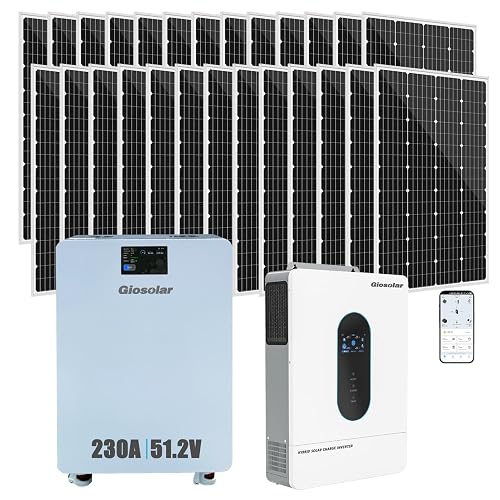 Best for hybrid expansion12000W Solar Power System Kit with Hybrid InverterView on Amazon
Our Top Picks
Quick Comparison
| Product | Best for | Key feature |
|---|---|---|
| ECO-WORTHY 10KW Off Grid Kit | Overall balance | 10KW split-phase, 20.48kWh storage |
| Whole House System 10KW Kit | Whole-house backup | 16kWh battery, 2950W panels |
| SUNGOLDPOWER 5000W Kit | Small cabins | 5000W inverter, UL1741 listed |
| Solar Panel Kit 10KW Bundle | Larger battery banks | 10.24kWh lithium, 2340W array |
| SUNGOLDPOWER 10000W Kit | Bifacial panel output | 5400W bifacial array |
| 12000W Hybrid Kit | Hybrid expansion | Dual 200A MPPT, WiFi monitoring |
ECO-WORTHY 10KW Output Off Grid Solar System Complete Kit
ECO-WORTHY 10KW Output Off Grid Solar System Complete Kit:10KW 120V/240V Output Split Phase Inverter| 4Pcs 48V 100Ah 20.48kWh High Capacity Energy Storage| 5310 Watts Solar Panel PV
Best for: Overall balance of inverter output and storage
This kit suits homeowners who want a full 120V/240V split-phase setup with four batteries and a large panel array in one package.
Pros
- 10KW split-phase inverter with 20.48kWh of storage
- Panel array of about 5310 watts
Cons
- Heavy battery bank requires careful placement
Whole House System 10KW Solar Inverter Complete Off-Grid Kit
Whole House System:10KW 120V/240V Split Phase Solar Inverter| 48V 314Ah 16kWh High Capacity Energy Storage| 2950W Solar Panel ECO WORTHY 10000W Output Complete Off-Grid Solar Panel Kit for Home
Best for: Whole-house backup power
Built for households that want to run most circuits, including well pumps and HVAC loads, through a single high-capacity battery.
Pros
- 16kWh 48V battery in one unit
- 2950W panel output for steady daytime charging
Cons
- Requires a licensed electrician for panel integration
SUNGOLDPOWER 5000W 48V Off Grid System Complete Solar Kit
SUNGOLDPOWER 5000W 48V Off Grid System Complete Solar Kit,1 * 5000W 120Vac Solar Inverter UL1741+6 * 200W Mono Solar Panels +1 * 100Ah 51.2V Lifepo4 Battery UL1973, for House Storage (SGM-5K5E)
Best for: Small cabins and seasonal homes
A smaller kit for lower daily loads such as lights, refrigeration, pumps and electronics.
Pros
- 5000W 120Vac inverter with UL1741 listing
- Single 100Ah LiFePO4 battery keeps the footprint small
Cons
- Limited capacity for electric heat or large appliances
Solar Panel Kit 12PCS 195W with 10KW Off Grid Inverter
Solar Panel Kit:12PCS 195W Solar Panels(2340W)+2PCS 48V 100AH Cubix Lithium Battery(10.24kWh)+10KW Solar Inverter 120V/240V ECO-WORTHY 10KW Output 9.36KWH Off Grid Solar System Complete Kit for Home
Best for: Larger battery banks
Suited to users who plan to expand storage later and want two lithium batteries from the start.
Pros
- 10.24kWh of lithium storage across two batteries
- Twelve 195W panels for a 2340W array
Cons
- Array size may need more roof or ground space than smaller kits
SUNGOLDPOWER Solar Kit 10000W Off-Grid Power System
SUNGOLDPOWER Solar Kit 10000W Off-Grid Power System:10KW 48Vdc 120/240Vac Solar Inverter(UL1741) 4*100AH 51.2V Battery(UL1973) 5400W Bifacial Solar Panels for House Backup/Energy Storage (SGR-10K20E)
Best for: Bifacial panel output
Fits buyers who want rear-side panel gain and a 10KW inverter with four 100Ah batteries.
Pros
- 5400W bifacial array
- UL1973 listed battery bank
Cons
- Bifacial gain depends heavily on mounting height and ground reflectance
12000W Solar Power System Kit with Hybrid Inverter
12000W Solar Power System Kit: 12KW 48V Split Phase Hybrid Solar Inverter with Dual 200A MPPT & WiFi, 12KWh 51.2V 230Ah Battery, 26pcs 120W Rigid Solar Panels for Home Off-Grid/Backup Power
Best for: Hybrid expansion and monitoring
Designed for owners who want grid-ready hybrid features and remote monitoring alongside off-grid operation.
Pros
- Dual 200A MPPT charge controllers with WiFi
- 12KWh 51.2V battery and 26 rigid panels
Cons
- Higher complexity makes commissioning more demanding
Buying Guide
Inverter Output and Voltage Support
The inverter is the heart of any mobile off grid solar system, and its continuous output rating determines how many appliances can run at once. Look for a split-phase 120V/240V inverter if you plan to power major household loads like well pumps, electric ranges or central air conditioning. Check the surge rating too, since motors often need several times their running wattage to start.
Battery Capacity in Kilowatt-Hours
Battery storage, measured in kilowatt-hours, sets how long your home can run after the sun goes down or during cloudy stretches. Estimate your daily energy use from your utility bills or appliance labels, then choose a battery bank that covers at least one to two days of that load. Lithium iron phosphate (LiFePO4) batteries are the common choice because they tolerate deep discharge and last longer than older lead-acid designs.
Solar Panel Wattage and Array Size
The total panel wattage needs to be large enough to recharge the batteries on a typical day, not just to run loads in direct sun. Consider how many peak sun hours your location gets and whether your roof or ground space can hold the array. A kit with more panel wattage gives you a faster recharge and more margin on overcast days.
Certifications and Warranty
Certifications such as UL1741 for inverters and UL1973 for batteries indicate that components have been evaluated against recognized safety standards. Review the warranty length for the inverter, batteries and panels separately, since coverage often varies by component. Good documentation and accessible customer support are worth weighing, especially if you plan to install the system yourself.
Mobility and Installation Needs
Because the system is described as mobile, check the weight, enclosure design and mounting options for each component before buying. Some kits suit portable setups, while others are better suited to a fixed installation on a cabin or home. Make sure you have the wiring, breakers and possibly an electrician’s help to connect the system safely to your home circuits.
FAQ
What is a mobile off grid solar system?
A mobile off grid solar system is a complete kit of solar panels, batteries, an inverter and controls that powers a home or building without a connection to the utility grid. It is designed to be self-contained, so it can supply electricity independently. Many buyers use these kits for remote cabins, backup power or homes that want energy independence.
How much battery storage do I need?
Start by calculating your average daily energy use in kilowatt-hours, which you can estimate from utility bills or appliance wattage. Many households aim for one to two days of storage to cover cloudy weather. Larger loads like air conditioning will require a bigger battery bank.
Can these systems run a whole house?
Some kits with split-phase 120V/240V inverters and larger battery banks are designed to support whole-house loads, while smaller kits are better for select appliances. Whether a system can run your entire home depends on your peak demand and how much energy you use each day. Compare the inverter’s continuous and surge ratings against your largest appliances before deciding.
Do I need a professional to install an off grid solar system?
Many buyers hire a licensed electrician, especially when connecting the system to home circuits or a main electrical panel. Proper wiring, breakers and grounding are important for safety and for meeting local electrical codes. Even if you plan a do-it-yourself installation, check local permit requirements first.
How long do the batteries last?
Lithium iron phosphate batteries typically last many years and thousands of charge cycles, depending on depth of discharge and operating temperature. Battery life varies by manufacturer, so check the warranty and cycle rating listed for the specific product. Keeping the batteries within recommended temperature ranges helps extend their life.
Will the system work in winter or cloudy weather?
Solar output drops during winter months and on overcast days, so the system will generate less power and rely more on stored battery energy. Oversizing the panel array and battery bank can help cover low-production periods. Some owners also keep a backup generator for extended poor-weather stretches.
Conclusion
Homeowners who need to run a full house, including large appliances, should look at the higher-output split-phase kits with substantial battery storage. Buyers with smaller needs, such as a cabin or a few essential circuits, can choose a lower-capacity system and save on upfront cost while still gaining reliable backup power.
Before you buy, compare inverter output, battery kilowatt-hours and panel wattage against your actual daily energy use. Matching the kit to your real needs will give you the best balance of performance, safety and value.
Related reading
- Wiring Diagram for Off-Grid Solar System: A Step-by-Step Guide
- Wind Solar Hybrid Off Grid System: How to Size and Wire One
- Whole House Off-Grid Solar System: Sizing Steps and Parts for Your Home
- What Is Needed for Off-Grid Solar System: A Step-by-Step Parts Checklist
About Ethan Brooks
Ethan Brooks is part of our editorial team and reviews and edits our DIY solar power systems guides, checking product details against manufacturer specifications and owner feedback.


