 By Ethan Brooks
Updated November 2026
A 2000W off grid solar system suits small homes, cabins, RVs and backup setups that run lights, a fridge, a router and a few small appliances. This list compares seven complete kits on the features that matter most: inverter output, battery capacity, panel wattage, charge controller type and whether the kit suits a house, a trailer or a shed. Each pick is based on manufacturer specifications and common owner feedback patterns, not on our own testing.
Our top picks at a glance
- 1
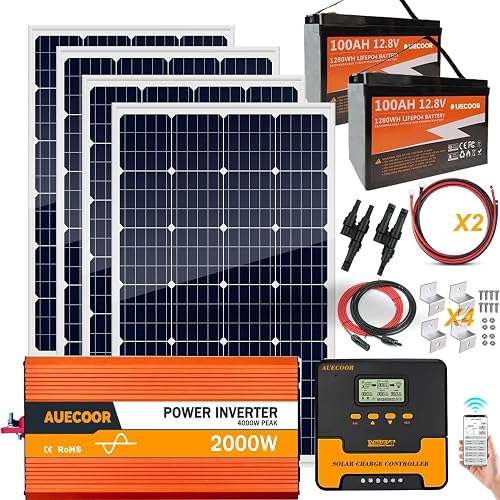 TOP CHOICEBest overallRV Complete Solar Panel Kit 1.92kWh for RV Off Grid Solar SystemView on Amazon
- 2
 TOP CHOICEBest for larger home loadsECO-WORTHY 10KW Output Off Grid Solar System Complete KitView on Amazon
- 3
 TOP CHOICEBest for a 2000W inverter with 800W panelsECO-WORTHY 800W Off Grid Solar System Complete Kit for RV Off GridView on Amazon
- 4
 Best for whole-home expansionECO-WORTHY 10KW Solar Panel Kit for Home with 9.36kWh StorageView on Amazon
- 5
 Best for a 48V battery bankSUNGOLDPOWER 5000W 48V Off Grid System Complete Solar KitView on Amazon
- 6
 Best budget 12V pick480W Solar Panel Kit with 100Ah LiFePO4 Battery and 1000W Inverter, 12View on Amazon
- 7
 Best for hybrid solar and wind880 Watts Solar Panel Wind Turbine Hybrid System Kit:4x120W Rigid SolaView on Amazon
Our Top Picks
| Product | Best for | Key feature |
|---|---|---|
| RV Complete Solar Panel Kit 1.92kWh | RVs and camper vans | 2x100Ah batteries, 2000W inverter |
| ECO-WORTHY 10KW Output Off Grid Kit | Larger home loads | 10kW split-phase inverter |
| ECO-WORTHY 800W Off Grid Kit | Mid-size off-grid cabins | Bifacial panels, 60A MPPT |
| ECO-WORTHY 10KW Solar Panel Kit for Home | Whole-home expansion | 12 panels, 10.24kWh storage |
| SUNGOLDPOWER 5000W 48V Kit | 48V battery systems | 5000W 120V inverter |
| 480W Solar Panel Kit with LiFePO4 Battery | Small budget 12V setups | 100Ah LiFePO4, 40A MPPT |
| 880W Solar Wind Turbine Hybrid Kit | Mixed solar and wind sites | Hybrid MPPT charge controller |
RV Complete Solar Panel Kit 1.92kWh for RV Off Grid Solar System
1.92KWH Complete Solar Panel Kit for RV Off Grid Solar System |2x100Ah 12.8V Batteries 2560WH| 4x120W Mono Rigid Solar Panels |2000W Power Inverter|MPPT Controller|Trailer, Camper, Marine
Best for: RVs, campers and trailers that need a self-contained 2000W system.
This kit suits owners who want a plug-and-play setup for a trailer or camper without designing the system from scratch.
Pros
- Pairs 2000W inverter with 2560Wh of battery storage
- Includes MPPT controller and four rigid panels
Cons
- Rigid panels are heavier to mount on curved roofs
ECO-WORTHY 10KW Output Off Grid Solar System Complete Kit
ECO-WORTHY 10KW Output Off Grid Solar System Complete Kit:10KW 120V/240V Output Split Phase Inverter| 4Pcs 48V 100Ah 20.48kWh High Capacity Energy Storage| 5310 Watts Solar Panel PV
Best for: Larger homes needing 120V/240V split-phase output.
Suited to owners planning a full house with heavier loads such as well pumps or electric ranges.
Pros
- 10kW split-phase inverter with 120V and 240V output
- Four 48V batteries give about 20kWh of storage
Cons
- Requires careful sizing and an electrician for interconnection
ECO-WORTHY 800W Off Grid Solar System Complete Kit for RV Off Grid
4PCS N-Type Bifacial 195W Solar Panel+12.8V 314Ah Lithium Battery+60A MPPT Charge Controller+2000W Pure Sine Wave Inverter ECO-WORTHY 800W Off Grid Solar System Complete Kit for RV Off Grid
Best for: Small cabins and RVs pairing a 2000W pure sine inverter with 800W of panels.
A good fit for users who want a pure sine wave inverter and bifacial panels in a compact package.
Pros
- Pure sine wave 2000W inverter suits sensitive electronics
- Bifacial panels can gain output from ground reflection
Cons
- Panel array is modest for a fully electric home
ECO-WORTHY 10KW Solar Panel Kit for Home with 9.36kWh Storage
Solar Panel Kit:12PCS 195W Solar Panels(2340W)+2PCS 48V 100AH Cubix Lithium Battery(10.24kWh)+10KW Solar Inverter 120V/240V ECO-WORTHY 10KW Output 9.36KWH Off Grid Solar System Complete Kit for Home
Best for: Homeowners building toward a larger array with lithium storage.
Works for households that want a 10kW inverter and a large panel count from one supplier.
Pros
- Twelve 195W panels give about 2340W of array capacity
- Two 48V lithium batteries provide about 10kWh
Cons
- Installation involves high-voltage work best left to a professional
SUNGOLDPOWER 5000W 48V Off Grid System Complete Solar Kit
SUNGOLDPOWER 5000W 48V Off Grid System Complete Solar Kit,1 * 5000W 120Vac Solar Inverter UL1741+6 * 200W Mono Solar Panels +1 * 100Ah 51.2V Lifepo4 Battery UL1973, for House Storage (SGM-5K5E)
Best for: Users who prefer a 48V battery architecture with a 5000W inverter.
Fits owners who want headroom above 2000W for occasional high-draw loads.
Pros
- 48V system reduces current for a given power level
- Includes UL-listed inverter and LiFePO4 battery
Cons
- Single 100Ah battery limits total storage
Buying Guide
Inverter Output and Surge Capacity
A 2000W off grid solar system is rated for continuous output, but motors such as well pumps, refrigerator compressors and power tools need extra power to start. Check whether the inverter lists a surge rating and confirm it can handle the largest appliance you plan to run. Pure sine wave inverters are the safer choice for sensitive electronics.
Battery Capacity and Chemistry
Battery capacity determines how long your system can run overnight or during cloudy days. Lithium iron phosphate (LiFePO4) batteries generally offer longer cycle life and deeper usable discharge than lead-acid options, though they cost more up front. Match the battery voltage to your inverter and charge controller, since mismatches cause problems.
Solar Panel Wattage and Roof or Ground Space
Total panel wattage affects how quickly your batteries recharge, especially in winter or on overcast days. Make sure you have enough unshaded space for the panel array and that the mounting hardware suits your roof, RV or ground site. Larger kits with more panels typically need more installation effort.
Charge Controller Type
An MPPT charge controller usually extracts more energy from panels than a PWM controller, particularly when panel voltage is well above battery voltage. Check the controller’s amperage rating so it can handle the output of your panel array. A hybrid controller can be useful if you plan to add a wind turbine later.
Intended Use: Home, Trailer or Shed
Think about where the system will live and what it needs to power. A home setup may benefit from split-phase output and larger storage, while an RV or trailer kit prioritizes compact, lightweight components and secure mounting. Matching the kit to your actual daily loads will help you avoid buying more capacity than you need or running short.
FAQ
Can a 2000W off grid solar system run a whole house?
A 2000W system can typically run lights, a refrigerator, a router, phone chargers and a few small appliances at the same time. It is generally not enough for central air conditioning, electric heating or large appliances running together. Calculate your daily energy use in watt-hours before choosing a kit.
How long will the batteries last during a power outage?
Runtime depends on battery capacity and how much power your devices draw. Adding up the wattage of the appliances you plan to run and dividing your usable battery capacity by that total gives a rough estimate. Real results will vary with temperature, battery age and inverter efficiency.
Do I need a professional to install a solar kit?
Many people install smaller kits themselves, but wiring between panels, batteries and the inverter should follow local electrical codes. A licensed electrician can confirm the system is safe and may be required for permits in some areas. Hiring help is especially worth considering for larger or permanently installed systems.
Is lithium or lead-acid better for an off grid system?
Lithium batteries usually last longer, weigh less and can be discharged more deeply without damage. Lead-acid batteries cost less up front but need more maintenance and replacement over time. The better choice depends on your budget, how often you will cycle the battery and the space available.
Can I add more panels or batteries later?
Many kits allow expansion, but you must confirm that the inverter, charge controller and battery bank support the added capacity. Mixing battery types or exceeding controller limits can damage equipment. Check the manufacturer’s expansion guidelines before buying extra components.
Conclusion
If you want a balanced, ready-to-use option for an RV, cabin or small home, the RV Complete Solar Panel Kit suits most light-to-moderate loads. For households with larger power needs, the ECO-WORTHY 10KW kits offer more capacity and split-phase output, though they require more space and installation planning.
Shoppers running a small shed, trailer or backup setup should focus on a kit that matches their daily wattage and battery runtime goals. Compare inverter surge rating, battery chemistry and panel space before deciding, and choose the option that fits your actual energy use rather than the largest kit available.
Related reading
- Wiring Diagram for Off-Grid Solar System: A Step-by-Step Guide
- Wind Solar Hybrid Off Grid System: How to Size and Wire One
- Whole House Off-Grid Solar System: Sizing Steps and Parts for Your Home
- What Is Needed for Off-Grid Solar System: A Step-by-Step Parts Checklist
About Ethan Brooks
Ethan Brooks is part of our editorial team and reviews and edits our DIY solar power systems guides, checking product details against manufacturer specifications and owner feedback.



