 By Ethan Brooks
Updated November 2026
An off grid hybrid solar wind power system pairs solar panels with a wind turbine so you can generate power when the sun is down or the wind is blowing. The seven kits below were selected by reviewing product listings, brand reputation and common owner feedback patterns. The criteria were the panel and turbine wattage, battery capacity, inverter output, charge controller type and how complete each kit is out of the box.
Our top picks at a glance
- 1
 TOP CHOICEBest overall640W Hybrid System Solar Wind Power Kit 12V – Off Grid Solar Wind Hybrid System KitView on Amazon
- 2
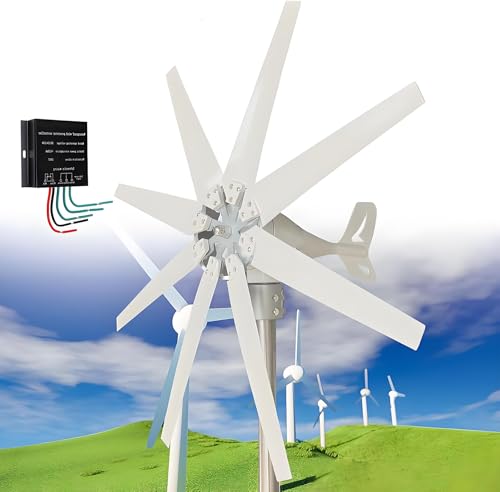 TOP CHOICEBest for large loads10000W Wind Turbine Generator Kit – Wind Turbine Generator with Charge ControllerView on Amazon
- 3
 TOP CHOICEBest for 24V battery banks1120W 24V Solar Wind Power Kit – Home Off-Grid System with Lithium BatteriesView on Amazon
- 4
 Best for whole-home outputECO-WORTHY 10KW Output Off Grid Solar System Complete Kit:10KW 120V/24View on Amazon
- 5
 Best for MPPT charging880 Watts Solar Panel Wind Turbine Hybrid System Kit – Hybrid Charge Controller KitView on Amazon
- 6
 Best for a 12V cabin1120 Watt 12 Volt Wind Solar Kit with 400W Wind Turbine Generator + 6View on Amazon
- 7
 Best for a 48V panel-heavy buildOff Grid Solar Panle Kit with Battery & Inverter:12x195W Panels, 48V 5View on Amazon
Our Top Picks
Quick Comparison
| Product | Best for | Key feature |
|---|---|---|
| 640W Hybrid System Solar Wind Power Kit 12V | Small off-grid cabins | Complete 12V starter kit |
| 10000W Wind Turbine Generator Kit | High wind-output sites | 8-blade, 12/24/48V options |
| 880 Watts Solar Panel Wind Turbine Hybrid System Kit | Mixed-source charging | MPPT hybrid charge controller |
| 1120W 24V Solar Wind Power Kit | 24V battery banks | Lithium batteries, 3000W inverter |
| ECO-WORTHY 10KW Output Off Grid Solar System | Whole-home backup | Split-phase 120V/240V output |
| 1120 Watt 12 Volt Wind Solar Kit | Weekend cabins and sheds | 60A MPPT controller |
| Off Grid Solar Panel Kit with Battery and Inverter | Larger 48V systems | 12 panels, 48V LiFePO4 battery |
640W Hybrid System Solar Wind Power Kit 12V – Off Grid Solar Wind Hybrid System Kit
640W Hybrid System Solar Wind Power Kit 12V, 2x120W Rigid Solar Panel+400W Wind Turbine with Controller+12.8V 100Ah Battery+1000W Pure Power Inverter+Smart Solar Controller for Home Off-Grid System
Best for: Small off-grid cabins and first-time hybrid builders.
This kit suits someone who wants a complete 12V setup without assembling each component separately. It combines two 120W rigid panels, a 400W turbine, a 100Ah battery and a 1000W inverter.
Pros
- Everything needed to start is included.
- The 12V architecture is easy to expand.
Cons
- Output is limited for high-draw appliances.
10000W Wind Turbine Generator Kit – Wind Turbine Generator with Charge Controller
10000W Wind Turbine Generator Kit – 12V/24V/48V, 8-Blade Wind Power System with Charge Controller for Home, Marine, Off-Grid, Solar & Wind Hybrid Energy Solutions
Best for: Sites with consistent wind and large loads.
This is a wind-focused option for property owners with a reliable wind resource who want to add a turbine to an existing solar array. Owners often report that wind output is strongly dependent on tower height and site exposure.
Pros
- Supports 12V, 24V and 48V configurations.
- Includes a charge controller.
Cons
- Requires a sturdy tower and careful installation.
880 Watts Solar Panel Wind Turbine Hybrid System Kit – Hybrid Charge Controller Kit
880 Watts Solar Panel Wind Turbine Hybrid System Kit:4x120W Rigid Solar Panel | 400W Wind Generator | 2000W Power Inverter | MPPT Hybrid Charge Controller |2x100Ah 12.8V Batteries Off Grid System
Best for: Mixed-source charging with an MPPT controller.
This kit fits someone who wants four 120W panels, a 400W turbine and two 100Ah 12.8V batteries managed by a single hybrid controller. It is a practical choice for small off-grid homes with moderate daily loads.
Pros
- Hybrid MPPT controller handles both sources.
- Two batteries add useful reserve capacity.
Cons
- Total output may be tight for larger appliances.
1120W 24V Solar Wind Power Kit – Home Off-Grid System with Lithium Batteries
1120W 24V Solar Wind Power Kit Home Off-Grid System for Charging Battery:2X 100AH Lithium Battery + 400W Wind Turbine Generator + 6X 120W Mono Solar Panel+ Charge Controller + 3000W Inverter
Best for: 24V battery banks and mid-sized homes.
A 24V system reduces current for a given power level, which can mean thinner wiring runs. This kit pairs six 120W panels with a 400W turbine and two 100Ah lithium batteries.
Pros
- 24V architecture lowers current draw.
- Lithium batteries are common in this class.
Cons
- Less suited to 12V-only appliances.
Buying Guide
Match the Kit to Your Daily Energy Needs
Before comparing kits, estimate how many watt-hours you use each day by adding up the wattage and run time of the appliances you plan to power. A kit with more panel and turbine capacity can cover heavier loads, but it also costs more and takes up more space.
Check Battery Voltage and Capacity
Battery voltage (12V, 24V or 48V) should match the inverter and charge controller in the kit. Higher-voltage systems tend to be more efficient for larger setups, while 12V systems are simpler and suit smaller cabins or backup use.
Compare Inverter Output and Surge Rating
The inverter determines how much continuous power you can draw and how well it handles motor startup loads like pumps or refrigerators. Look at both the continuous and peak wattage ratings, and make sure the peak rating covers your largest appliance.
Understand the Charge Controller Type
An MPPT controller typically harvests more energy from solar panels than a PWM controller, especially in cool or low-light conditions. Some kits include a separate wind controller, so confirm that the controller can handle both inputs at once.
Consider Installation Space and Wind Conditions
Wind turbines need clear airflow and a mounting pole or tower, so check whether your site has enough height and open space. Also confirm that your roof or ground area can accommodate the panel array before you buy.
FAQ
Do I need both solar and wind for an off-grid hybrid system?
Not always, but combining them improves reliability because solar produces most during the day and wind often picks up at night or during storms. A hybrid setup helps keep batteries charged across more of the day and year.
How long will the batteries power my home?
Runtime depends on battery capacity, the total load you draw and how much energy the panels and turbine supply each day. Calculating your daily watt-hour use will give you a realistic estimate for any kit.
Can I expand a kit later with more panels or batteries?
Many kits can be expanded if the charge controller and inverter have enough capacity for additional panels or battery modules. Check the maximum input rating of the controller before adding components.
Do these kits require professional installation?
Basic installation is possible for handy homeowners, but wiring a battery bank, inverter and grid-independent system involves electrical risk. Hiring a licensed electrician is a good idea, especially for larger systems or any connection to your home wiring.
Is a wind turbine worth it in a low-wind area?
In areas with consistently low wind speeds, the turbine may add only a small amount of energy, so solar may carry most of the load. Wind speed data for your location can help you decide whether the turbine is worth including.
Conclusion
For most homeowners starting out with a modest daily load, the 640W 12V kit offers a balanced, straightforward option. Those with larger loads or a 24V battery bank should look at the 1120W 24V kit or the higher-capacity 10000W and 10KW-class systems, depending on their power needs and budget.
Buyers who want a complete, expandable setup for a larger home or property will benefit most from the larger kits with lithium storage and split-phase output. Smaller cabins, sheds and backup needs are better served by the simpler 880W or 640W configurations.
Related reading
- Wind Solar Hybrid Off Grid System: How to Size and Wire One
- Off-Grid Solar Wind Hybrid System UK: Sizing and Wiring Steps (2026)
- Off-Grid, Backup and Hybrid Solar Systems: How They Differ
- Top 6 Off Grid Solar Power Systems for Sale Options for Homes (2026)
- Top 5 DIY Home Solar Power System Options for Off-Grid Homes
- Simple Solar Power System for an Off-Grid Cabin: 5 Best Picks Compared (2026)
About Ethan Brooks
Ethan Brooks is part of our editorial team and reviews and edits our DIY solar power systems guides, checking product details against manufacturer specifications and owner feedback.


