 By Ethan Brooks
Updated November 2026
Choosing what size solar system for off grid living works best when you start from your daily energy use, not from a kit’s headline wattage. The picks below were selected from product listings, manufacturer specifications and patterns in owner feedback, with attention to panel capacity, battery storage, inverter output and whether each kit suits a house, RV or small cabin. No units were tested or measured for this article.
Our top picks at a glance
- 1
 TOP CHOICEBest overallWhole House System: 10KW 120V/240V Split Phase Solar Inverter KitView on Amazon
- 2
 TOP CHOICEBest for a mid-size homeSolar Panel Kit: 12PCS 195W Panels with 10KW InverterView on Amazon
- 3
 TOP CHOICEBest for a 120V/240V split-phase homeSUNGOLDPOWER 10000W Off Grid Solar System Complete KitView on Amazon
- 4
 Best for a small cabin or workshop3000W 24V Solar Power System Complete Kit with 960W PanelsView on Amazon
- 5
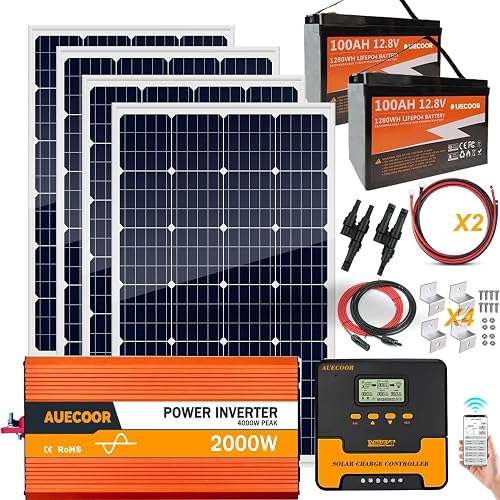 Best for an RV or camper92KWH Complete Solar Panel Kit for RV Off Grid SystemView on Amazon
- 6
 Best for a compact backup setup4PCS N-Type Bifacial 195W Solar Panel with 12.8V Lithium BatteryView on Amazon
Our Top Picks
Quick Comparison
| Product | Best for | Key feature |
|---|---|---|
| Whole House System 10KW | Full-time whole-home use | Split-phase 10KW inverter |
| Solar Panel Kit 12PCS 195W | Mid-size homes | 2340W panel array |
| SUNGOLDPOWER 10000W Kit | 120V/240V households | UL1741 inverter listing |
| 3000W 24V Complete Kit | Small cabins and workshops | Pure sine wave inverter |
| 1.92KWH RV Solar Kit | RVs and campers | Dual 100Ah batteries |
| 800W Off Grid Complete Kit | Compact backup loads | 314Ah lithium battery |
Whole House System: 10KW 120V/240V Split Phase Solar Inverter Kit
Whole House System:10KW 120V/240V Split Phase Solar Inverter| 48V 314Ah 16kWh High Capacity Energy Storage| 2950W Solar Panel ECO WORTHY 10000W Output Complete Off-Grid Solar Panel Kit for Home
Best for: Full-time whole-home off-grid use with high daily loads.
This kit suits households that run electric heating, well pumps or multiple appliances at once. The listing pairs a 10KW split-phase inverter with a 16kWh lithium bank and roughly 2950W of panels.
Pros
- Split-phase output supports standard US household circuits.
- Large battery capacity covers evening and overcast-day loads.
Cons
- Panel array is modest for a 10KW system, so long cloudy spells may strain it.
Solar Panel Kit: 12PCS 195W Panels with 10KW Inverter
Solar Panel Kit:12PCS 195W Solar Panels(2340W)+2PCS 48V 100AH Cubix Lithium Battery(10.24kWh)+10KW Solar Inverter 120V/240V ECO-WORTHY 10KW Output 9.36KWH Off Grid Solar System Complete Kit for Home
Best for: Mid-size homes that want a balanced panel and battery ratio.
Buyers sizing for a modest home often prefer this layout, since 2340W of panels pairs with about 10kWh of storage and a 10KW inverter.
Pros
- Panel-to-battery ratio is well balanced for moderate loads.
- Includes inverter and batteries in one package.
Cons
- Output may fall short for heavy electric heating in winter.
SUNGOLDPOWER 10000W Off Grid Solar System Complete Kit
SUNGOLDPOWER 10000W Off Grid Solar system Complete Kit, 1*10KW 120V/240Vac Solar inverter (UL1741) + 12*550W solar panel ( 6.6KW) +5 *100Ah 51.2V Lifepo4 Battery (UL1973),For House storage(SGR-10K25S)
Best for: 120V/240V households wanting a larger panel array.
This kit fits owners who want about 6.6KW of panels feeding a UL1741-listed 10KW inverter and five 100Ah lithium batteries.
Pros
- Panel array is larger relative to the battery bank than many kits.
- Inverter carries a UL1741 listing.
Cons
- Battery capacity is modest for a 10KW system.
3000W 24V Solar Power System Complete Kit with 960W Panels
3000W 24V Solar Power System Complete Kit with 960W (8×120W) Solar Panel 3KW Peak 6KW Pure Sine Wave Inverter, 2.56KWH Battery,PV Combiner Box,MPPT 60A Solar Controller,Off-Grid RV Home
Best for: Small cabins, sheds and workshops.
A 24V architecture with 2.56kWh of storage suits lighter, intermittent loads such as lights, refrigeration and tools.
Pros
- Right-sized for low daily consumption.
- Includes MPPT controller and combiner box.
Cons
- Not sufficient for electric heating or large pumps.
1.92KWH Complete Solar Panel Kit for RV Off Grid System
1.92KWH Complete Solar Panel Kit for RV Off Grid Solar System |2x100Ah 12.8V Batteries 2560WH| 4x120W Mono Rigid Solar Panels |2000W Power Inverter|MPPT Controller|Trailer, Camper, Marine
Best for: RVs, campers and trailers.
Owners who travel or park in shaded campgrounds often choose this 12.8V setup for its compact footprint and 2000W inverter.
Pros
- Compact layout suits mobile installations.
- MPPT controller included.
Cons
- Limited capacity for air conditioning.
4PCS N-Type Bifacial 195W Solar Panel with 12.8V Lithium Battery
4PCS N-Type Bifacial 195W Solar Panel+12.8V 314Ah Lithium Battery+60A MPPT Charge Controller+2000W Pure Sine Wave Inverter ECO-WORTHY 800W Off Grid Solar System Complete Kit for RV Off Grid
Best for: Compact backup loads and small off-grid sheds.
With about 800W of panels and a 60A MPPT controller, this kit suits light, steady loads such as routers, lighting and small fans.
Pros
- Lithium battery keeps weight low.
- Bifacial panels can add some output from reflected light.
Cons
- Too small for most full-time households.
Buying Guide
Start with your daily energy use
Add up the watt-hours your appliances use in a typical day, including lights, refrigerator, well pump, phone and laptop charging, and any heating or cooling. This total, not the kit’s headline wattage, is the number that should guide your choice of system size. Many buyers overestimate or underestimate their needs, so checking a few months of utility bills or appliance labels can help.
Match battery capacity to how much backup you want
Battery storage determines how long your home can run overnight or during cloudy days. Systems with larger battery banks, such as those rated around 9 to 16 kWh, give more autonomy but cost more and take up more space. Smaller batteries suit RVs, cabins or homes that mainly need evening lighting and basic loads.
Check inverter output and voltage
The inverter must handle your largest combined load, including motors that draw a surge at startup. Confirm whether you need 120V only, or 120V/240V split-phase for larger appliances like electric dryers and central air. Pure sine wave output is generally the safer choice for sensitive electronics.
Consider panel array size and your location
The total panel wattage should be large enough to recharge the battery bank on an average day in your area, after accounting for sunlight hours, seasonal changes and shading. Roof space, mounting options and whether the panels are rigid or flexible also affect what fits your site. Installing a little more panel capacity than the minimum can help during the darker months.
Look at certifications and included components
Listings that mention UL certifications for the inverter or battery can give you more confidence about safety and compliance with local codes. Also check whether the kit includes charge controllers, wiring, combiner boxes and mounting hardware, since these add to the total cost of setup. A licensed electrician or solar installer can confirm that the system meets your local requirements.
FAQ
How do I know what size solar system I need for off grid living?
Calculate your total daily watt-hour use, then size the battery to cover your nighttime and cloudy-day needs. Divide the daily energy need by the average peak sun hours in your area to estimate the panel wattage required. Most people adjust this number after a few months of real-world use.
Is a 10KW inverter kit overkill for a small cabin?
It can be, depending on your loads. A 10KW inverter is designed for whole-house use, so a small cabin with modest appliances may run efficiently on a smaller system. Choosing a kit sized to your actual peak demand usually makes more sense than buying the largest option.
Can I run a whole house on a 120V-only system?
Many homes can run on 120V circuits for lights, outlets and smaller appliances, but larger loads such as electric ranges, dryers and central air often need 240V. If you plan to power those, a split-phase inverter is the better match. Reviewing your home’s electrical panel can clarify which circuits are involved.
How long will the battery last during a cloudy week?
Battery runtime depends on the bank’s usable capacity and how much energy your home uses each day. Limiting heavy loads during poor weather can extend how long the system keeps running. A generator or grid backup is often worth keeping for extended low-sun periods.
Do I need a professional to install an off-grid solar system?
Professional installation is recommended for most setups, especially those involving high-voltage inverters, roof mounting and connections to a home’s electrical panel. Local permits and inspections may be required. A qualified installer can also verify that the system is wired and grounded safely.
Conclusion
If you have a full-time home with significant daily loads, a whole-house kit with a large battery bank and split-phase inverter, such as the Whole House System or the SUNGOLDPOWER 10000W kit, is the better fit. Mid-size homes that want a balanced setup may find the 12PCS 195W Solar Panel Kit with a 10KW inverter a good starting point.
For RVs, campers, boats or small cabins with modest needs, the 3000W 24V kit, the 1.92KWH RV kit or the 800W 4PCS N-Type Bifacial kit are more practical choices. Start by calculating your own daily energy use, then pick the system whose battery capacity and inverter output match that number with a little room to spare.
Related reading
- Off-Grid Solar System Package: What to Buy and How to Size It
- Wind Solar Hybrid Off Grid System: How to Size and Wire One
- What Is Needed for Off-Grid Solar System: A Step-by-Step Parts Checklist
- What Is Meant by Off Grid Solar System? A Plain-English Answer
- What Do I Need for Off-Grid Solar System: A Step-by-Step Parts Guide
About Ethan Brooks
Ethan Brooks is part of our editorial team and reviews and edits our DIY solar power systems guides, checking product details against manufacturer specifications and owner feedback.


