 By Ethan Brooks
Updated November 2026
Shoppers searching for the largest off-grid solar power system usually want one thing: enough stored and generated energy to run an entire house without a utility connection. This list compares six complete kits by total inverter output, battery capacity, solar array size and how well each bundle suits whole-home or backup duty. Listings and manufacturer specifications were the main sources, along with patterns in owner feedback about setup and expansion.
Our Top Picks
Our top picks at a glance
- 1
 TOP CHOICEBest overallECO-WORTHY 10KW Output Off Grid Solar System Complete KitView on Amazon
- 2
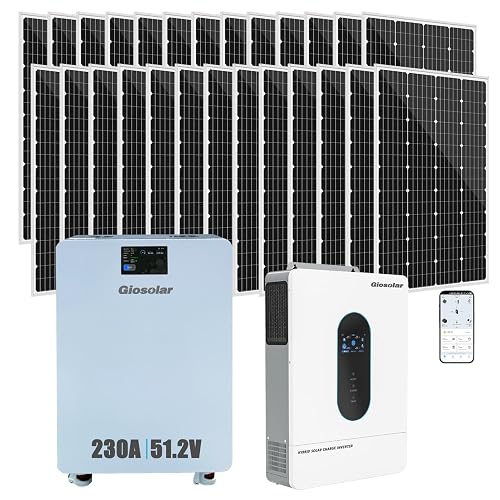 TOP CHOICEBest for high battery capacity12000W Solar Power System Kit: 12KW 48V Split Phase Hybrid Solar InverterView on Amazon
- 3
 TOP CHOICEBest for split-phase homesWhole House System: 10KW 120V/240V Split Phase Solar InverterView on Amazon
- 4
 Best for home backupSolar Complete System with 590W N-Type Panels and Liber 10KP InverterView on Amazon
- 5
 Best for learning the designThe DIY Off Grid Solar Power BibleView on Amazon
- 6
 Best for RV and cabin use4PCS 195W Solar Panels, 3000W UPS Inverter Charger, 2PCS 12.8V 280AH Lithium BatteriesView on Amazon
Our Top Picks
| Product | Best for | Key feature |
|---|---|---|
| ECO-WORTHY 10KW Off Grid Solar System Complete Kit | Whole-home off-grid | 10kW output, 3120W array |
| 12000W Solar Power System Kit | Large battery storage | 12kWh, dual MPPT |
| Whole House System 10KW Split Phase | 120V/240V households | Split-phase inverter |
| Solar Complete System with Liber 10KP | Home backup power | 590W N-type panels |
| The DIY Off Grid Solar Power Bible | DIY design planning | Sizing and wiring guide |
| ECO-WORTHY 7.168KWH 800W Kit | RV and cabin setups | Bluetooth MPPT controller |
ECO-WORTHY 10KW Output Off Grid Solar System Complete Kit
ECO-WORTHY 10KW Output Off Grid Solar System Complete Kit 16PCS 195W N-Type Solar Panel (3120W) +1 * 48V 10KW Solar Inverter + 1 * 51.2V 314Ah Powermega LiFePO4 Battery + Brackets and Cables
Best for: Whole-home off-grid power with the highest listed output in this group.
This kit suits homeowners who want a single bundle covering panels, a 10kW inverter and a 314Ah LiFePO4 battery. The listing specifies 16 panels totaling 3120W.
Pros
- Full array, inverter and battery in one package
- Listed 10kW output suits larger loads
Cons
- Requires careful roof or ground-mount planning
12000W Solar Power System Kit: 12KW 48V Split Phase Hybrid Solar Inverter
12000W Solar Power System Kit: 12KW 48V Split Phase Hybrid Solar Inverter with Dual 200A MPPT & WiFi, 12KWh 51.2V 230Ah Battery, 26pcs 120W Rigid Solar Panels for Home Off-Grid/Backup Power
Best for: Large battery storage for long off-grid autonomy.
Households with heavy evening loads or frequent cloudy stretches benefit from the 12kWh battery paired with 26 rigid panels.
Pros
- Dual 200A MPPT controllers
- Large 12kWh battery capacity
Cons
- Large footprint for panels and battery bank
Whole House System: 10KW 120V/240V Split Phase Solar Inverter
Whole House System:10KW 120V/240V Split Phase Solar Inverter| 48V 314Ah 16kWh High Capacity Energy Storage| 2950W Solar Panel ECO WORTHY 10000W Output Complete Off-Grid Solar Panel Kit for Home
Best for: Split-phase homes that need 240V appliances.
Standard North American homes use 120V/240V service, and this kit’s split-phase inverter is built to match that wiring.
Pros
- Split-phase 120V/240V output
- 16kWh high-capacity storage
Cons
- Owners should verify panel string voltage before wiring
Solar Complete System with 590W N-Type Panels and Liber 10KP Inverter
Solar Complete System with 590W N-Type Solar panel(6pcs)+Powermega 48V 314Ah(2 Pack)+Liber 10KP 10kW Hybrid Inverter+Cable ECO-WORTHY Solar Panel Kit LiFePO4 Energy Storage System for Home Backup
Best for: Home backup power during outages.
Homeowners who mainly want reserve power for essential circuits will appreciate the LiFePO4 pack and hybrid inverter.
Pros
- High-efficiency N-type panels
- Hybrid inverter supports grid backup
Cons
- Array is smaller than the largest kits here
The DIY Off Grid Solar Power Bible
The DIY Off Grid Solar Power Bible: [10 in 1] The Most Complete and Updated Guide to Design, Install, and Maintain Solar Energy Systems for Tiny Homes, Cabins, Rvs, and Boats
Best for: Planning and designing your own large system.
This book suits builders who want to size panels, batteries and inverters before buying any hardware.
Pros
- Covers design, installation and maintenance
- Useful for sizing very large arrays
Cons
- A reference book, not a hardware kit
4PCS 195W Solar Panels, 3000W UPS Inverter Charger, 2PCS 12.8V 280AH Lithium Batteries
4PCS 195W Solar Panels, 3000W UPS Inverter Charger, 2PCS 12.8V 280AH Lithium Batteries, 60A MPPT Controller Bluetooth ECO-WORTHY 7.168KWH 800W Solar Panel Kit for RV Off Grid Complete System
Best for: RV and cabin setups that need mobile or smaller-scale power.
Owners with motorhomes or remote cabins often prefer this compact layout with a Bluetooth-monitored MPPT controller.
Pros
- Bluetooth-monitored 60A MPPT controller
- Modest footprint for mobile use
Cons
- Not sized for whole-home loads
Buying Guide
Total Inverter Output and Surge Capacity
The inverter sets the ceiling on how much power you can draw at one time. For a whole house, check both the continuous rating and the surge rating, since well pumps, air conditioners and electric ranges can briefly demand far more than their running wattage. Split-phase 120V/240V output is important if your home’s wiring expects it.
Battery Capacity and Chemistry
Battery capacity, usually listed in kilowatt-hours, determines how long your home can run overnight or during cloudy days. Lithium iron phosphate (LiFePO4) batteries are the common choice for stationary systems because they tolerate many charge cycles and handle deep discharge well. Compare usable capacity rather than nominal capacity when you can.
Solar Array Size and Daily Generation
A large inverter is only as useful as the panels feeding it. Estimate your household’s daily kilowatt-hour use, then make sure the array can produce that amount after accounting for your local sunlight hours, roof orientation and seasonal dips. Kits with more panels leave room to grow, but they also need enough roof or ground space.
Expansion Options and Monitoring
Some bundles let you add batteries or panels later, while others are fixed. Built-in monitoring through an app or WiFi connection helps you track production, battery state and load, which makes troubleshooting far easier. Confirm that the inverter and battery in a kit are designed to work together before you buy.
FAQ
Can one of these kits power an entire house?
Several of the larger kits are sized for whole-home use, but the result depends on your actual daily energy consumption and climate. Calculate your average kilowatt-hour use before deciding. Heavy electric heating or cooling may require more capacity than a basic kit provides.
Do I need a professional to install a whole-home off-grid system?
Many people hire a licensed electrician to connect a system to the home’s main panel, especially for split-phase service. Local codes often require permits and inspections for this type of work. Installing the panels and batteries may be more manageable for experienced DIYers, but the electrical integration usually deserves professional attention.
How long will the batteries last?
Lithium batteries are commonly rated for several thousand charge cycles, which can translate to many years of daily use. Actual lifespan depends on depth of discharge, temperature and how well the system is maintained. Check the manufacturer’s warranty for cycle and capacity guarantees.
Can I add more panels or batteries later?
Some kits are designed to expand, while others are closed bundles. Look for a compatible inverter with extra MPPT input capacity and a battery system that supports parallel connections. Verify voltage and communication compatibility before adding components.
Will these systems work during a power outage?
Systems with battery storage and a hybrid inverter can keep essential loads running during grid outages, provided the setup includes a backup or off-grid mode. Confirm whether the inverter switches automatically and which circuits it powers. Some kits are better suited to backup duty than full-time off-grid living.
Conclusion
If you want the highest total output and the most room for a full household, the largest bundles with 10 to 12 kilowatt inverters and substantial battery banks are the strongest fit. Households with more modest needs, or those planning a smaller cabin, RV or backup-only setup, may find a mid-sized kit delivers the right balance of cost and capacity.
Before you buy, match the inverter, battery and panel sizes to your real daily energy use, and confirm that the components are designed to work together. Choosing a kit that fits your current needs with a clear path to expansion is usually the most practical decision.
Related reading
- Top 6 Off Grid Solar Power Systems for Sale Options for Homes (2026)
- Top 5 DIY Home Solar Power System Options for Off-Grid Homes
- Simple Solar Power System for an Off-Grid Cabin: 5 Best Picks Compared (2026)
- Off-Grid Solar Power System Diagram: A Step-by-Step Layout for DIY Builders
- Off-Grid Solar Power System Calculator: How to Size Your Setup Step-by-Step
About Ethan Brooks
Ethan Brooks is part of our editorial team and reviews and edits our DIY solar power systems guides, checking product details against manufacturer specifications and owner feedback.


