By Graham Fisher
Updated November 2026
Shoppers looking at the renogy wanderer 10a pwm solar charge controller usually want to know what else is in the same class before committing. This list compares five 10-amp PWM controllers built for 12V and 24V small systems. The selection criteria were listing specifications, brand reputation, lighting and display features, and recurring owner feedback patterns, not hands-on bench testing.
Our top picks at a glance
- 1
 TOP CHOICEBest overallRenogy Wanderer 10A PWMView on Amazon
- 2
 TOP CHOICEBest for waterproof mountingSOLPERK 10A Solar Charge Controller WaterproofView on Amazon
- 3
 TOP CHOICEBest for lithium compatibility checksSOLPERK Intelligent Portable Controller 10A 12VView on Amazon
- 4
 Best for USB and LCD monitoringVictron Energy BlueSolar PWM-LCD&USB 12/24V 10AView on Amazon
- 5
 Best for Bluetooth monitoringVictron Energy SmartSolar MPPT 100V 50AView on Amazon
Our Top Picks
Quick Comparison
| Product | Best for | Key feature |
|---|---|---|
| Renogy Wanderer 10A PWM | Small 12V kits | Simple LED status display |
| SOLPERK 10A Waterproof Regulator | Marine and RV mounting | IP67-style sealed housing |
| SOLPERK Intelligent Portable Controller | Portable setups | Lithium and AGM battery modes |
| Victron BlueSolar PWM-LCD&USB 10A | Monitoring-focused builds | LCD plus USB charging port |
| Victron SmartSolar MPPT 50A | Larger future expansion | Bluetooth app monitoring |
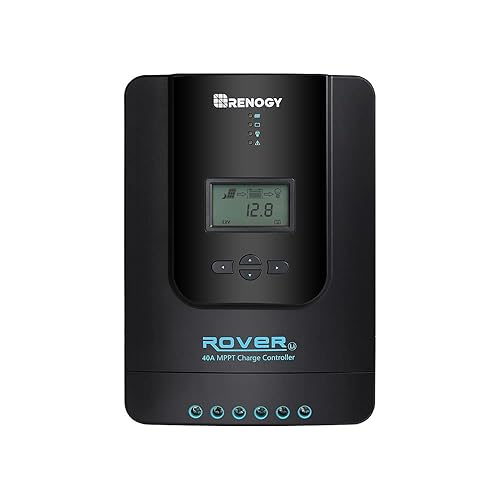
Renogy Wanderer 10A PWM
Renogy 30A 12V/24V PWM Solar Charge Controller with LCD Display Flush Mount Design Negative Ground, Compatible with Sealed, Gel, Flooded and Lithium Batteries, Adventurer 30A,black
Best for: Small 12V kits where a straightforward, familiar controller is the priority.
This is the closest match in the category to the renogy wanderer 10a pwm solar charge controller, aimed at people building a small off-grid or RV system who want a compact, PWM-based regulator with a simple indicator layout.
Pros:
- Familiar brand with broad compatibility with common lead-acid and lithium chemistries
- Simple status indicators are easy to read at a glance
Cons:
- Limited to PWM charging, so panel voltage must be matched carefully
SOLPERK 10A Solar Charge Controller Waterproof
SOLPERK 10A Solar Charge Controller Waterproof Solar Panel Controller 12V/24V PWM Solar Panel Battery Intelligent Regulator for RV Boat car ,with LED Display
Best for: Marine and RV installs exposed to moisture and spray.
Listed for 12V and 24V operation with a sealed housing, this option suits boat, van, or trailer builds where the controller may sit in a damp compartment.
Pros:
- Sealed housing is marketed for wet environments
- Built-in LED display covers basic charge status
Cons:
- Fewer advanced configuration options than premium units
SOLPERK Intelligent Portable Controller 10A 12V
Solar Controller Intelligent Portable Controller IP67 Solar Panel Controllers for AGM, Gel, Flooded and Lithium Battery SOLPERK MPPT Solar Charge Controller 10A 12V Waterproof Controller
Best for: Portable setups that switch between battery types.
Listings describe support for AGM, gel, flooded, and lithium batteries, which makes it a flexible choice for a camper or solar box you move between vehicles.
Pros:
- Multiple battery chemistry settings listed
- IP67-rated housing is specified for outdoor use
Cons:
- Listing labels it as MPPT in places, so confirm the charging method before buying
Victron Energy BlueSolar PWM-LCD&USB 12/24V 10A
Victron Energy BlueSolar PWM-LCD&USB 12/24-Volt 10 amp Charge Controller
Best for: Builders who want a clear display and a built-in USB port.
Victron’s BlueSolar line is widely recognized in the DIY solar community, and this 10-amp PWM model adds an LCD and USB output for phones and small devices.
Pros:
- LCD readout and USB port in one unit
- Victron build quality is widely praised by owners
Cons:
- Higher-than-average cost for the amperage class
Victron Energy SmartSolar MPPT 100V 50A
Bluetooth Charge Controllers for Solar Panels, Certified to UL1741 Victron Energy SmartSolar MPPT Solar Charge Controller 100V, 50A, 12/24V
Best for: Builders planning to grow the system well beyond 10 amps.
This is a larger MPPT controller rather than a direct PWM swap. It fits buyers who expect to upgrade their array and want Bluetooth monitoring from day one.
Pros:
- Bluetooth app monitoring is listed as standard
- Higher current rating leaves room for expansion
Cons:
- Oversized for a small 10A-class system
Buying Guide
Match the controller to your panel voltage
PWM controllers pull the battery voltage down to the panel, so an array with a much higher Vmp than the battery will waste capacity. Keep panel open-circuit voltage within the controller’s listed limit for your system voltage.
Size the amperage with margin
Divide total panel wattage by system voltage, then add roughly 25 percent headroom. A 10A controller on a 12V system handles about 120 watts of panels before you approach its limit.
Check battery chemistry settings
Lead-acid and lithium iron phosphate batteries need different absorption and float voltages. Confirm the controller lets you set or select the profile your battery requires.
FAQ
Is a 10A PWM controller enough for a small solar setup?
A 10A PWM controller is generally suited to small panel arrays and 12V systems where the total panel current stays within the controller’s rating. It is a practical choice for things like a small camper, a boat, or a shed with a few lights and a phone charger. If your panels produce more current than 10A at your system voltage, a larger controller is the safer pick.
What is the difference between PWM and MPPT controllers?
PWM controllers connect the panel to the battery and pulse the charge, which works well when panel voltage closely matches battery voltage. MPPT controllers convert extra panel voltage into additional charging current, which can harvest more energy from the same panel, especially in cooler weather or with higher-voltage arrays. PWM units are usually simpler and less expensive for small, matched systems.
Do I need to match the controller to my battery type?
Yes, most controllers let you select a charging profile for lead-acid types such as sealed, gel, or flooded batteries, and some also support lithium. Using the wrong profile can undercharge or overcharge the battery and shorten its life. Check your battery manufacturer’s recommended voltage settings before you install.
Can I use these controllers with a 24V system?
Several of the listed options support both 12V and 24V operation, with the system voltage detected automatically or selected by the user. Confirm the input and output voltage ratings in the product details before connecting, since some models are limited to one voltage. Always verify that your panel’s open-circuit voltage stays within the controller’s maximum input rating.
Are waterproof controllers necessary for outdoor use?
If the controller will sit outside or in a damp area such as a boat or open van, a sealed or higher-IP-rated housing helps protect the electronics from rain and spray. For controllers installed inside a protected enclosure, standard housings are often sufficient. Check the ingress protection rating against where you plan to mount it.
Do these controllers need a fuse or breaker?
Adding an appropriately rated fuse or breaker on the battery side is a good practice for any solar charge controller installation. It protects the wiring and battery from short circuits and helps meet common electrical safety guidelines. Follow the manufacturer’s wiring instructions and the wire gauge recommendations for your current.
Conclusion
For a simple, budget-friendly 12V setup with a clear display, a compact 10A PWM controller from the Renogy or SOLPERK lines is a reasonable starting point, while the Victron PWM model suits buyers who want Bluetooth-free LCD monitoring and USB output in a well-known brand. If you expect to grow your array or want higher harvest from the same panels, the Victron SmartSolar MPPT unit is the better long-term investment, despite its higher capacity and cost.
Match the controller to your current panel output, battery chemistry, and mounting environment first, and then choose the feature set that fits your use case. Buyers with very small, fixed systems will likely be satisfied with a basic PWM option, while those planning expansion should lean toward a controller with more headroom.
Related reading
- Renogy PWM Solar Charge Controller: How to Choose and Wire One
- Top 6 Wanderer Solar Charge Controllers Compared for DIY Systems
- 6 Best Renogy Solar Charge Controller Models Compared for DIY Systems
- Top 6 Solar 12V Charge Controller Options Compared for DIY Systems
- Top 6 MPPT Solar Charge Controllers for Lithium Batteries Compared
About Graham Fisher
Graham Fisher is part of our editorial team and reviews and edits our DIY solar power systems guides, checking product details against manufacturer specifications and owner feedback.