 By Ethan Brooks
Updated November 2026
An off grid 3 phase solar system suits homes and workshops that run three-phase loads or need split-phase power without a utility connection. This list compares six complete kits by inverter output, battery storage, panel array size and how well each fits a specific use. Selection was based on published product specifications, brand reputation and common owner feedback patterns, not on hands-on testing.
Our top picks at a glance
- 1
 TOP CHOICEBest overallECO-WORTHY 10KW Output Off Grid Solar System Complete KitView on Amazon
- 2
 TOP CHOICEBest for whole-house backupWhole House System 10KW 120V/240V Split Phase Solar Inverter KitView on Amazon
- 3
 TOP CHOICEBest for a smaller homeSolar Complete 9.36KWH Off-Grid System 12KW Split PhaseView on Amazon
- 4
 Best for UL-listed componentsSUNGOLDPOWER Solar Kit 10000W Off-Grid Power SystemView on Amazon
- 5
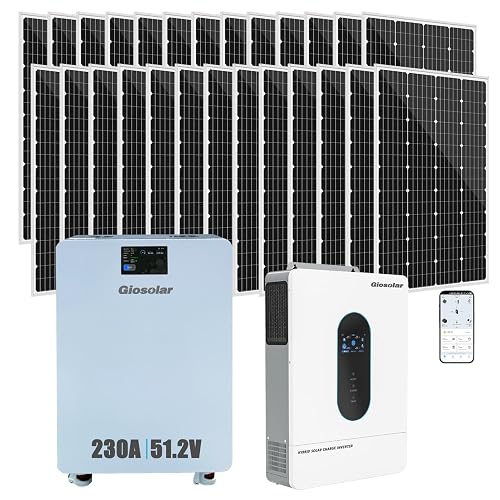 Best for high-capacity storage12000W Solar Power System Kit with Hybrid InverterView on Amazon
- 6
 Best for a light load budgetSUNGOLDPOWER 5000W 48V Off Grid System Complete Solar Kit,1 * 5000W 12View on Amazon
Our Top Picks
| Product | Best for | Key feature |
|---|---|---|
| ECO-WORTHY 10KW Off Grid Kit | Overall balance | 10kW split-phase, 20.48kWh storage |
| ECO-WORTHY Whole House System | Whole-house backup | 16kWh battery, 2950W array |
| Solar Complete 9.36KWH System | Smaller homes | 12kW inverter, WiFi monitoring |
| SUNGOLDPOWER 10000W Kit | UL-listed parts | UL1741 inverter, UL1973 battery |
| 12000W Hybrid Kit | Large storage needs | 12kWh battery, dual 200A MPPT |
| SUNGOLDPOWER 5000W Kit | Lighter loads | 5kW inverter, 100Ah LiFePO4 |
ECO-WORTHY 10KW Output Off Grid Solar System Complete Kit
ECO-WORTHY 10KW Output Off Grid Solar System Complete Kit:10KW 120V/240V Output Split Phase Inverter| 4Pcs 48V 100Ah 20.48kWh High Capacity Energy Storage| 5310 Watts Solar Panel PV
Best for: Overall balance of inverter output, storage and array size.
This kit suits homeowners who want a complete split-phase system with enough battery reserve to ride through evening peaks. Manufacturers specify a 10kW 120V/240V inverter, four 48V 100Ah batteries and about 5.3kW of panels.
Pros
- Full storage capacity of about 20.48kWh
- Panel array sized to recharge a large battery bank
Cons
- Installation requires a qualified electrician for the service panel
Whole House System 10KW 120V/240V Split Phase Solar Inverter Kit
Whole House System:10KW 120V/240V Split Phase Solar Inverter| 48V 314Ah 16kWh High Capacity Energy Storage| 2950W Solar Panel ECO WORTHY 10000W Output Complete Off-Grid Solar Panel Kit for Home
Best for: Whole-house backup with a larger battery bank.
Owners planning to run most household circuits through an outage often choose a 16kWh battery configuration. The listing pairs a 10kW split-phase inverter with roughly 2950W of panels.
Pros
- Larger 16kWh storage for extended backup
- Split-phase output suits standard US home wiring
Cons
- The array is modest for recharging a full 16kWh bank quickly
Solar Complete 9.36KWH Off-Grid System 12KW Split Phase
Solar Complete 9.36KWH Off-Grid System:12KW 120V/240V Split Phase Solar Inverter WiFi Monitoring+2400W Solar Panels+200A 51.2V Wall Mounted & Vertical Battery|Combiner Box | Home,Back Up
Best for: Smaller homes that want a compact, all-in-one package.
This kit targets households with moderate daily loads and a need for backup power. Its 12kW inverter provides headroom for surge loads like well pumps.
Pros
- WiFi monitoring included
- Combiner box and wall-mount battery simplify layout
Cons
- A 9.36kWh battery may run short for larger homes
SUNGOLDPOWER Solar Kit 10000W Off-Grid Power System
SUNGOLDPOWER Solar Kit 10000W Off-Grid Power System:10KW 48Vdc 120/240Vac Solar Inverter(UL1741) 4*100AH 51.2V Battery(UL1973) 5400W Bifacial Solar Panels for House Backup/Energy Storage (SGR-10K20E)
Best for: Buyers who prioritize UL-listed inverter and battery components.
Listings cite UL1741 for the inverter and UL1973 for the battery, which many local inspectors look for. The kit pairs a 10kW 48Vdc inverter with four 100Ah batteries.
Pros
- UL1741 inverter and UL1973 battery listings
- Bifacial panels can add output in reflective settings
Cons
- Bifacial panel gains depend heavily on mounting height and ground surface
12000W Solar Power System Kit with Hybrid Inverter
12000W Solar Power System Kit: 12KW 48V Split Phase Hybrid Solar Inverter with Dual 200A MPPT & WiFi, 12KWh 51.2V 230Ah Battery, 26pcs 120W Rigid Solar Panels for Home Off-Grid/Backup Power
Best for: Large storage needs and higher daily energy use.
This kit suits households or small workshops with heavy daily consumption. It combines a 12kW hybrid inverter, dual 200A MPPT charge controllers and a 12kWh battery.
Pros
- Dual MPPT inputs for flexible array layout
- Large 12kWh battery capacity
Cons
- Twenty-six 120W panels require substantial roof or ground space
Buying Guide
Inverter Output and Split-Phase Compatibility
Check that the inverter’s continuous output rating covers your largest simultaneous load, including motors, well pumps, and HVAC compressors that draw a surge on startup. Confirm that the inverter supplies 120V/240V split-phase output if your panel expects that configuration, since a mismatch can prevent the system from powering your home correctly.
Battery Capacity and Chemistry
Battery capacity determines how long your home can run overnight or during cloudy stretches without sunlight. Lithium iron phosphate (LiFePO4) batteries generally offer longer cycle life and safer chemistry than older lead-acid options, so look for that chemistry when comparing kits. Match the battery voltage to the inverter’s specified input voltage to avoid compatibility problems.
Solar Array Size and Daily Energy Needs
Estimate your household’s daily kilowatt-hour consumption from your utility bills, then make sure the panel array can produce enough energy on an average sunny day after accounting for losses. An array that is too small will leave batteries undercharged, while an oversized array adds cost without much benefit if your roof space or budget is limited.
Certifications and Code Compliance
Look for listings such as UL1741 for the inverter and UL1973 for batteries, which signal that the equipment has been tested against recognized safety standards. Local building and electrical codes may also require permits and inspections, so confirm requirements with your jurisdiction before installing a three-phase or split-phase off-grid system.
Expansion Options and Monitoring
If you expect your energy needs to grow, choose a kit whose inverter and battery bank can be expanded with additional modules or panels. Built-in WiFi or app-based monitoring can also help you track production, battery state of charge, and consumption over time, which makes it easier to spot problems early.
FAQ
Can an off grid 3 phase solar system power a whole house?
Many complete kits are designed for whole-house backup or primary power, especially those with 10kW or larger inverters and substantial battery banks. The right size depends on your actual daily energy use and the peak loads you need to run at the same time. Reviewing your utility history and load list before buying will help you choose a kit that fits.
What is the difference between split-phase and three-phase power?
Split-phase power, common in North American homes, provides 120V and 240V from a single-phase source, while three-phase power uses three conductors offset in timing and is more typical in commercial or heavy industrial settings. Most residential off-grid kits in this category deliver split-phase output, so confirm your home’s service type before purchasing.
How long can batteries power my home without sunlight?
Runtime depends on battery capacity, the inverter’s load, and how much energy you use overnight or during cloudy periods. Smaller loads and a larger battery bank will extend backup time considerably. Reviewing your typical nighttime consumption will give you a realistic estimate for any particular kit.
Do I need a professional to install an off-grid solar kit?
Installation of a high-voltage inverter, battery bank, and split-phase connection to your home’s electrical panel generally requires a licensed electrician and often a permit. Local codes may also dictate grounding, disconnect, and labeling requirements. Hiring a qualified installer helps ensure safety and compliance.
Conclusion
Homeowners who want a broad, all-in-one starting point with a large battery bank and a generous panel array should look at the larger 10kW and 12kW kits, while those focused mainly on backup power for essential circuits may find the smaller 5kW option sufficient. Buyers planning to expand over time should prioritize kits with expandable batteries and monitoring features.
Before you buy, compare each kit’s inverter output, battery capacity, and panel array against your measured daily energy use, and confirm local permitting and installation requirements. Matching the system to your actual needs will do more for long-term satisfaction than choosing the largest kit available.
Related reading
- Wiring Diagram for Off-Grid Solar System: A Step-by-Step Guide
- Wind Solar Hybrid Off Grid System: How to Size and Wire One
- Whole House Off-Grid Solar System: Sizing Steps and Parts for Your Home
- What Is Needed for Off-Grid Solar System: A Step-by-Step Parts Checklist
- What Is Meant by Off Grid Solar System? A Plain-English Answer
About Ethan Brooks
Ethan Brooks is part of our editorial team and reviews and edits our DIY solar power systems guides, checking product details against manufacturer specifications and owner feedback.


